


Behind the Docket
One month, six universities, 62 students, 1,025 proceedings: Scenes from an overstrained immigration system in America
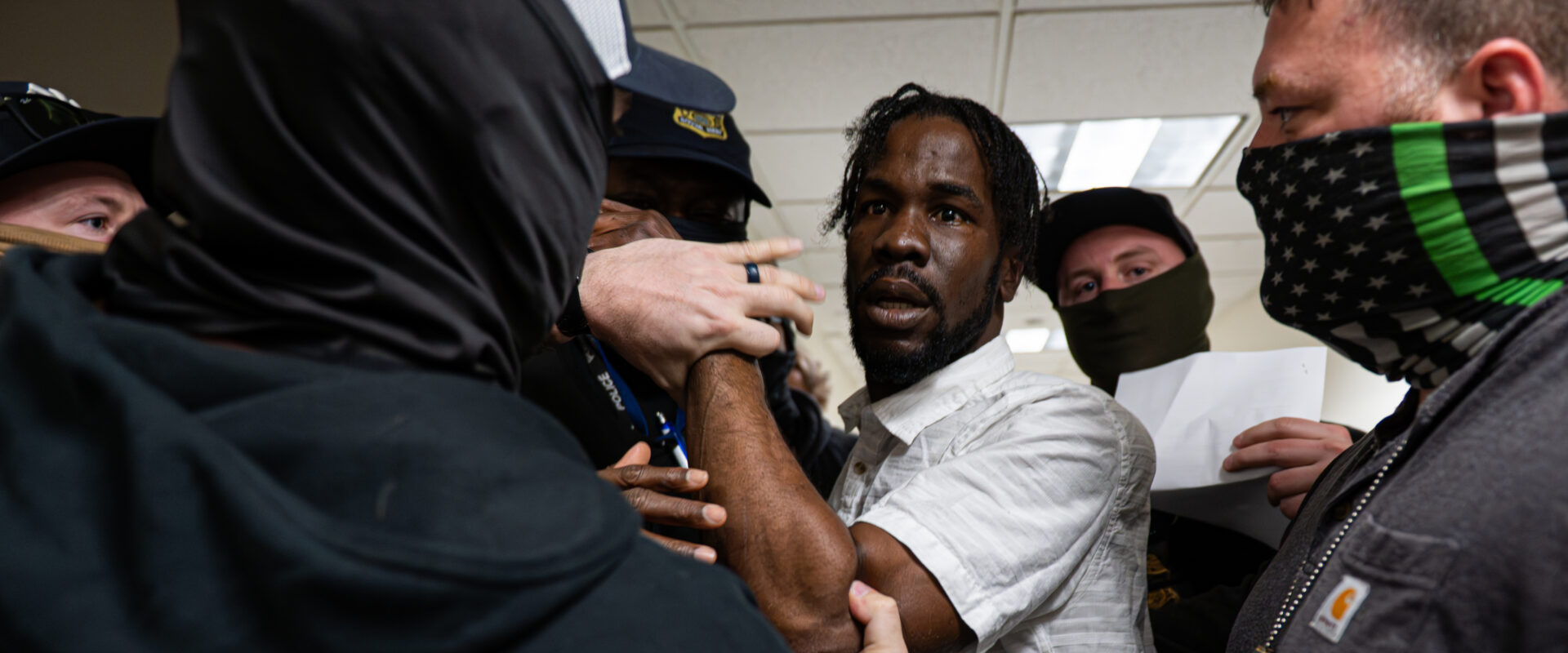
They wait, gripping folders and manila envelopes stuffed with legal forms and paperwork, as security guards begin unlocking doors just before 8 on this February morning.
Some walk through metal detectors, pushing strollers with swaddled, sleeping babies, or holding the hands of small children. Others are meeting their lawyers in the parking lot – some for the first time. Still others are shuffled to a room to face a computer screen in an ICE detention facility.
Enter ground zero of President Donald Trump’s campaign promise of mass deportation: America’s immigration courts.
The men, women and children are here to find out if they will be allowed to stay in the United States.
Similar scenes unfold in the nation’s more than 70 immigration courts and three adjudication centers day after day and month after month from coast to coast. It’s a choked system with 3.3 million pending cases to be decided by about 600 or so federal immigration judges.
In a national reporting project, 62 journalists from six universities across the nation fanned out into 14 courtrooms in Arizona, California, Florida, Illinois, Nebraska and New York from Jan. 28 to Feb. 28, where they observed 1,025 federal immigration court proceedings. In total, 98 journalists worked on the project.
Here — behind the backlog, the statistics, the policy fights and the headlines — is what they found.
Arizona
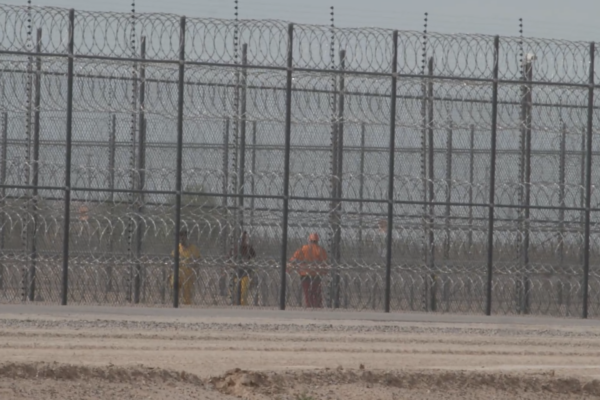
The fenced-in, gray housing blocks of the Eloy Detention Center loom behind the immigration court. Security guards escort rows of detainees dressed in dark green, beige, yellow and red jumpsuits into courtrooms with no observers on this day. The men and women sit in the court’s front pews awaiting a decision to determine if they go home to their families in the U.S. while continuing to fight deportation cases, and how much they’ll have to pay for that temporary freedom.
They wait for their bond hearings.
One by one, the judge calls a detainee’s name and assigned number, a ritual repeated in the 28 bond hearings observed by Arizona State University reporters from Feb. 9 to Feb. 12 in the Eloy and Florence immigration courts. Judges granted bonds to nine of 28 detainees, in amounts ranging from $5,000 to $12,000. Lawyers represented every detainee who obtained bond, but 43% of respondents at bond hearings in Arizona in 2025 did not have legal counsel, according to federal data analyzed by The Transactional Records Access Clearinghouse, a research center at Syracuse University.
In Eloy’s courts, one such man who appears to be in his early 20s stands before Judge Michael Schnitzer on Feb. 10, relying on a Russian translator whose voice breaks up over the phone. The young man grips a letter of support from his parents as his only evidence that he has sponsors in the U.S. His parents’ asylum case is pending as they wait for him in California with his younger brother. He spoke wistfully of the 12-year-old dog he hasn’t seen in two years.
Schnitzer seems moved, but says his hands are tied and denies the man bond. The burden of proof is on the young man to show he’s not a flight risk nor a danger to the community. The young man, who did have a lawyer, was unable to prove he would stay in the United States and avoid crime while waiting on the outcome of the case.
Read more from Arizona
Children placed in adult detention centers
Story by Katrina Michalak & Sophie Schaeffer
Immigration courts face pressure to move faster
Story by Tymber Klahr Photos by Ike Wood
Bonds without bounds
Story by Mia Osmonbekov
California
A judge ticks through a half-dozen “failure to appear” cases in matter of minutes at the end of a master calendar hearing, ready to issue deportation orders for respondents who, for whatever reason, did not show up in court that day. Perhaps they’ve already left.
This takes place a stone’s throw from busy Los Angeles International Airport in the West Los Angeles Immigration Court, one of two Los Angeles-area courts where five students from the University of Southern California documented 42 hearings between Feb. 6-13.
In other hearings, respondents arrive – some without lawyers – and sit down to wait on wood benches for their name to be called before a judge peppers them with questions.
On Friday, Feb. 6, a man who appears to be in his 70s walks with a cane to sit in front of the judge. A middle-aged woman helps him walk to the table; then she sits in the gallery to observe. There is no attorney present.
He answers the judge’s rapid-fire questions through a Spanish interpreter.
Yes, he is married.
His wife is a naturalized U.S. citizen.
He and his wife are parents to three children. They are now 49, 43 and 39.
He has been in the U.S. for 50 years.
The judge: Why didn’t any of his family members file a petition for him to adjust his status to legal resident, a move that could have put him on a path to U.S. citizenship?
It is clear the man doesn’t understand the question.
The judge explains through the translator that his children, if unmarried, could have petitioned for him to adjust his status once they were 21 years old.
“My children were born here,” the man responds.
The judge reiterates that the man remains subject to deportation. It’s unclear how he landed in removal proceedings.
But, the man tells the judge, he brought a letter from one of his children the last time he was here.
The judge says she has not seen it. Regardless, she tells him that is not what he needs, saying what he needs is a petition filed with U.S. Citizenship and Immigration Services. She suggests he apply for asylum. Do this before your next hearing in May, she advises.
In Spanish, he asks: “Judge, with all respect, do you have children?”
She tells him she cannot answer.
Read more from California
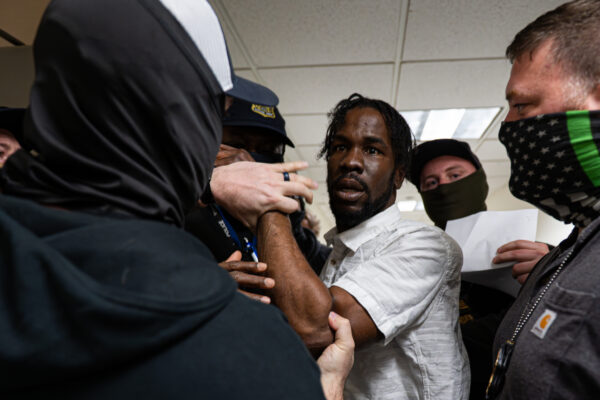
Behind the Docket
Story by Project Staff

Suddenly uprooted
Story by Delia Rose Sauer & Vera Lucia Pappaterra
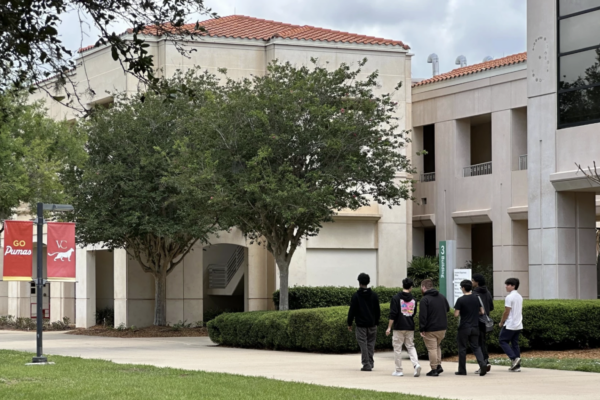
Students shut out
Story by Angelique Rodriguez & Oriana Torre
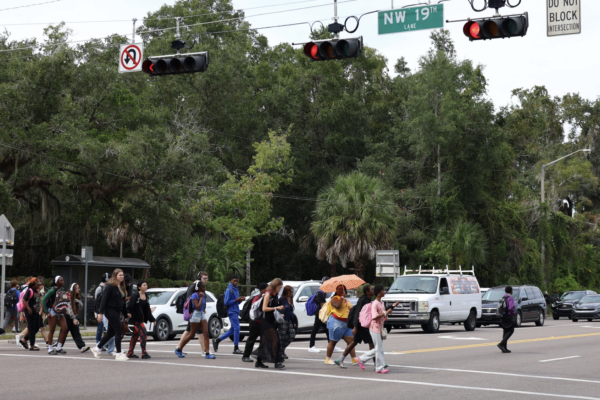
“We couldn’t take it anymore”
Story by Bea Anhuci
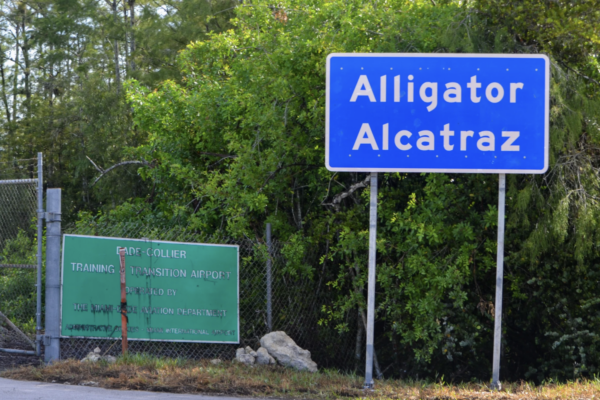
Built in a flash: New satellite imagery shows rapid construction of “Alligator Alcatraz”
Story by Kairi Lowery
Florida
The students are the first journalists to observe immigration hearings run by the Justice Department within the sprawling and heavily guarded Krome North Service Processing Center, a major immigrant detention center operated by the U.S. Department of Homeland Security. Access requires negotiating with both federal agencies, and one journalist is denied access one day but allowed the following days. The other, much larger U.S. immigration courts in Florida are in downtown Miami and in Orlando.
In the court within Krome, most immigrants in the cases the students observe are from Cuba and Nicaragua and say they are alone in America. They ask the judge to release them temporarily on bond until their cases could be adjudicated. Over and over, arrest reports or other necessary documents aren’t available from immigration attorneys or the government prosecutors, causing cases to be rescheduled.
In Miami, as Judge J. Daniel Dowell formally delays a decision in the cases of three men whose identities the court can’t confirm, five plainclothes federal immigration agents wait outside the courtroom door. As one of the immigrants exits the courtroom, the agents whisk him into a corner and handcuff him, as a courthouse security officer tries to block a journalist from watching. “I don’t know what you’re doing,” he says, “but I don’t want to be caught in it.” The agents arrest seven others that day, mostly Venezuelans.
What was the tipoff that arrests were coming in the courthouse? When ICE parks its white Ford F-350 XLT van, with a capacity of 10 to 12 seats, in the parking garage adjacent to the building, arrests are imminent.
In the Miami courtroom for Judge Dalin Holyoak, so many cases involve immigrant parents with young children — little girls comparing bows and gems in their hair — the judge asks his assistant to pull out a clear box of toys that included Slinkys, squishies and tiny dinosaurs for the kids while he rules on their parents’ cases.
Read more from Florida
Built in a flash: New satellite imagery shows rapid construction of “Alligator Alcatraz”
Story by Kairi Lowery
Behind the Docket
Story by Project Staff
Suddenly uprooted
Story by Delia Rose Sauer & Vera Lucia Pappaterra
Illinois
Fourteen Northwestern University students spent much of February in Chicago’s two downtown immigration courts where they observed over 300 proceedings. A significant number of migrants were ordered removed to Ecuador or Uganda — supposedly “safe” third countries other than their own — without the chance to have their asylum claims heard in the U.S. But others had more luck, and were granted asylum. Like the Russian man who feared being sent to the front lines of the war in Ukraine because he is Muslim, and an ethnic minority.
Or the Honduran national who tells Illinois Immigration Judge Samia Naseem of the three times he refused to work with the MS-13 gang, which left him and his family members beaten. The MS-13 gang, or Mara Salvatrucha, is an international gang, started in Los Angeles in the 1980s. Its members are allegedly involved in drug and human trafficking, prostitution, murder and extortion.
Facing death threats, he fled his Central American homeland with his family in 2019 for a new – a safe — life in America.
Naseem takes it all in, she cross-examines the respondent, as does the DHS attorney, before she recesses to her chambers to consider his family’s fate.
Twenty minutes pass.
The man sits quietly and is virtually motionless, except for the near-constant rubbing of his hands together.
The door creaks open, and the Hounduran national walks back in. Judge Naseem is already there, behind the bench, papers in hand.
“I’m going to go through the legal terms very quickly. There’s nothing to be worried about,’’ she tells him, and rapidly reads her decision in a series of legalese difficult to follow.
Then:
“The court is granting your asylum application.”
She quickly advises that the Department of Homeland Security has 30 days to appeal her ruling. If they don’t appeal, he will become a lawful permanent resident of the U.S., meaning he can live and work indefinitely, more commonly referred to as having a “green card.”
He looks up at the judge and says in Spanish: “Thank you, your honor, for protecting my family.”
Read more from Illinois
In Chicago’s immigration court: Cases of chaos, despair and hope
Story by Project Staff
Trends, jargon inside Chicago immigration courts
Story by Clare Kirwan


Immigration judges face firings and pressure
Story by Molly A. Wallace

Notario fraud persists in Chicago as the Trump Administration toys with immigration courts
Story by Vani Subramony Graphics by Jesse Renee Kennedy
Chicago’s immigration attorneys adjust to Trump’s policy changes
Story by Madison Roth
Nebraska
Three University of Nebraska – Lincoln College of Journalism and Mass Communications students attended 44% of the 316 hearings on the court’s docket from Feb. 9-13. Omaha’s immigration court, which also hears cases from Iowa, is considered one of the nation’s most conservative, with its judges rarely granting asylum, according to TRAC data.
The students witness rapid-fire proceedings lasting an average of about four minutes, which were at times confusing and chaotic due in large part to technology glitches and the occasional search for language interpreters.
Confusion reigns in the case of a Peruvian national who walks into Judge Matthew Morrissey’s courtroom the morning of Feb. 12 after stealing a few hours of sleep at the Super 8 motel in nearby Council Bluffs, Iowa.
Just the day before, he and his buddy rented a Toyota RAV4 in Sacramento, California, and headed east toward the nation’s heartland, past his former residence in North Platte, Nebraska, and into Morrissey’s courtroom.
He checks the docket for his name and then waits 90 minutes before his name is called.
Morrissey mumbles that there appears to be something odd about the addresses on the man’s file. He asks the man if he lives at an address in Sacramento.
The man nods.
“I’m impressed you showed up,” Morrissey says.
It’s unclear if the man has a lawyer, and Morrissey advises him that whoever is helping him should have filed paperwork to move his case to California.
And with a few clicks on his keyboard, Morrissey does just that.
The judge sets the man’s next hearing at an immigration court just a 15-minute drive from the man’s home.
The man made a 3,148-mile round-trip drive for a four-minute hearing.
Read more from Nebraska
Policy changes disrupt agricultural workforce
Story by Ruth Bailey
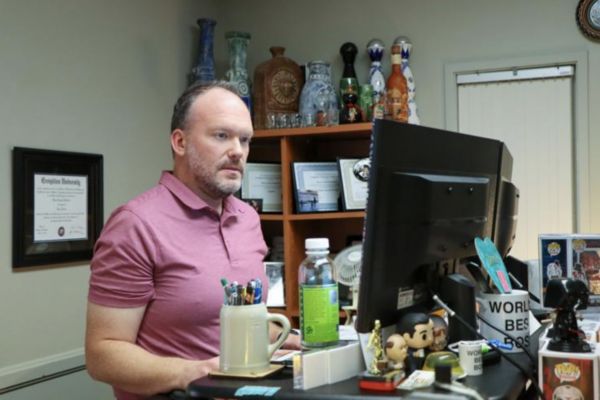
Fighting for immigrants amid policy shifts
Story by Grace Lewis

Immigrant youth risk losing special protection status
Story by Izabell Escobar
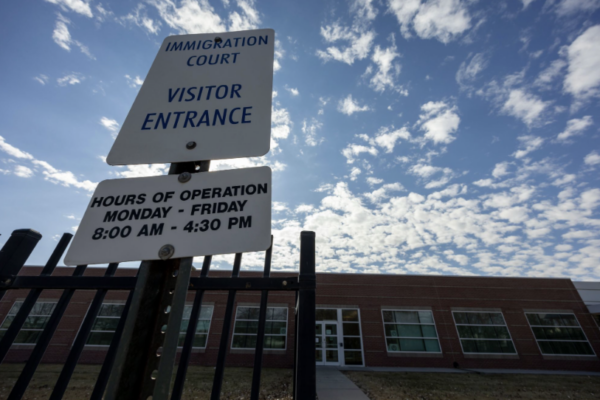
Chaos and confusion inside Omaha’s Immigration Court
Story by Justin Diep
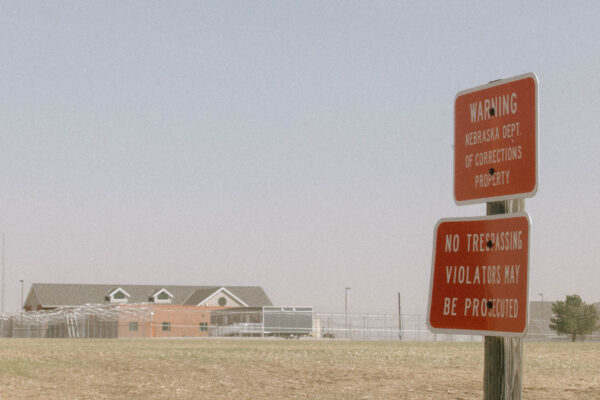
Financial questions linger over ‘Cornhusker Clink’
Story by Ruth Bailey Photos by Julia Trost

On the road: South Omaha to ‘Cornhusker Clink’
Story by Justin Diep
New York
Detainees appear at the immigration court inside the federal detention center in Batavia in uniforms color-coded by risk level. Hearings take place in the same facility where they sleep, eat and wait — sometimes for months — for their cases to proceed. Guards escort them in and out of the small hearing room adjacent to their holding cells.
Seventeen students from Syracuse University spent Feb. 9-13 documenting 66 proceedings inside courts in Buffalo, Batavia and New York City. They witnessed a system that decides, case by case, who stays in the United States and who must go.
The numbers illustrate a system defined by scale and scarcity.
In 47 of the 66 hearings, respondents have no attorney. Interpreters were used in nearly 84% of cases, appearing by phone or video. At least eight cases involved “riders,” meaning multiple family members’ fates were tied to the outcome of the lead respondent’s case.
Children were present at four hearings.
Immigration court proceedings are administrative, not criminal. Many who await their hearings in detention centers have no criminal backgrounds.
Yet those distinctions blur inside facilities like the Buffalo Federal Detention Center in Batavia and its adjacent immigration court.
Detainees in blue and orange uniforms are escorted one by one into the courtroom, crossing their arms to stay warm in their short-sleeved uniforms. They all wear black Velcro shoes.
In four bond hearings, government lawyers acknowledge that the respondents are not dangerous — only that they might be flight risks.
One detainee wears an orange uniform indicating a higher risk classification than the majority of detainees in blue. None of them wear red, the highest level.
The man in orange tells the judge he’s lived in the United States for 25 years. He arrived from Mexico as a child. He speaks fluent English. His relatives are U.S. citizens. He is engaged.
His criminal record consists of a single conviction: felony drunken driving.
That is enough. The judge orders him deported.
Read more from New York
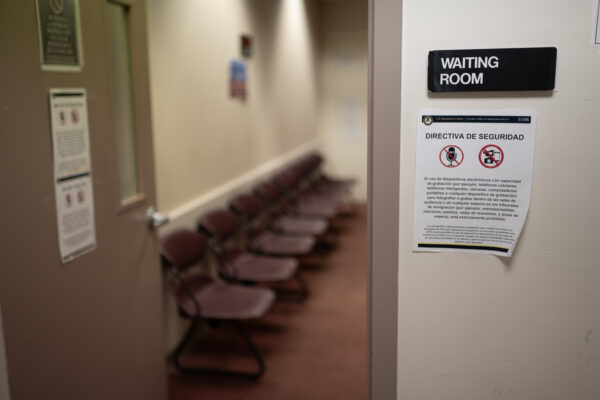
Immigration courts backlog has grown since 2012
Story by Duncan Green & Brenne Sheehan Photos by Ike Wood
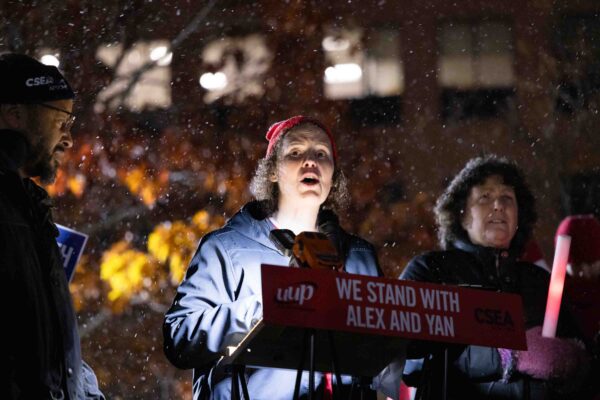
Syracuse Cuban couple detained amid Trump immigration crackdown
Photos by Ella Chan & Cassie Roshu Story by Anna Momo
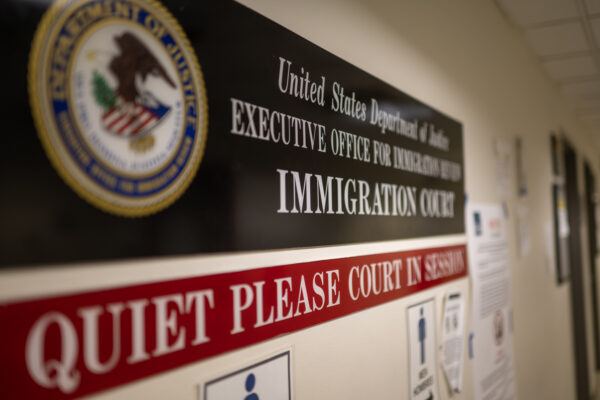
What we observed in U.S. immigration courts
Story by Griffin W. Fellows & Brenne Sheehan Photos by Ike Wood

SU student’s nonprofit delivers food to Kenya
Story by Jai’La Du Rousseau
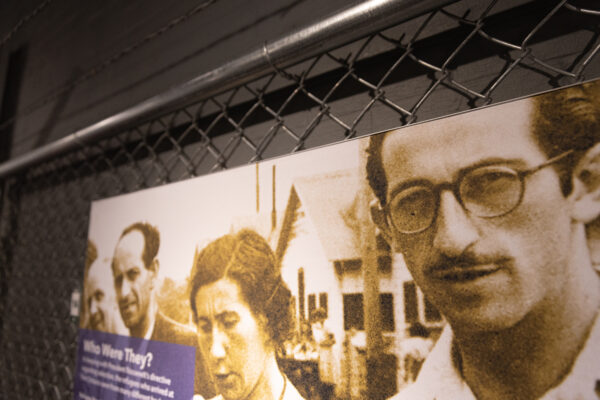
Oswego’s Safe Haven Museum CNY’s ‘forgotten’ Holocaust refugees
Story by Julia Boehning Photos by Cassie Roshu

How international students navigate collegiate soccer
Story by Rohan Borges & Felipe Ferraz de Souza Miranda Photos by Ella Chan
Contributors
This story reflects the work of more than four dozen reporters based at six universities.
Howard Center for Investigative Journalism at Arizona State University’s Walter Cronkite School of Journalism and Mass Communication: Suzgo Chitete, Tymber Klahr, Kat Michalak, Mia Osmonbekov, Lavanya Paliwal, Lilly Roseburrough, Sophie Schaeffer.
S.I. Newhouse School of Public Communications at Syracuse University: Julia Boehning, Olivia Boyer, Ben Butler, Ella Chan, Leah Cohn, Evan Edmiston, Griffin Fellows, Reed Granger, Duncan Green, Kathryn Miller, Anna Momo, Haley Moreland, Alejandrina Perez, Brenne Sheehan, Jack Siciliano, Sarah Torres and Wesley J. Pérez Vidal.
Medill School of Journalism at Northwestern University: Feixu Chen, Julian Gonzalez, Grace Herzog, Clare Kirwan, Ben Lauren, Jasmine Lewin, Mary Ellen Ritter, Richard Taylor Robinson, Madison Roth, Sarah Serota, Navya Shukla, Vani Subramony, Camille Vocelka, Molly Wallace.
University of Nebraska-Lincoln College of Journalism and Mass Communications: Ruth Bailey, Justin Diep, Izabell Escobar.
University of Florida: Maria Avlonitis, Alissa Gary, Gabriel Velasquez Neira, Vera Lucia Pappaterra, Sara-James Ranta, Angelique Rodriguez, Delia Rose Sauer, Zoey Thomas, Marta Zherukha.
University of Southern California, Annenberg School for Communication and Journalism: Charlotte Calmes, Bryan Nicolas-Nicolas, Senna Ihab Omar, Lizbeth Solorzano, Gian Marco Velasquez.
More from On the Docket
Immigration courts face pressure to move faster
Story by Tymber Klahr Photos by Ike Wood
Bonds without bounds
Story by Mia Osmonbekov
Immigration courts backlog has grown since 2012
Story by Duncan Green & Brenne Sheehan Photos by Ike Wood

What is a habeas corpus petition?
Story by Laura Robertson & Mikayla Melo