


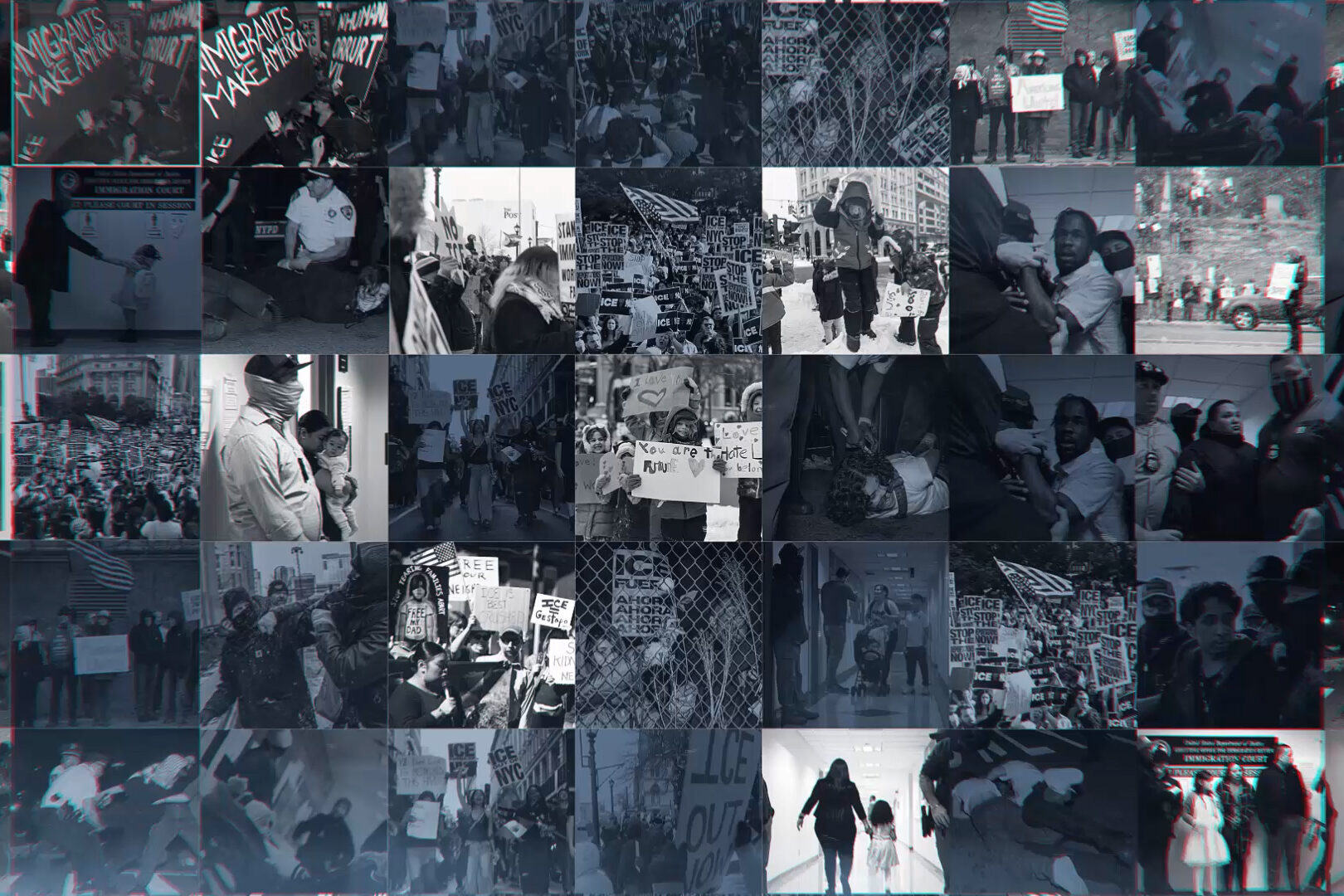
About Focal Point
A yearlong, multi-university journalism initiative resulted in Lives in the Balance, which explored immigration in a divided America.
Immigration enforcement is now reaching deep into everyday life in America, from ICE surges in Chicago and Minneapolis to increasing pressures inside the nation’s clogged immigration courts.
Lives in the Balance brought together nearly 100 journalists from six universities to document the reach of that system from inside the nation’s immigration courts — backlogged for years, whipsawed by confusion and chaos amid policy changes and pressure to move faster — and beyond.
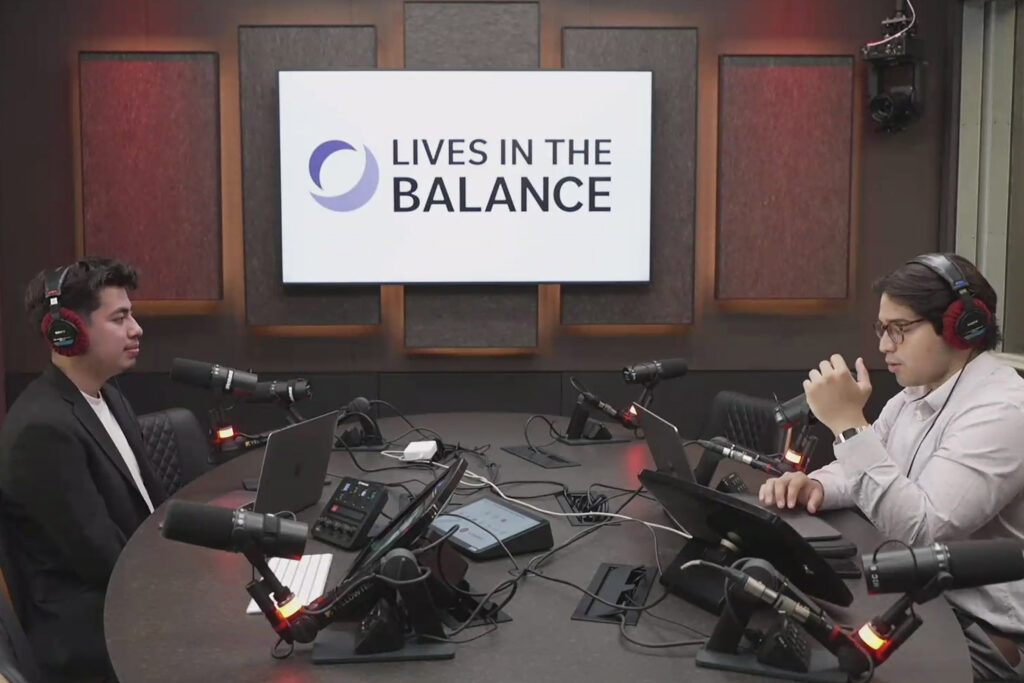
Podcast
Inside the courtrooms
Student journalists from across the country discuss their observations and perspectives on what they saw while reporting on federal immigration courts this past year.
Now Playing
Inside the courtrooms
Produced by Lives in the Balance Staff
They found immigrant children are misplaced into ICE detention centers through ‘murky’ science, some immigrant teens are aging out of a special status meant to protect them, while still others are opting to stay home instead of going to school to avoid possible arrest.
In upstate New York, a rare glimpse inside a detention facility challenges the idea that immigration detention is intended to ensure court appearances or facilitate removal, rather than punish those caught in the system. In Nebraska, questions linger about financial promises made by that state’s governor about the so-called “Cornhusker Clink,” and continues to divide a small rural community. And in Florida, satellite imagery shows the rapid construction of “Alligator Alcatraz” amid ongoing pressure and lawsuits to close its doors.
These are a few of more than 60 stories captured in Lives in the Balance, which can be viewed in four sections:
On the Docket, which looks closely at what is happening inside America’s immigration courtrooms;
Enforcement, which puts a lens on ICE arrests and detention across American cities;
Journeys, which tells stories from inside America’s immigrant communities;
The System, which examines the immigration system as a whole.
Sixty-two reporters fanned out into 14 courtrooms in Arizona, California, Florida, Illinois, Nebraska and New York from Jan. 28 to Feb. 28, to observe proceedings. Collectively, they spent 651 hours in courtrooms where they gathered the same data from 1,025 court proceedings. That information was compiled into 31 data sets and analyzed for trends. The data is anecdotal and non-scientific.
They interviewed 194 people, including immigrants, respondents, immigration experts, attorneys, legal scholars, former and current immigration judges and members of the Department of Homeland Security and ICE.
They filed 41 public records requests, of which 11 were denied and seven were fulfilled. The remainder are pending.
More three-dozen other journalists – including photographers, videographers and podcasters; graphic artists, editors and data journalists worked on this report.
AI disclosure
Reporters used some AI tools to provide basic copy editing, including grammar and spelling checks and voice-to-text transcription as well as supporting deep research that was then analyzed by journalists. The site designers used AI to vibe code the custom WordPress site and to help build some of the interactive graphics.
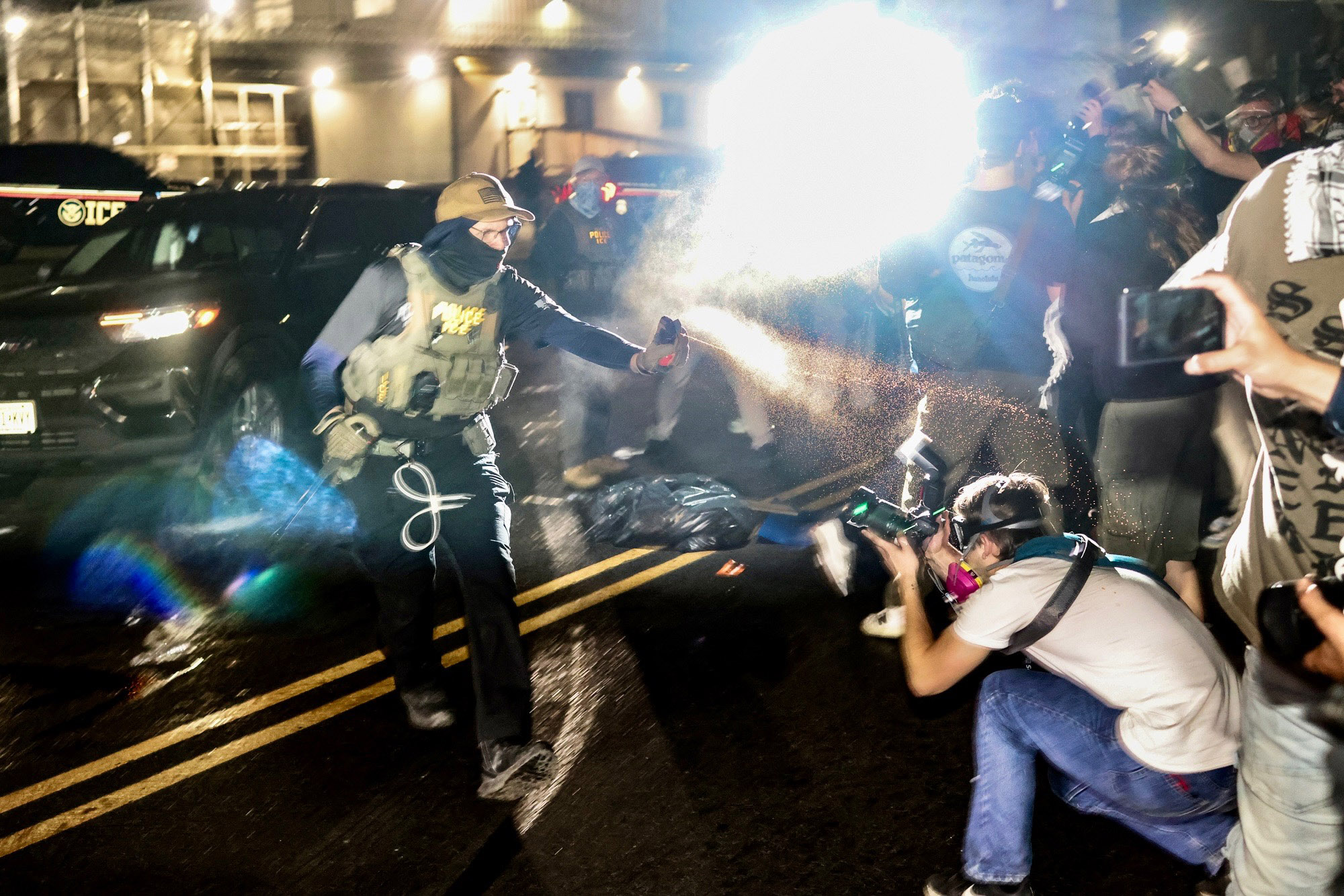
Syracuse photojournalist Ike Wood (right) captures protests at Delaney Hall detention center in Newark, N.J.
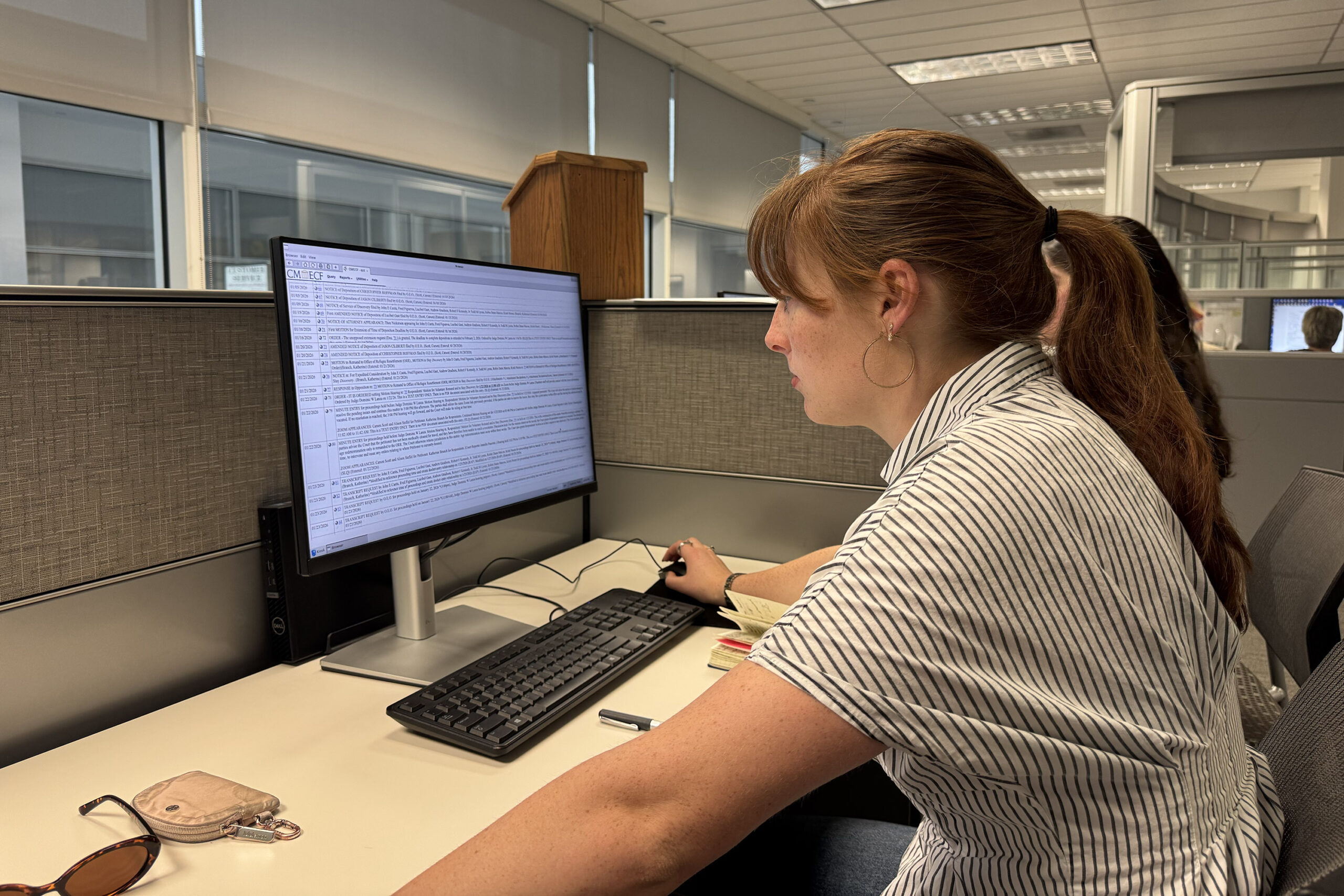
Howard Center reporter Sophie Schaeffer, from ASU’s Cronkite School of Journalism, reviews a court record.
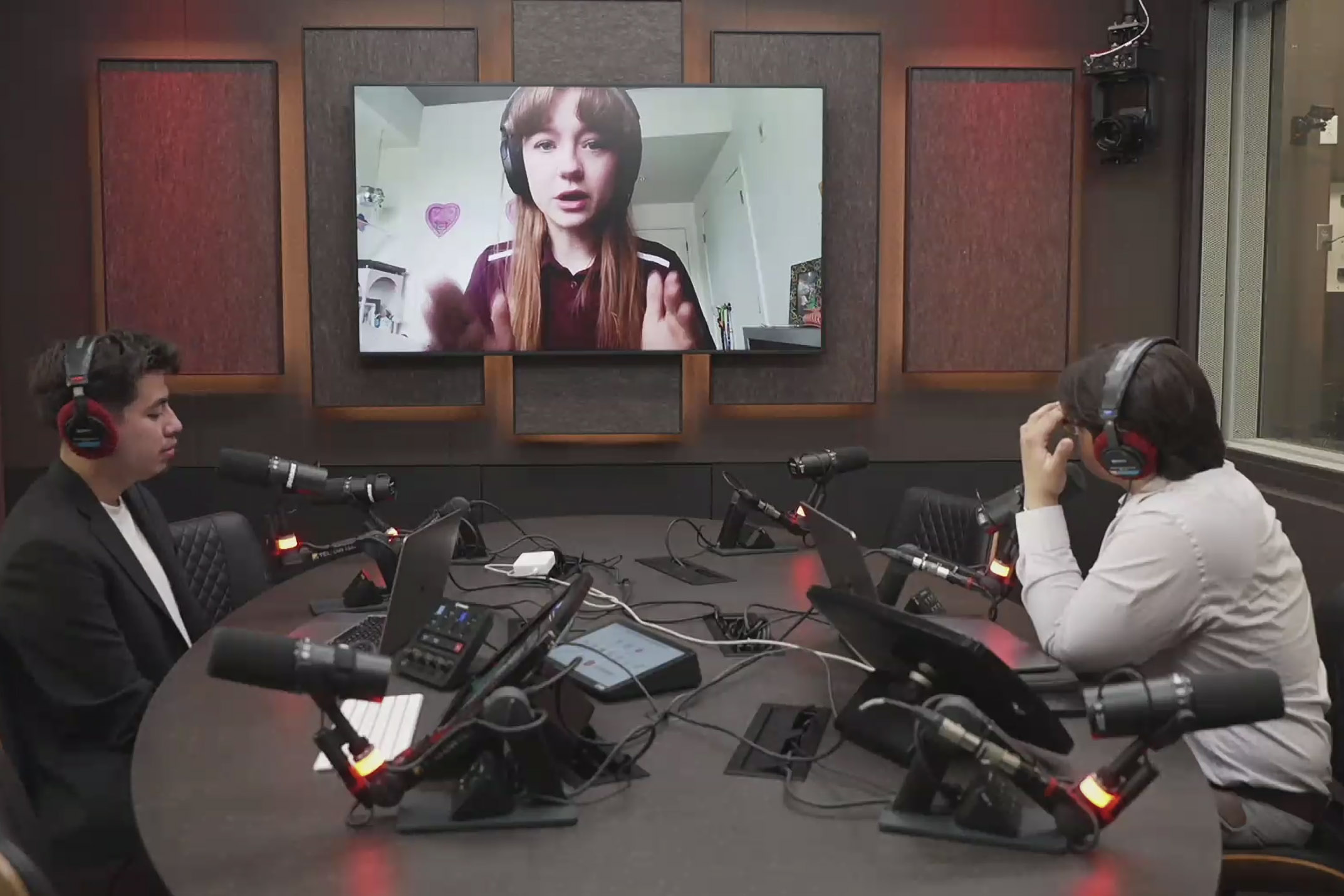
Arizona State reporter Lilly Roseburrough discusses covering immigration court with USC hosts for the Lives in the Balance podcast.
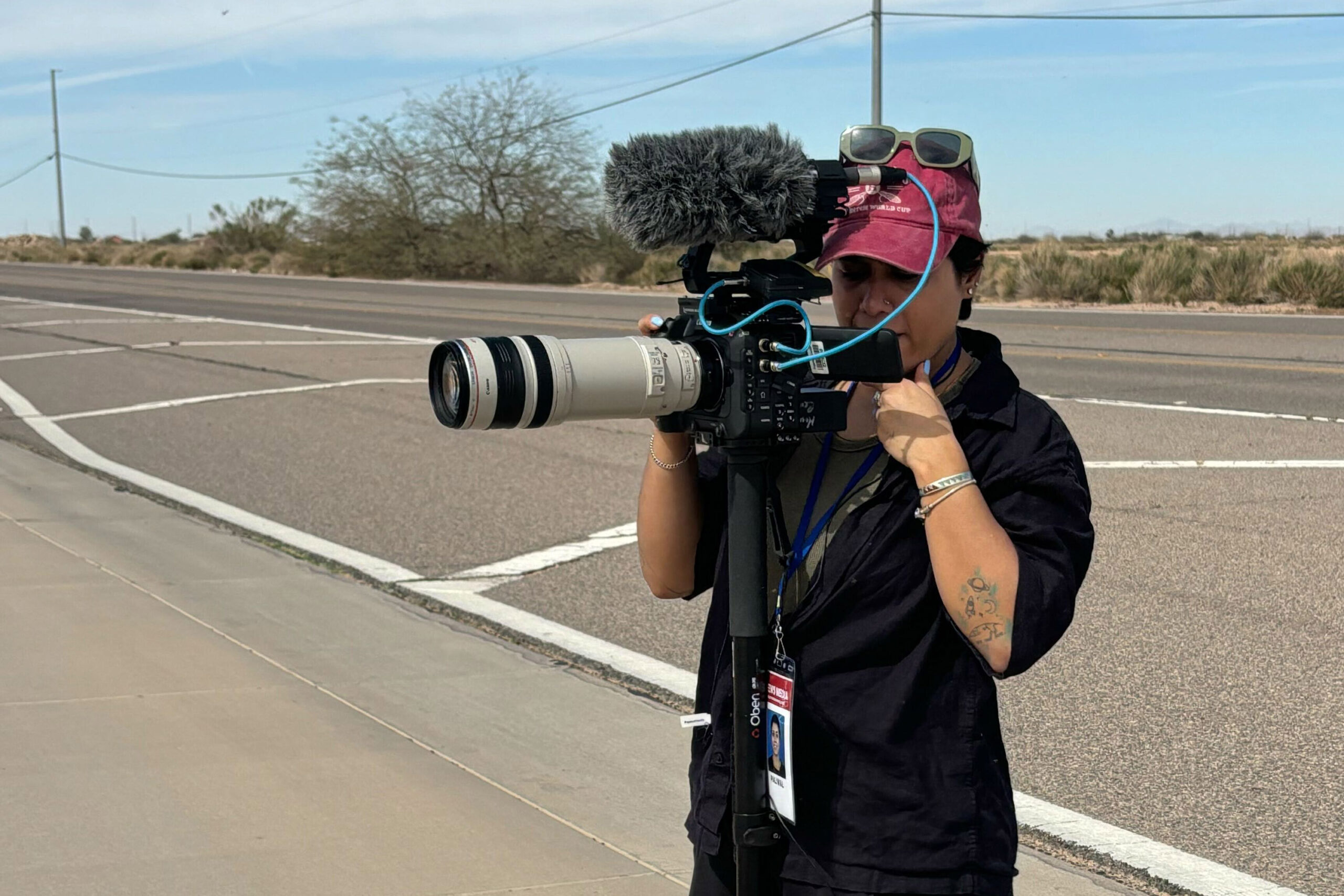
Arizona State video journalist Lavanya Paliwal on assignment
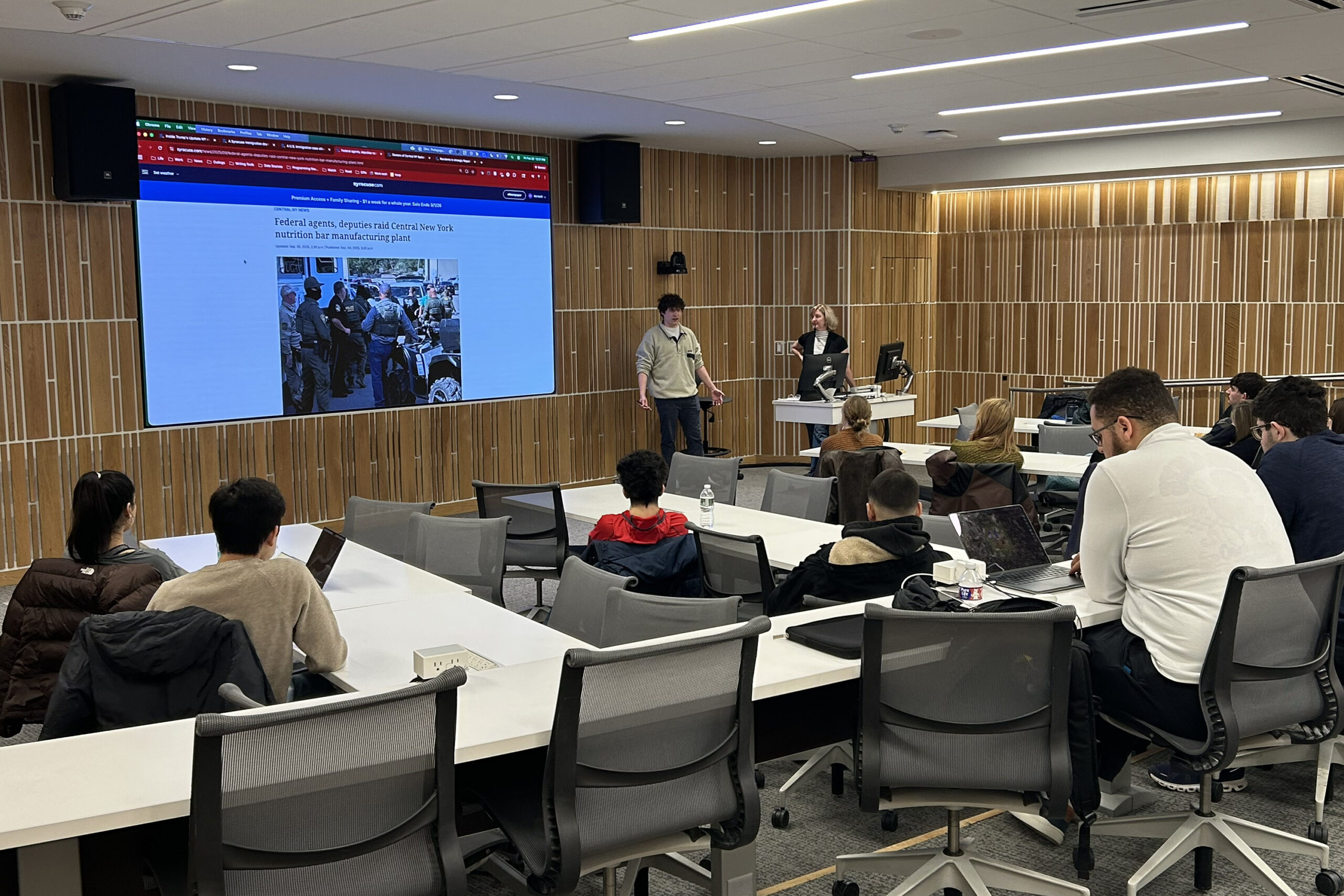
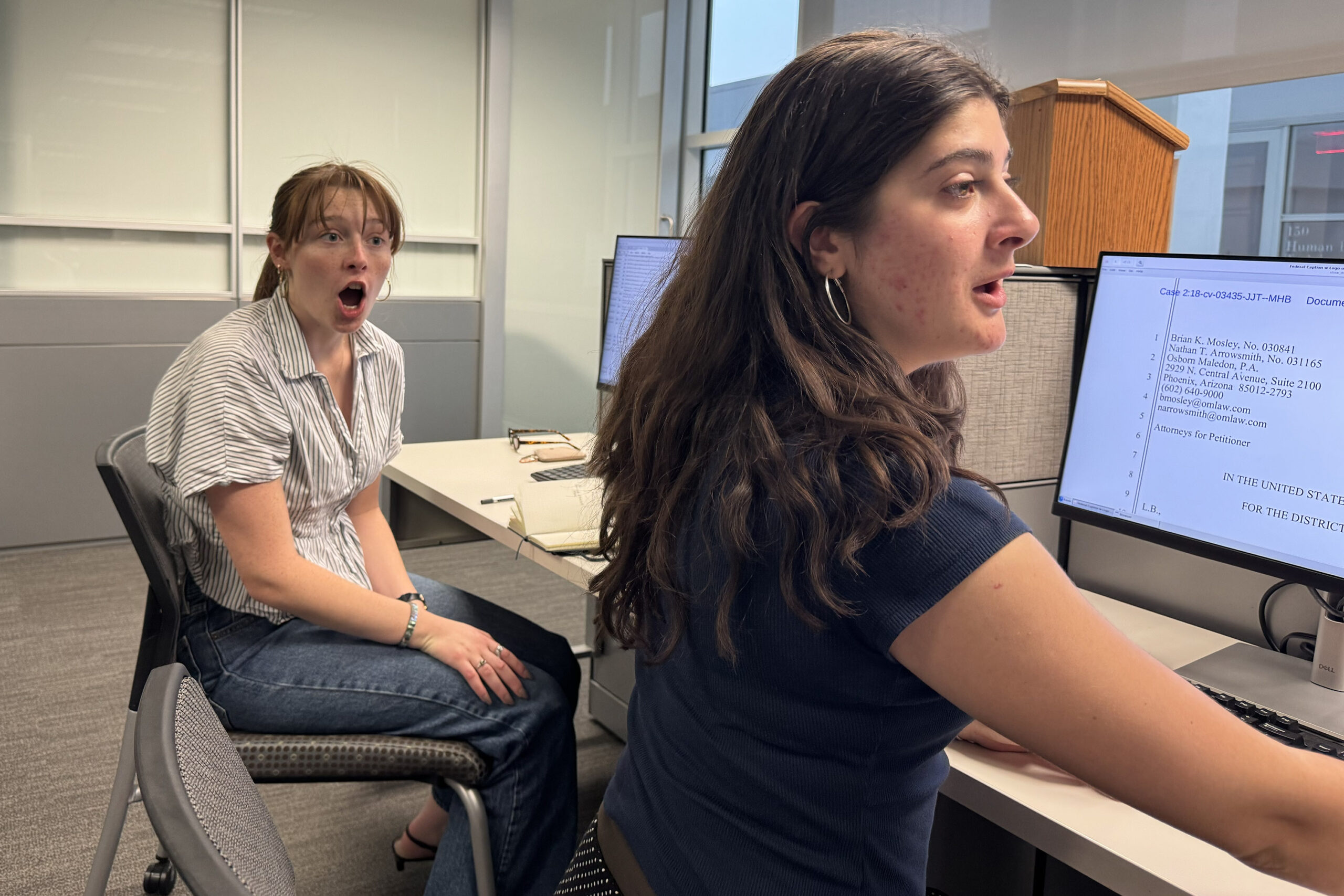
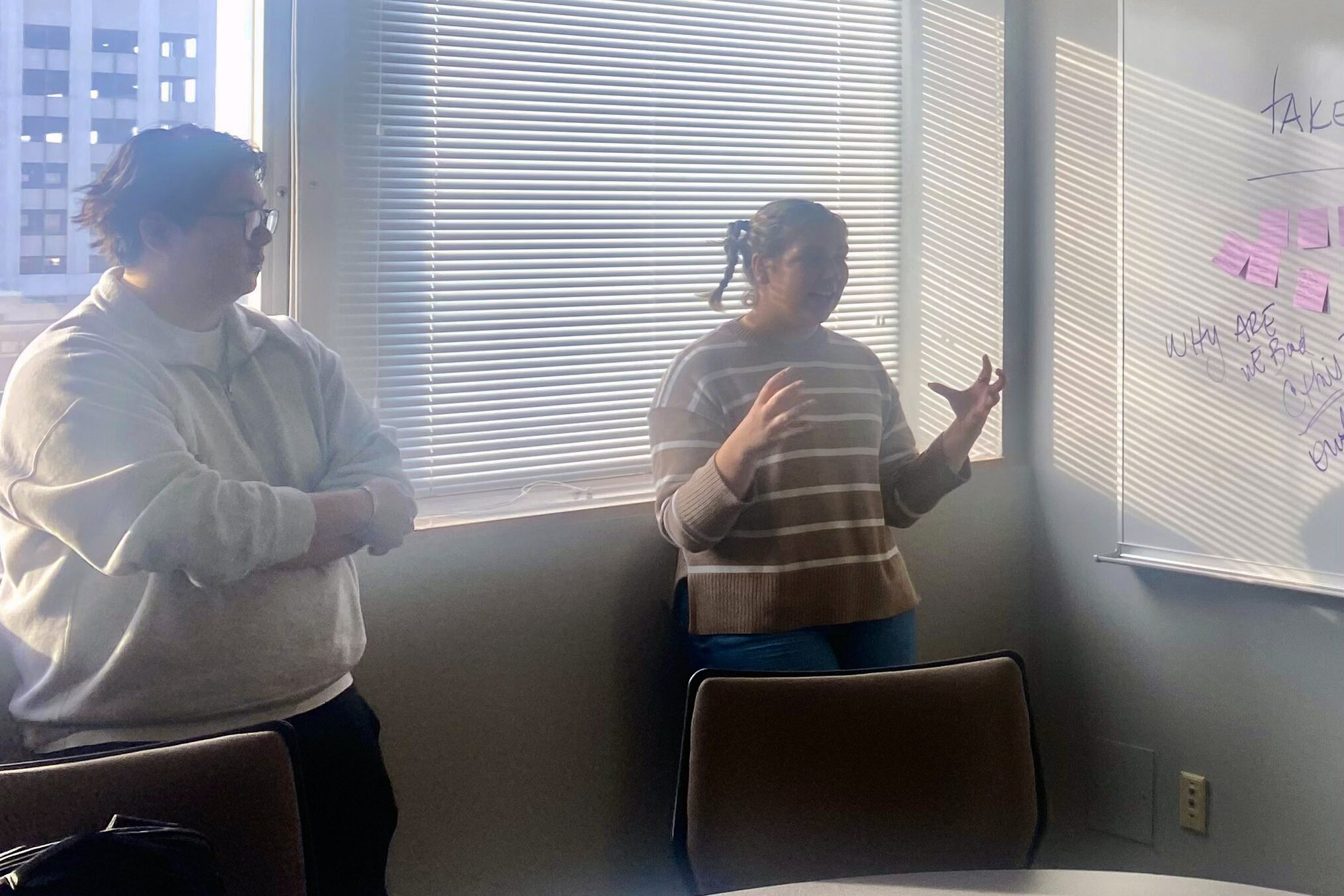
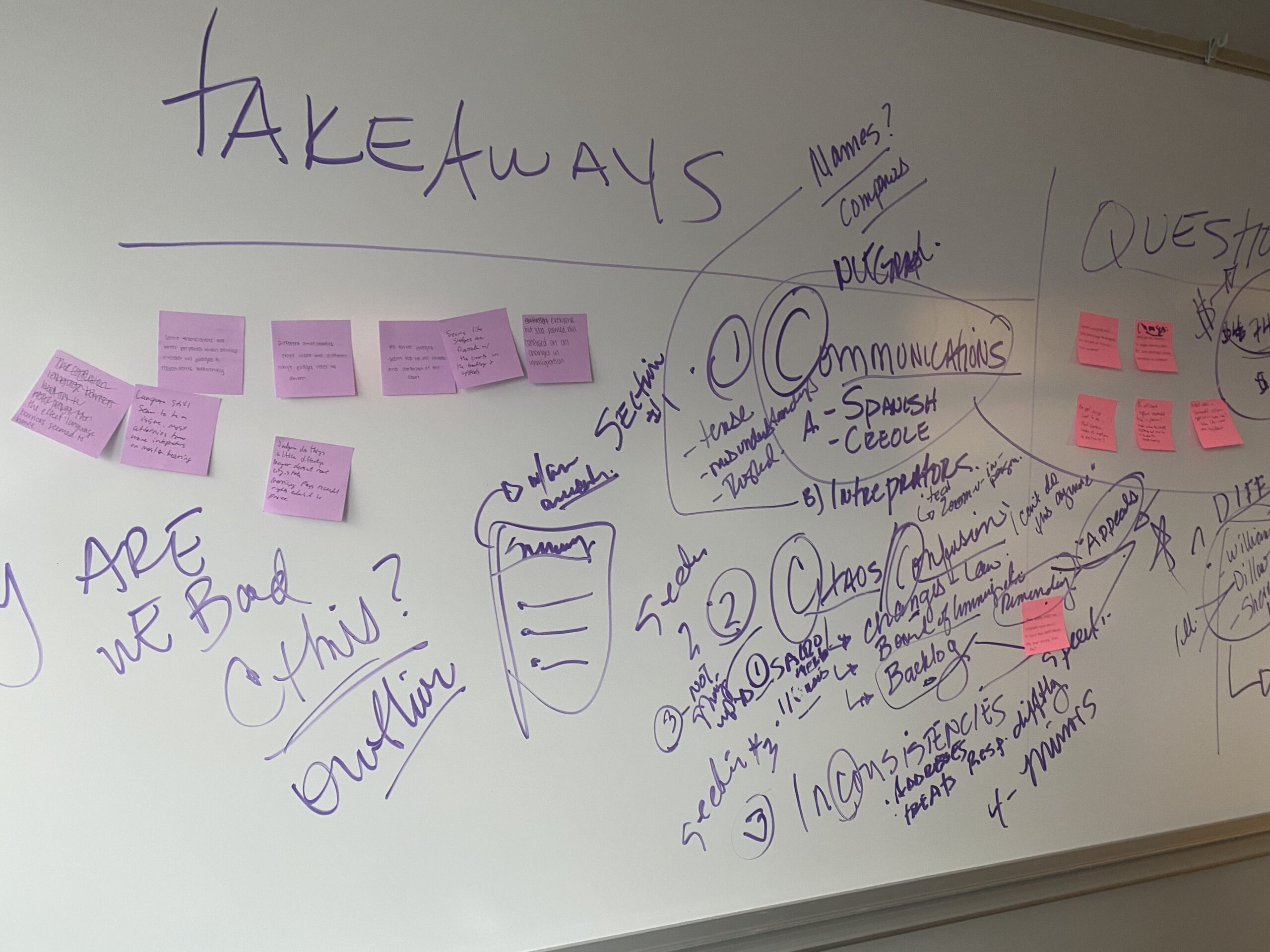
University of Nebraska-Lincoln journalists Justin Diep and Ruth Bailey during a story brainstorming meeting.
Special Thanks
The team wishes to thank the nation’s immigrants and their families for opening their homes and hearts to our reporting teams, sometimes at personal risk. We are in your debt. We also wish to thank the immigration lawyers, advocacy groups and nonprofits, judges and others involved in the nation’s immigration court system who took considerable time to explain complex laws, court structure and shifting national policy.
Arizona State University’s Howard Center for Investigative Journalism thanks the Scripps Howard Foundation. The Howard Center is an initiative of the Scripps Howard Foundation in honor of the late news industry executive and pioneer Roy W. Howard.
The Newhouse School at Syracuse University thanks Newhouse alumnus David Flaum and his wife, Jackie, for their continuous support of our reporting initiatives. Their generosity enabled two dozen students to travel to immigration courts from Buffalo to New York City and to report on immigration issues across New York.
The University of Nebraska-Lincoln College of Journalism and Mass Communications thanks the Deepe Family Fund in Deepe Reporting, The Midwest Newsroom, Nebraska Public Media.
The Lives in the Balance Team
Reporters
Arizona: Suzgo Chitete, Tymber Klahr, Katrina Michalak, Mia Osmonbekov, Lavanya Paliwal, Lilly Roseburrough, Sophie Schaeffer
California: Charlotte Calmès, Bryan Nicolas-Nicolas, Senna Ihab Omar, Lizbeth Solorzano, Gian Marco Velazquez
Florida: Bea Anhuci, Kairi Lowery, Vera Lucia Pappaterra, Angelique Rodriguez, Delia Rose Sauer, Oriana Torre
Illinois: Feixu Chen, Julian Gonzalez, Grace Herzog, Clare Kirwan, Ben Lauren, Jasmine Lewin, Mary Ellen Ritter, Richard Taylor Robinson, Madison Roth, Sarah Serota, Navya Shukla, Vani Subramony, Camille Vocelka, Molly Wallace
Nebraska: Ruth Bailey, Justin Diep, Izabell Escobar, Grace Lewis
New York: Maya Aguirre, Cooper Andrews, Kylie Adedji, Valentina de Andrada, Ben Butler, Rohan Borges, Olivia Boyer, Will Broad, Ryan Brown, Leah Cohn, Trinity Corbett, Kira Desai, Patricia Diaz, Jack DiNapoli, Jai’La Du Rousseau, Megan Ebken, Evan Edminston, Griffin W. Fellows, Duncan Green, Lauren Jones, Sofia Kissel, Max Olson, Sara Oppenheimer, Luisana Ortiz, Mikayla Melo, Anna Momo, James Mullarkey, Arwen Parmelee, Wesley J. Pérez Vidal, Rickie Potts II, Alex Rubinson, Josh Solomon, Felipe Ferraz de Souza Miranda, Sarah Torres, Aidan Tseng, Kyra Wood
Podcasters:
Arizona: Lilly Roseburrough (also editor)
California: Bryan Nicolas-Nicolas, Gian Marco Velasquez
New York: Haley Moreland
Nebraska: Ruth Bailey
Video:
Arizona: Lavanya Paliwal (also editor), Sophie Schaeffer, Bella Mazzilli
Photographers:
Arizona: Lavanya Paliwal
Nebraska: Julie Trost
Syracuse: Rebecca Beckas, Ella Chan, Christine Kao, Liam Kennedy, Cassie Roshu, Ike Wood
Data Analysts & Graphics:
Arizona: Mia Osmonbekov, Lilly Roseburrough
Production, Design & Branding:
Cayla Israel, lead designer
Jesse Renee Kennedy, lead illustrator
Blakesley Rhett, lead producer
Faculty & Advisors
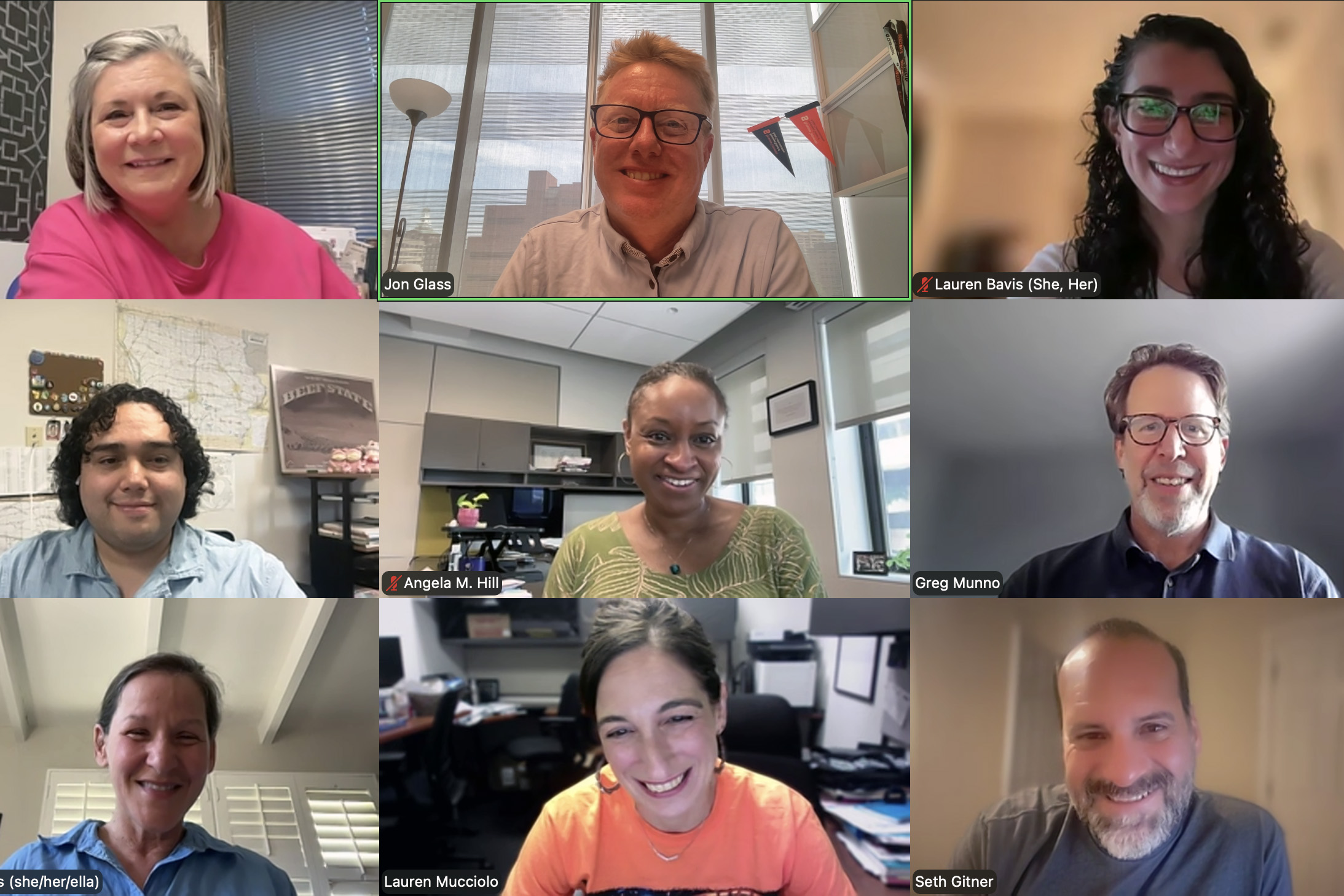
The project directors' final weekly Zoom meeting on June 11, 2026.
Arizona State University
- Mark Greenblatt, Executive Editor, Howard Center for Investigative Journalism
- Angela M. Hill, Ida B. Wells professor of practice of Investigative Journalism, Howard Center for Investigative Journalism
- Lauren Mucciolo, Executive Producer, Howard Center for Investigative Journalism
Northwestern University
- Kari Lydersen, associate professor
Syracuse University
- Lauren Bavis, professor of practice in Journalism
- Seth Gitner, associate professor in Journalism and Visual Communications
- Nausheen Husain, assistant professor in Journalism
- Jon Glass, professor of practice in Journalism and Newhouse School Executive Editor
- Greg Munno, associate professor in Journalism and Chair of magazine, news and digital journalism program
University of Florida
- Ted Bridis, senior lecturer in investigative reporting
- Gregg Birnbaum, adjunct journalism professor
University of Nebraska-Lincoln
- Chris Graves, associate professor of practice in Journalism and Deepe Family Chair in Depth Reporting
- Daniel Wheaton, UNL instructor and Senior Data Journalist for The Midwest Newsroom
- Linda White, assistant professor and Deepe Family Chair in Depth Reporting
University of Southern California
- Leslie Berestein Rojas, associate professor of professional practice of Journalism and Director of Audio News