


A race against the clock
Timing, dueling court systems and lack of legal help often creates confusion for immigrant youth.
Immigration Judge Matthew Morrissey moves quickly through his docket.
He calls a name, glances at a file and asks a question before setting another hearing date. Then another. And another.
Then, he calls the case of a 6-year-old girl, who sits at the front of the courtroom — her legs swinging beneath the chair and her feet not quite reaching the floor. She turns to wave at adults seated behind her, then she turns and faces forward again, waiting.
She is quiet as the hearing continues, likely oblivious to the fact that Morrissey’s decision may determine if she will face deportation or be allowed to stay in the U.S.
Morrissey must decide if the child qualifies for Special Immigrant Juvenile Status, which is one pathway to lawful permanent residency — more commonly known as getting a “green card” — for children who have been found to be abused, neglected or abandoned and are at risk in their home countries.
But, being granted the special status is complicated in a clogged court system where immigration rules and policies have changed under the Trump administration, meaning children can be stuck in limbo for years — sometimes even after they reach adulthood without clear legal status or the ability to legally work.
“A lot of kids don’t know this relief exists until it’s too late,” said Mary Choate, executive director of Nebraska’s Center for Legal Immigration Assistance.
Law meant to protect
Congress enacted Special Immigration Juvenile Status (SIJS) as part of the Immigration Act of 1990. It provides protection to undocumented or unauthorized children as one route to lawful permanent residence if they are under the custody and care of a state’s juvenile court because they have been abused, neglected or abandoned and can not be safely reunited with their parents.
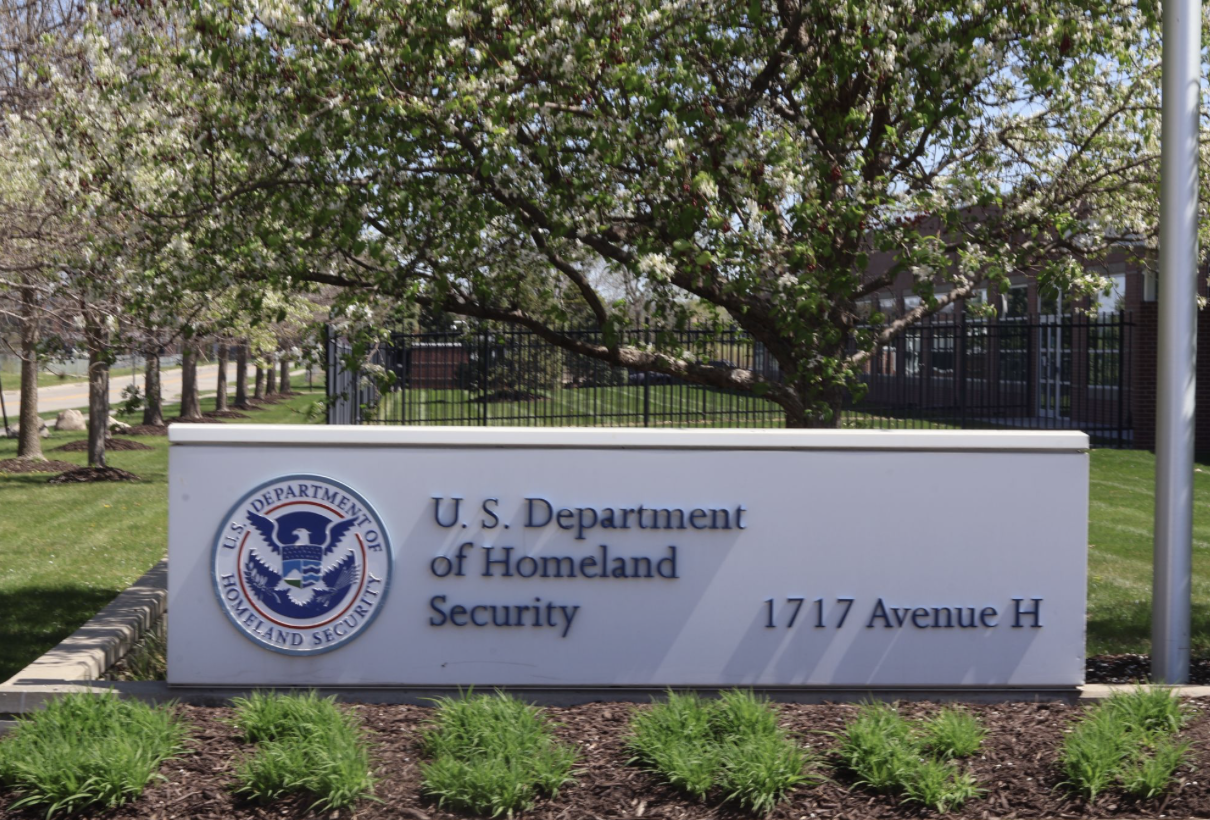
Photo by Izabell Escobar
A sign marks the U.S. Department of Homeland Security building in Omaha, Nebraska, on April 5, 2026. Federal agencies oversee immigration proceedings and applications, such as those for Special Immigrant Juvenile Status.
The process requires young people to move between state and federal immigration courts, often under tight deadlines and without guaranteed legal representation. It also depends on findings in two courts: State courts, where judges must issue findings about abuse, abandonment or neglect; and federal immigration courts, where judges decide whether a child can remain in the United States.
Youth must apply for the status before they turn 21. In most states, youth are considered adults in juvenile court when they are 18; in Nebraska, youth are considered adults at 19.
“We can’t do the state court findings ourselves,” Choate said. “We have to refer clients out to private attorneys to even begin that process.”
Choate said some young people are connected to services early in their cases, while others arrive much later.
And sometimes details such as a birthday, a filing date, a delayed hearing – or a human error – can determine if an immigrant youth qualifies for that status or misses out and faces deportation.
In one case in February, a 17-year-old girl approached such a deadline in Omaha’s Immigration Court. During a routine hearing, her attorney told the judge she might not have enough time to apply for SIJS before turning 18, as delays in scheduling could affect whether she could complete the required state court process.
“There is no automatic screening. It depends on whether someone tells them.”
– Ariel Magaña Linares, an immigration attorney
In another case that same week, a judge initially said a teenager was 18 when paperwork was filed, an error that would have made him ineligible. His attorney corrected the record. He had been 17.
When a young person ages out of the state court system, attorneys say consequences are immediate. Without a state court order, a youth cannot apply for SIJS, even if they would otherwise qualify under federal law. That can leave them with fewer legal options in immigration court and at greater risk of deportation.
In some cases, attorneys said, that window closes not because a young person is ineligible, but because no one initiates the process in time.
Choate described one case where an unaccompanied minor entered the United States at age 13 and lived with an older sibling for several years.
Although the child may have qualified for SIJS, no one sought the required state court findings.
By the time the family sought legal help, the child was nearing 19.
“There is no automatic screening,” said Ariel Magaña Linares, a senior attorney at the Nebraska Center for Immigrant and Refugee Advancement in Omaha, Nebraska. “It depends on whether someone tells them.”
Law meant to protect
Children typically enter immigration proceedings after being detained at the U.S. border and later released from federal custody, according to the Executive Office for Immigration Review.
Nationwide, more than 130,000 unaccompanied immigrant children were encountered at the U.S. border in fiscal year 2023, according to U.S. Customs and Border Protection data.
According to federal data from the Office of Refugee Resettlement, hundreds of unaccompanied children are released to a parent, relative or another approved guardian in Nebraska each year.
Like their adult counterparts, children are expected to appear in immigration court, often months after their release, according to the Executive Office for Immigration Review.
Nationally, recent data show that more than 500,000 children are facing pending deportation cases in U.S. immigration courts, part of a broader backlog of about 3.3 million cases, according to data from the Transactional Records Access Clearinghouse (TRAC), a research center at Syracuse University that tracks immigration court cases.
Cases begin with master calendar hearings, which are short procedural hearings where judges confirm basic information and schedule future court dates. Dozens of cases are often handled in one session.
Immigration courts, which are administrative and not criminal or civil, are not required to provide lawyers to migrants. As of February 2026, about 46% of juveniles in Omaha’s immigration court lack legal representation, according to TRAC data.
Without an attorney, children are expected to navigate a complex legal system on their own, including filing applications, meeting deadlines and identifying forms of relief such as SIJS. Attorneys say that many children who are eligible for protection never apply simply because they do not know it exists or do not understand the steps required to pursue it.
For children, lawyers and advocates said, the process can be especially difficult to understand.
“Trauma impacts your ability to understand what’s happening,” said Anne Wurth, associate legal director at the Center for Immigrant and Refugee Advancement, based in Omaha, Nebraska. “And it’s not easy for anyone to navigate the immigration system, especially when they’re not represented by counsel.”
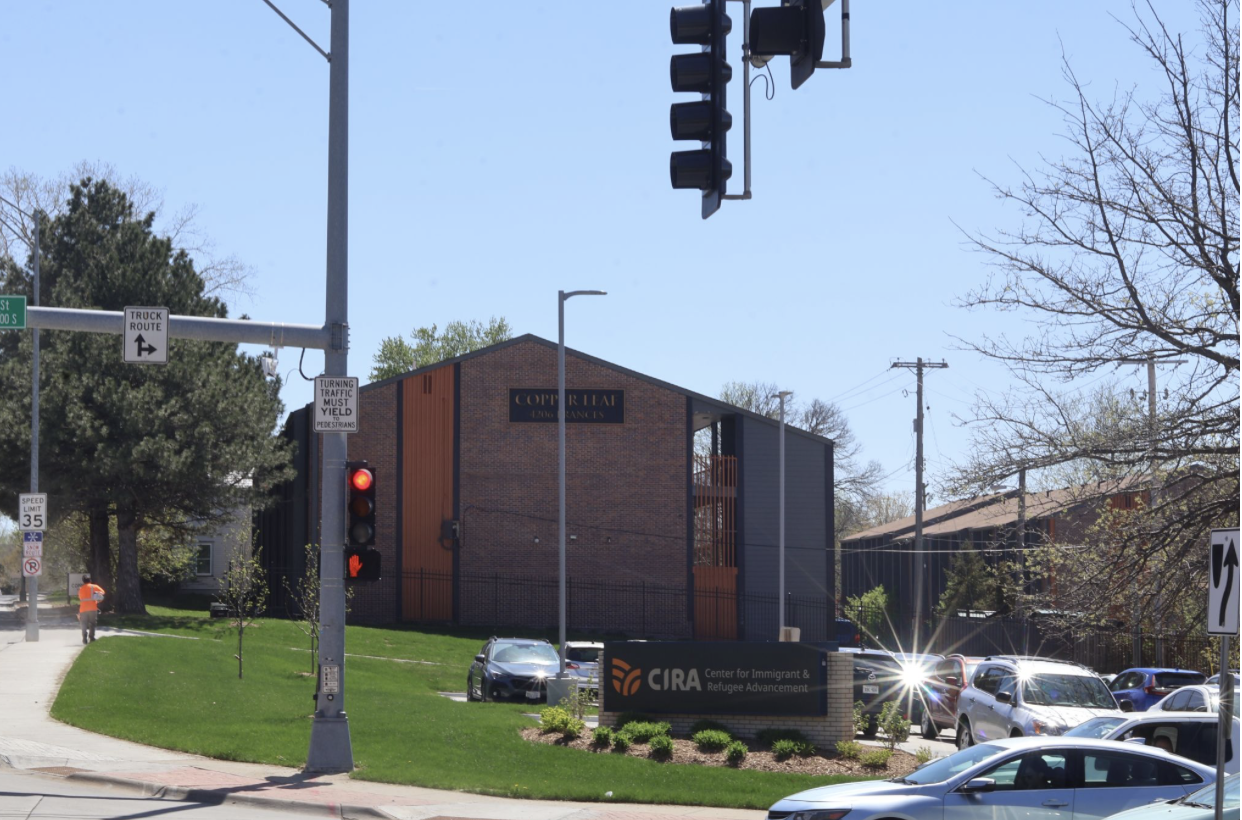
Photo by Izabell Escobar
The Center for Immigrant and Refugee Advancement office, 4223 Center St., Omaha, Nebraska, is shown on April 4, 2026. Organizations like CIRA help connect immigrant youth with legal services as they navigate complex immigration proceedings.
Visa backlogs, mean long waits with no guarantees
Obtaining SIJS does not automatically trigger lawful residency. Youth need to apply for a visa, which can take years because the government caps the number of visas available annually.
The visas fall under the employment-based category, which includes Special Immigrant Juvenile Status. Each year, about 7% of employment-based visas are allocated to that category. More youth are approved for SIJS than visas are available.
“It’s not easy for anyone to navigate the immigration system, especially when they’re not represented by counsel.”
– Anne Wurth, associate legal director at the Center for Immigrant and Refugee Advancement
The visa bulletin, which tracks that wait time, “is a document that’s released by the government every month that has updated dates on which categories of individuals can access their visas,” said Wurth, the associate legal director at the Center for Immigrant and Refugee Advancement.
“They’re basically put into a line,” said Joshua Waltjer, an associate attorney at Kendall, Crawford and Reeker who specializes in immigration law. “You’re not guaranteed any status at that point, you just have the approval.”
As they wait, young people often transition into adulthood while still in legal limbo.
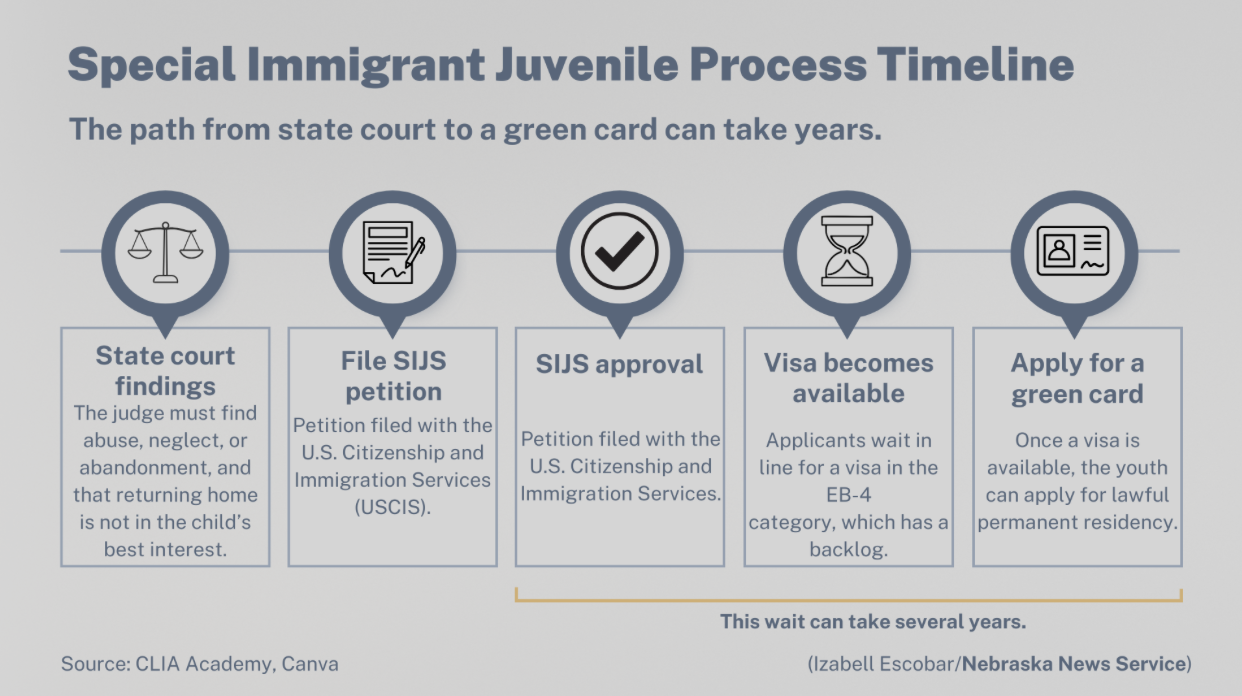
Photo by Izabell Escobar
A visualization showcasing the path from state court to a green card.
They may graduate from high school, begin working informally or try to support family members, all while waiting for a visa to become available and often without a clear timeline for when their case will be resolved. And they can be subject to removal proceedings.
“We have some kids who got the approval, but there’s really nothing we can do with it right now. They’re just waiting in court for their next hearings,’’ Waltjer said.
He said attorneys often ask immigration judges for more time, but there are no guarantees.
“You can’t promise anything,” Waltjer said. “There’s no way to predict when that line is going to move.”
Policy changes impact protections
Since 2022 and under a Biden-era policy,, many SIJS recipients received deferred action during this period, allowing them to legally remain in the U.S. and apply for legal work authorization while they waited for their visa to become available.
In 2025, the Trump administration halted the protection, which sparked a lawsuit and a series of subsequent court findings. The current administration argued that being approved for SIJS or having unavailable visas does not inherently provide legal grounds for deferred action or work permits. They argued the policy was an unauthorized expansion.
U.S. Citizenship and Immigration Services ended its policy of automatically protecting young immigrants from deportation while they wait for a visa. Starting May 10, having special immigration status no longer guarantees that protection.
“The longer that you’re here without the ability to get a green card, there’s risk. You’re left in a country where you can’t get legal status, but you also can’t work legally,’’ Waltjer said. “They could theoretically have an approved SIJS petition and still be removed from the United States.”
In addition, attorneys said recent changes in immigration court procedures can affect whether their young clients are able to remain in the country long enough to benefit from that protection.
Dylan Severino, an immigration attorney with the Center for Immigrant and Refugee Advancement, said immigration judges have historically allowed cases to be continued while young people wait for visas.
But recent decisions from the federal Board of Immigration Appeals have made those continuances harder to obtain.
“If they can’t continue the case, it means an order of deportation,” he said.
Burke Brown, an attorney with Polaris Law Group, said the change has affected how immigration courts evaluate these cases.
“Now they’re saying any relief under SIJS is speculative,” he said. “There’s no direct path out of removal proceedings.”
Wurth said attorneys can request time from judges while awaiting visas, but that has become harder.
“As things become more restrictive, that feels like a harder and harder thing to ask for,” she said.
Waltjer was more blunt:
“It used to be closer to a clear path,’’ he said. “Now, there are a lot more question marks.”
Note: Nebraska News Service is not using the full names of juveniles and their families to protect their privacy and not jeopardize pending court cases or asylum claims.

A digital journalist from Omaha, Nebraska.
More from On The Docket
Bonds without bounds
Story by Mia Osmonbekov

What is a habeas corpus petition?
Story by Laura Robertson & Mikayla Melo
Behind the Docket
Story by Project Staff
Chicago’s immigration attorneys adjust to Trump’s policy changes
Story by Madison Roth
Chaos and confusion inside Omaha’s Immigration Court
Story by Justin Diep
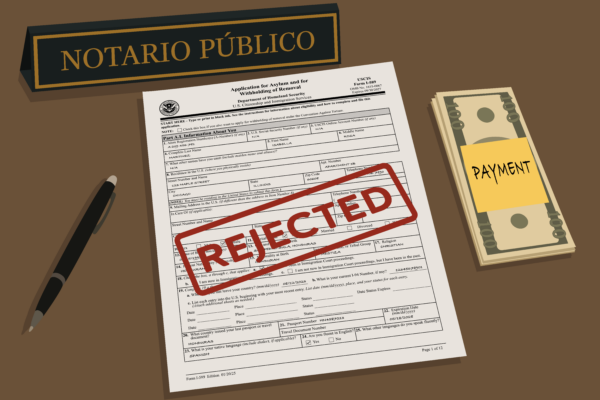
Notario fraud persists in Chicago as the Trump Administration toys with immigration courts
Story by Vani Subramony Graphics by Jesse Renee Kennedy