


Immigration courts under pressure
Attorneys and former judges say Trump administration policies aimed at efficiency risk limiting fairness.
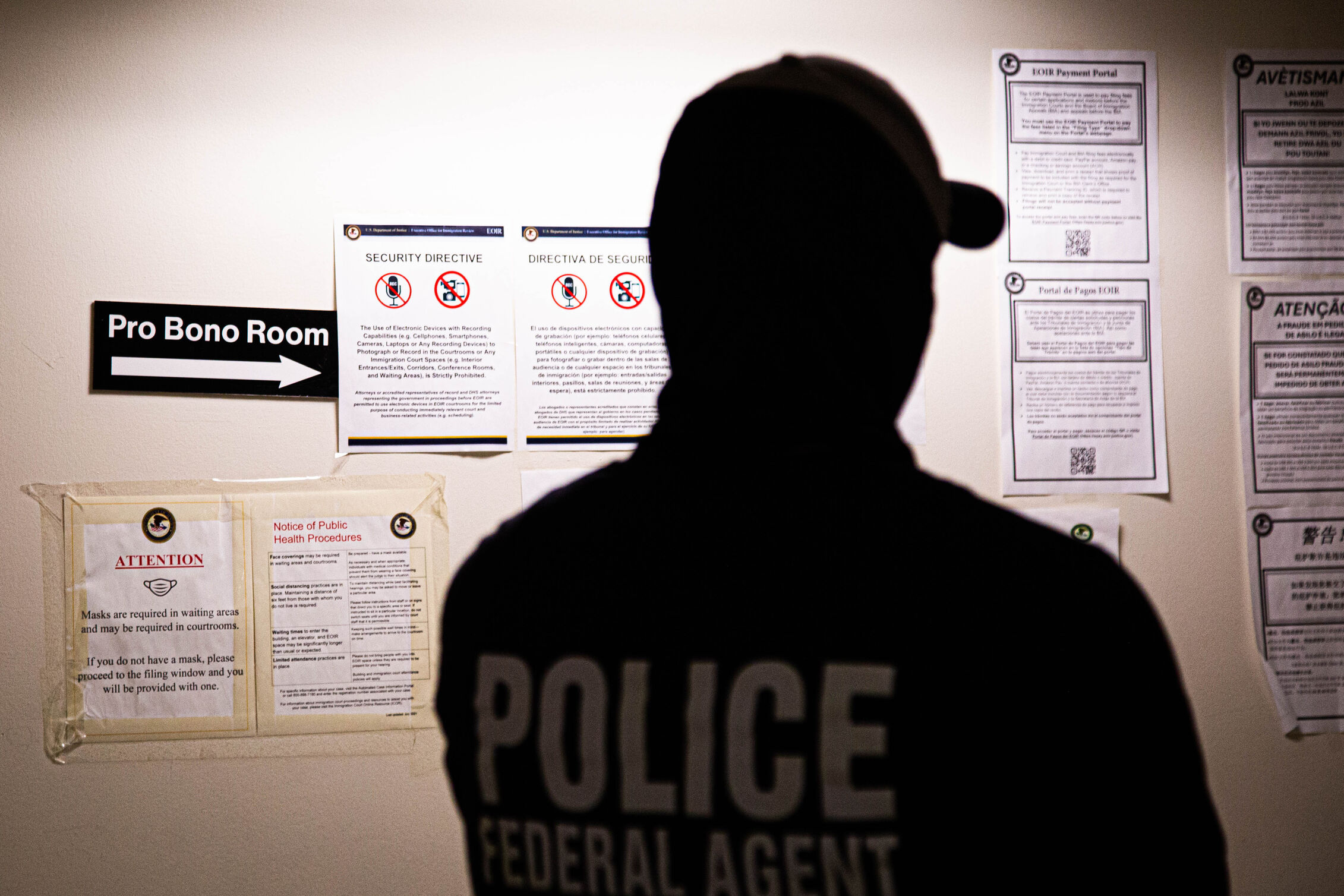
Immigration attorneys and former judges say a series of Trump administration policy changes is pressuring a backlogged immigration court system to move cases faster — sometimes at the expense of fairness and full review.
Immigration attorney Pattilyn Bermúdez Solano believed she had the law on her side heading into an Eloy immigration court hearing in March, but she said she quickly learned the judge was not interested in hearing the merits of her argument.
“It appeared that he already had his mind set of how he was going to deal with the case,” Bermúdez Solano said of the judge, who she said claimed he did not have jurisdiction to hold a hearing on whether to release her client on bond.
Bermúdez Solano argued her client was eligible for bond and cited a federal statute she said clearly gave the judge authority to hold the hearing and potentially grant release.
The judge sat for a moment, she said, telling the courtroom to wait while he fact-checked what Bermúdez Solano had told him.
He stared at his computer before saying, according to Bermúdez Solano, “She’s right.” But the judge still denied her client bond.
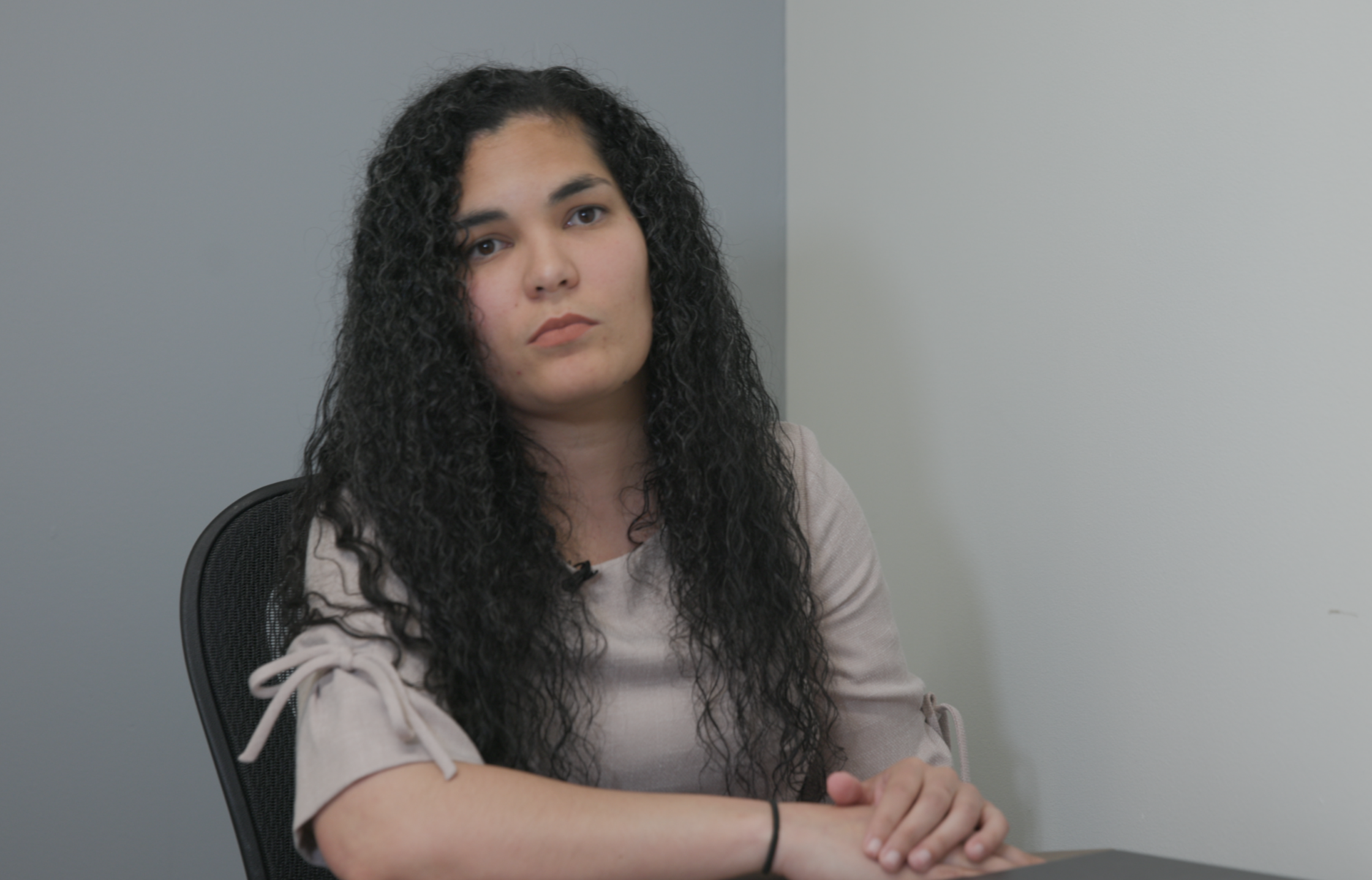
Photo by Lavanya Paliwal
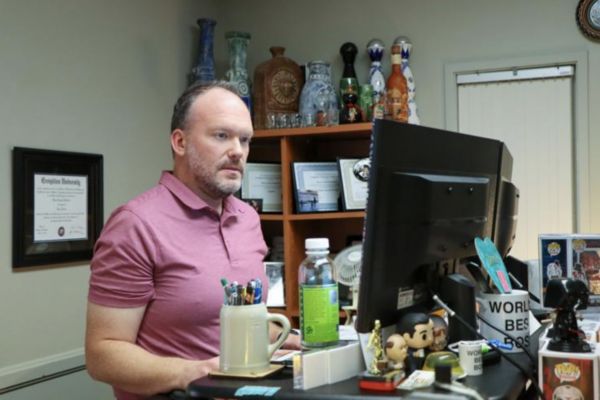
Immigration attorney Pattilyn B. Bermúdez Solano speaks with ASU’s Howard Center reporters on March 3, 2026 in her office in Scottsdale, Arizona.
What Bermúdez Solano experienced reflects what immigration attorneys, former judges and advocates say they are increasingly dealing with in U.S. immigration courts. The second Trump administration has doubled down on policy changes intended to force cases to move quickly, they said, issuing a series of new directives to immigration judges that often emphasize efficiency without mentioning fairness. Dating back to Trump’s first term, the U.S. Department of Justice has used performance evaluations that only allow judges who meet certain case-processing quotas to qualify for the highest ratings. In 2025 and 2026, the Justice Department went further, issuing several policy changes, including:
- April 2025 guidance from the Executive Office for Immigration Review that allows immigration judges to dismiss insufficient asylum applications without a hearing, unless there is a factual dispute.
- A February 2026 attempt by the administration to cut many immigration appeal deadlines from 30 days to 10 days.
- An April 2026 precedential decision in which the Board of Immigration Appeals said testimony alone may be insufficient to prove hardship based on medical or mental health conditions when records or expert evidence could reasonably be provided.
These policy changes have faced opposition, in some instances, efforts to reverse the Trump administration’s updates have been successful. In February 2026, the Amica Center for Immigrant Rights sued the Executive Office for Immigration Review, arguing the accelerated appeal deadlines were unlawful and unfair. For instance, the center said the 30-day-to-10-day rule change created a sped-up hearing process that left little to no time for proper preparation between an attorney and client.
The center also alleged in the court filing that the Executive Office for Immigration Review failed to put the rule in the Federal Register for public comment before issuing updated procedures.
U.S. District Judge Randolph Moss, who presided over the lawsuit in the District of Columbia, found that the administration failed to comply with public comment requirements, writing in his ruling, “Issues that are so fundamental to the rights of tens of thousands of individuals (and that will guide how organizations and lawyers present their claims to the BIA) ought to be considered and addressed before—rather than after—a rule takes effect.”
The ruling blocked the Trump administration from implementing its plan to cut deadlines from 30 days to 10 days.
The Executive Office for Immigration Review and the Amica Center for Immigrant Rights did not respond to emails requesting comment on the lawsuit.
While the lawsuit succeeded in blocking portions of the rule, many policies remain in place, including the dismissal of asylum applications without a full hearing and the policy limiting the use of testimony about mental health as a defense in an immigration court proceeding.
Attorney burnout
Many immigrants in detention appear in court without legal representation, leaving nonprofit and pro bono attorneys to fill major gaps. The rapid pace at which the Trump administration is pushing the immigration court system to move, however, is causing burnout for many of these attorneys.
Madison Koenig, a New York-based staff attorney in The Legal Aid Society’s immigration law unit, often finds herself swamped by the workload and struggling to keep up.
She began working in The Legal Aid Society’s detained practice in 2021, where she worked only with clients in detention. Many of these clients had just arrived in the U.S. and had no family nearby to visit. For these clients, Koenig said she served as their only connection to the outside world, which made the work particularly exhausting.
“It’s really challenging to work with people who are generally in immigration proceedings and who are so afraid of dealing with so much,” Koenig said. “But it is even more challenging when people are in detention or experiencing the particular challenges of detention.”
For the four years Koenig served in the department, she said that she always stayed relatively busy. But 2025 felt “nonstop.”
“Even when you’re working within the constraints of the detained system, you’re still held to the same standards that a case that’s non-detained is held to,” Koenig said. “You’re still expected to have witnesses, you’re still expected to have documents and evidence, and the judges are not very sympathetic to the explanation of why that’s really hard to do when somebody’s in jail and can’t get anything.”
Koenig said she left the detention unit in January 2026 because of burnout.
More pressure on immigration judges
For Andrew “Art” Arthur at the Center for Immigration Studies, a “low immigration, pro-immigrant” nonprofit organization based in Washington, D.C., the benefits of a sped-up immigration system outweigh any potential drawbacks.
“In the case of an alien facing deportation, every delay works to that alien’s advantage,” Arthur said. “What the board is [trying] to do is to take away incentives to file weak or frivolous appeals in order to get the case to a decision.”
Appointed during the Bush Administration, Arthur served as an immigration judge in Pennsylvania from 2006 to 2015.
“It’s really challenging to work with people who are generally in immigration proceedings and who are so afraid of dealing with so much. But it is even more challenging when people are in detention or experiencing the particular challenges of detention.”
– Madison Koenig, New York-based staff attorney
Policies designed to speed up and increase the volume of immigration cases are not new to the second Trump administration. Many such policies were issued at the start of Trump’s first term in 2017 and later retracted during the Biden administration.
Retired immigration judge John Richardson said these policy changes from the Trump administration ultimately led to his retirement in 2018.
Before the first Trump Administration, Richardson said that his role as an immigration judge was almost entirely independent. “I called each case as he saw it,” he said. For him, the ability to use his own discretion was important, stating that after each day, he would go home and “could sleep well at night.”
Richardson said that after President Donald Trump took office, he started to lose his independence.
With immigration judges already under pressure, a Trump-era policy measured satisfactory performance by speed and volume, including a benchmark of 700 completed cases a year. The Accountability for Organizational Results metric was presented to immigration judges as a measure to ensure satisfactory performance.
The increased workload and decreased judicial autonomy led Richardson to retire in September 2018, a day before the 700-case quota was implemented.
A year later, Las Americas Immigrant Advocacy Center and other plaintiffs sued the Trump administration over its new immigration judge performance metrics, which tied satisfactory performance in part to completing 700 cases a year and making sure higher courts did not send back 15% or more of their decisions. In their complaint, the plaintiffs argued the policy undermined judicial impartiality and wrote that the government had created “an adjudication system where applicants for asylum are supposed to lose.”
When Joe Biden took office as president in 2021, the 700-case quota was removed.
After a full day in court, immigration attorney Bermúdez Solano said she often feels exhausted.
“I have been getting a lot of gray hair in the past few months, and I’m only 31,” Bermúdez Solano said.
But she said her fatigue is outweighed by empathy for clients who feel voiceless. Some days, Bermúdez Solano said, she wants to cry, or she feels like all she can do is give up. But quitting, she said, is not an option.
“I always say, ‘If I give up, and the attorney next to me gives up, and the other one and the other one, who’s going to fight the fight?”
Note: This project was produced by the Howard Center for Investigative Journalism, based at Arizona State University’s Walter Cronkite School of Journalism and Mass Communication. The Howard Center is an initiative of the Scripps Howard Fund in honor of the late news industry executive and pioneer Roy W. Howard.
Contact us at howardcenter@asu.edu, visit us at https://howardcenter.asu.edu/ and follow us on X and Instagram @HowardCenterASU.

A digital journalist from Holton, Kansas.

A visual journalist from Syracuse, New York.
More from On The Docket

Notario fraud persists in Chicago as the Trump Administration toys with immigration courts
Story by Vani Subramony Graphics by Jesse Renee Kennedy
Bonds without bounds
Story by Mia Osmonbekov
Fighting for immigrants amid policy shifts
Story by Grace Lewis
Chaos and confusion inside Omaha’s Immigration Court
Story by Justin Diep

Closed door justice
Story by Suzgo Chitete