


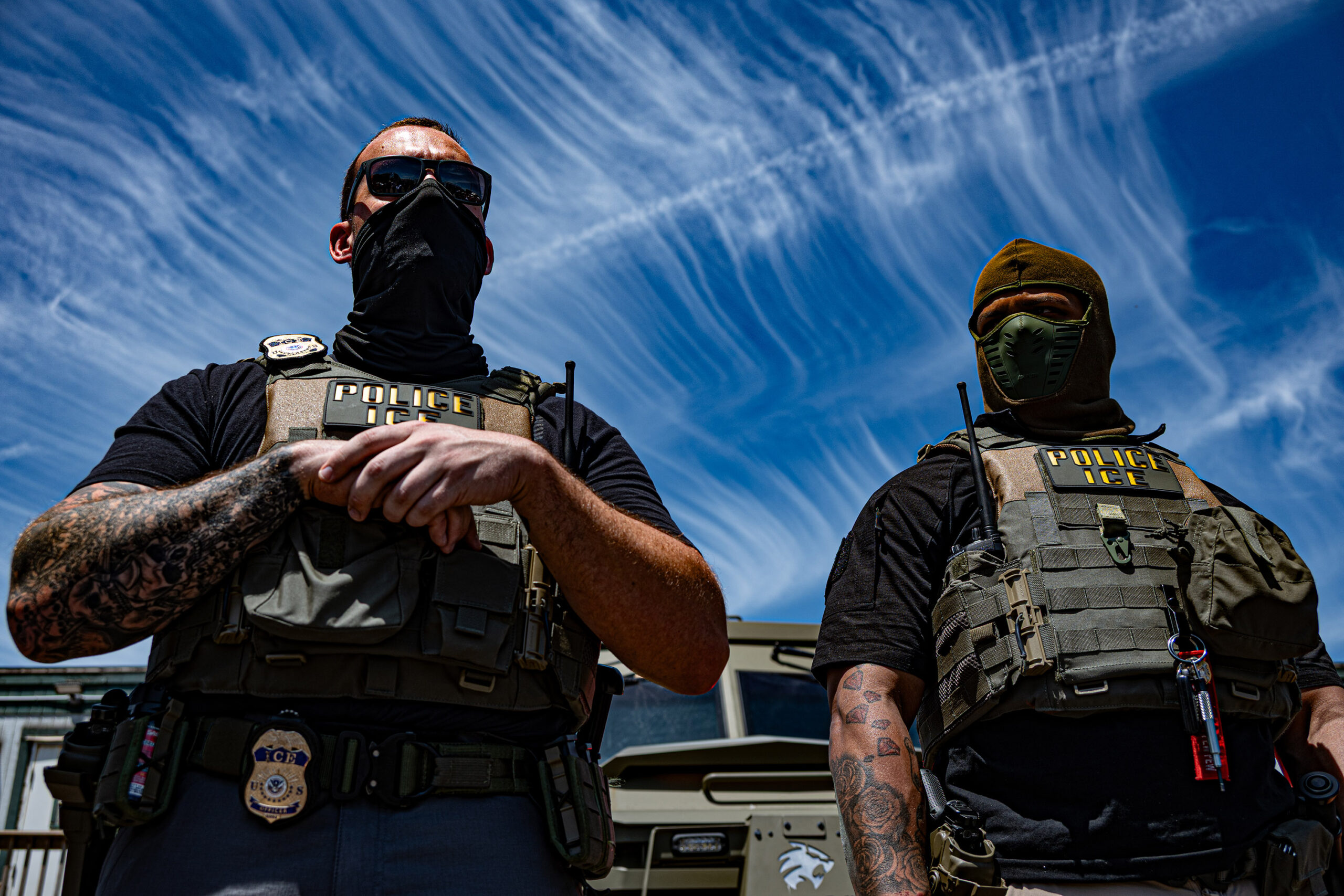
ICE’s historic expansion began after 9/11
The 9/11 attacks preceded the signing of the Homeland Security Act in 2002, which led to the creation of ICE. Now, it’s the highest-funded law enforcement agency in U.S. history.
Almost 25 years ago, President George W. Bush signed the Homeland Security Act of 2002 in a direct response to 9/11 — the deadliest terrorist attack on United States soil. The act spurred a major overhaul of the federal government, creating new organizations such as the Department of Homeland Security and Immigration and Customs Enforcement, commonly known as ICE.
Almost immediately, immigrants and foreigners in the United States paid the price for the attacks. An FBI-led investigation into the attacks rounded up 1,200 people, mostly Arab, Muslim and South Asian immigrants, and detained them for weeks or months until they were “cleared” of terrorism links by the FBI. According to a 2003 OIG report, “detainees and their attorneys alleged that the detainees were not informed of the charges against them for extended periods of time; were not permitted contact with attorneys, their families and embassy officials; remained in detention even though they had no involvement in terrorism; or were physically abused, verbally abused and mistreated in other ways while detained.”
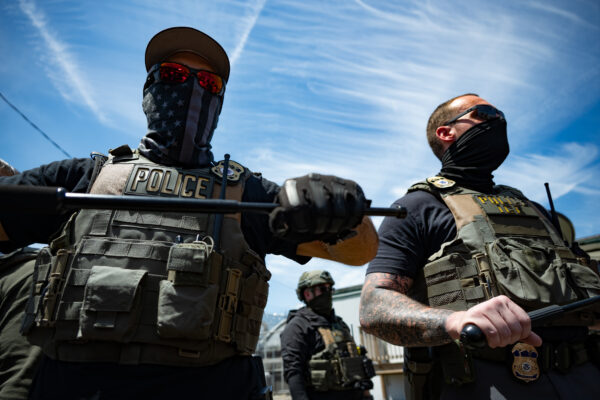
Today, critics say this is standard treatment of detained individuals under a rogue ICE. ICE agents have killed innocent civilians, sprayed tear gas on nonviolent protestors and broken into homes, all under protection from the federal government. Agents have ignored people’s special visas or other similar protections, deporting them anyway.
In 2025 alone, ICE deported more than 675,000 people, and more than two million people self-deported, according to a January 2026 DHS press release. The Trump administration has deemed it a success, despite the public outcry.
“They’ve basically created this agency that seems to answer exclusively to the federal government and to the Department of Homeland Security, and not particularly to the local law,” said Philip Kasinitz, a CUNY Graduate Center sociology professor specializing in immigration.
Over the past two decades, ICE has become the highest-funded law enforcement agency in U.S. history. In fiscal year 2025, ICE was granted additional funding from the “One Big Beautiful Bill” that inflated its yearly budget to more than $80 billion. The agency’s budget had not exceeded $10 billion since before 2024.
In addition to ICE’s recent rise, the United States’ post-9/11 era brought federal policies that target foreigners, particularly Muslims and Arabs. Kasinitz said he doesn’t think the 9/11 attacks vastly changed domestic immigration reform efforts, but that the terrorist attack “accelerated a trend” for more ruthless enforcement strategies.
The aftermath of 9/11, however, brought fundamental changes to how the U.S. reframed immigration as a matter of national security, treating migrants as possible threats rather than people who were navigating a civil legal process. DHS’ creation opened the door to mass detentions of asylum seekers, deportations that tore communities apart and major investments into private detention complexes — policies which increased the exclusion of foreign nationals.
Those strategies are currently on full display in 2026, and backed by a historically well-funded federal agency.
ICE’s annual funding increased dramatically at a mostly consistent rate from 2006 to 2021. In those 15 years, the agency’s yearly spending rose from just over $19 million to more than $20.8 billion, which is greater than the GDP of 86 countries worldwide.
Even from 2020 to 2021, ICE spending grew by around $18 billion. Additional federal spending and detention contracts show that immigration spending shifted to private companies or contractors to perform the necessary services rather than purely internal government staffers.
Today, the ICE budget has surpassed $80 billion.
Pace University immigration law professor Amelia Wilson called the costs outrageous.
“It’s the cost of overhead for detention centers, it’s paying the immigration judges that have to deal with their cases, paying the ICE officers a salary, paying for all their enormous bazookas that they carry around, their high-tech equipment, their infrared goggles,” Wilson said. “Can you imagine what we would be able to do with that money in other ways to improve people’s lives rather than ruin them?”
Detention as an intentional strategy
In her own practice, Wilson has seen wretched examples of ICE tearing families apart. She’s represented clients who were in families where the breadwinner had been taken away by immigration agents, leaving them at a struggle to make ends meet.
“If you take one person away from a family, especially if that person is the main breadwinner, for months on end, I saw the catastrophic impact it would have on the lives of my clients,” Wilson said.
She also feels that during this heavy increase of deportations, the conditions the federal government is putting immigrants in is unacceptable. Wilson said that in many cases, those captured by ICE are unable to get a lawyer and, therefore, don’t receive protection for immigration cases they could otherwise win. Wilson believes it’s an intentional strategy to use more resources on detention, putting too many people behind bars for lawyers to be able to represent.
“To cite the most obvious example, and this predates Trump 2.0, but the use of detention as an enforcement tool is a problem,” Wilson said. “More and more people being detained for longer times, in further areas away from metropolitan regions where it’s harder to gain access to counsel, the conditions have become harsher and harsher.”
An aggressive post-9/11 enforcement agenda
Kasinitz, a former member of the Social Science Research Council’s Committee that studied 9/11’s social effects in New York City, said that 9/11 is not solely responsible for shifts in the public perception of immigrants. However, he sees danger in an unintended consequence of 9/11 — the federal government funding ICE’s aggressive enforcement agenda, while ignoring customs entirely.
“If you take one person away from a family, especially if that person is the main breadwinner, for months on end, I saw the catastrophic impact it would have on the lives of my clients."
– Amelia Wilson, Pace University immigration law professor
“All the action now is on the immigration side,” Kasinitz said. “They’re virtually not doing customs enforcement anymore.”
After 9/11, the U.S. government increasingly targeted immigrants through policy. In 2002, the Department of Justice instituted the controversial National Security Entry-Exit Registration System (NSEERS). This program established registration requirements for non-citizen males aged 16 and over, including visitors, students, green card holders and asylum seekers.
NSEERS required immigrant men from 25 countries — which almost entirely consisted of nations from the Middle East, North Africa and South Asia — to register with the federal government. No terrorists were found but hundreds of people who had overstayed their visas by less than a month were detained.
The United States also ran a mass surveillance project several years after 9/11 that targeted mosques around the country, which included a secret unit led by the NYPD. The NYPD never generated a lead or triggered an investigation in more than six years of spying on and cataloguing local Muslim-dominated institutions.
A recent Costs Of War report by law professor Elizabeth Beavers identifies five immigration precedents set by post-9/11 policies: the conflation of immigration enforcement and counterterrorism, expanded “terrorist” designation lists, deporting people as “terrorists” without proving any violent acts, indefinite detention and torture of noncitizens and a sharp increase in executive national security powers.
“While the Trump administration is intensifying and stretching the law in novel ways,” wrote Beavers, “it is also following a familiar post-9/11 legal formula.”

A digital journalist from Naperville, Illinois.

A digital journalist from Belchertown, Massachusetts.

A digital journalist from Yucatán, México.

A visual journalist from Syracuse, New York.
More from Enforcement
ICE expansion after 9/11 attacks
Story by Cooper Andrews & Jack DiNapoli & Patricia Diaz Photos by Ike Wood
DHS after a turbulent and deadly year
Story by Gian Marco Velásquez Photos by Ike Wood
Built in a flash: New satellite imagery shows rapid construction of “Alligator Alcatraz”
Story by Kairi Lowery

ICE split her family apart
Story by Elany Romero Cruz & Megan Ebken Photos by Ella Chan

Protests, clashes and home raids in Minneapolis
Photos by Ike Wood
N.J. protests meet tear gas as hunger strike ensues
Photos by Ike Wood