


Farmer uncertainty
New immigration policy changes disrupt agricultural workforce.
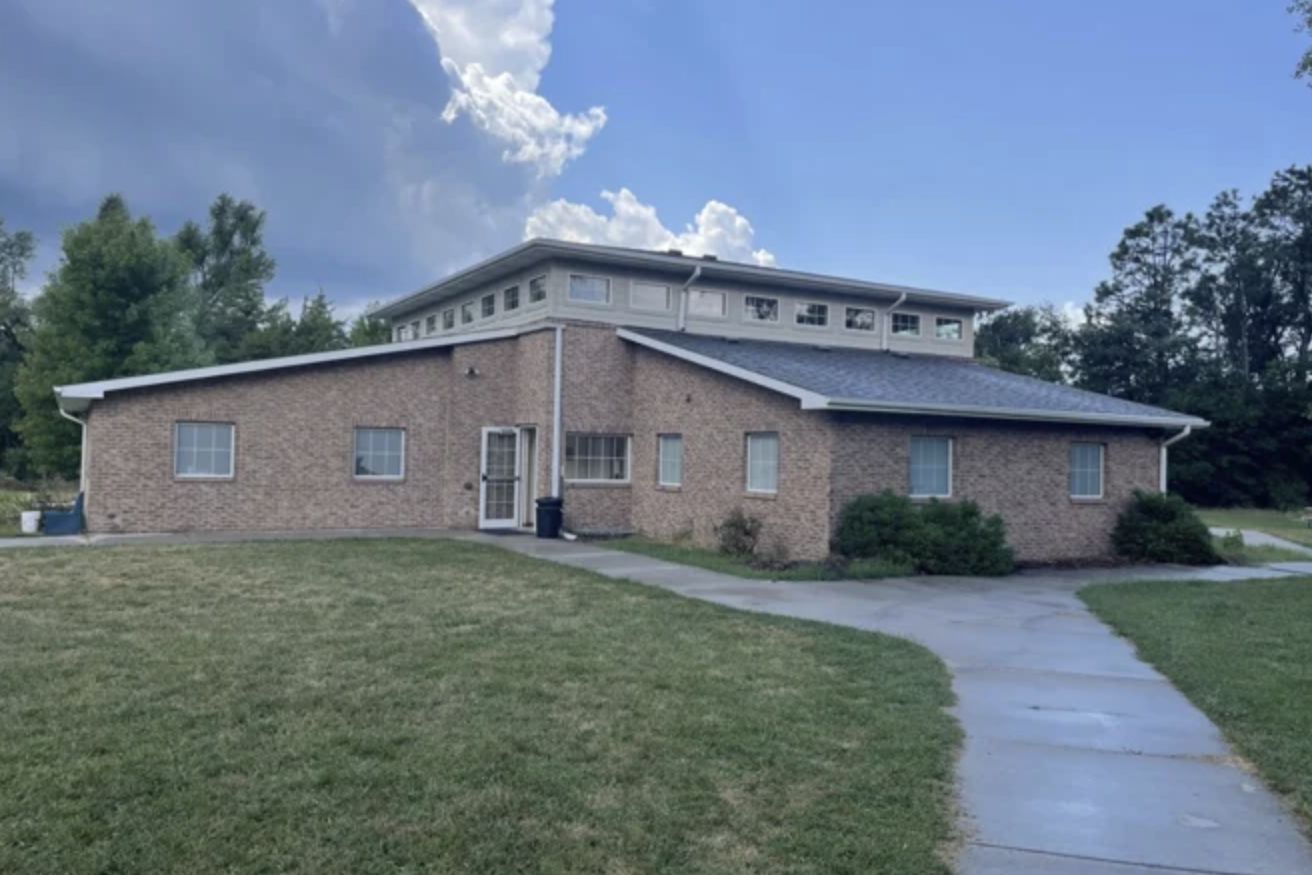
Walking through the halls of the abandoned EpWorth Village four years ago, Frank Sandall couldn’t help but see an opportunity.
Despite the barren building walls and overgrown yard, Sandall knew he wanted to turn the old orphanage in rural York, Nebraska, into dormitory-style housing for temporary workers.
Sandall’s vision became a reality when he did just that. In 2022, he bought EpWorth and turned it into EpWorks Workforce Housing. The facility now houses nearly 200 migrant workers who come to central Nebraska year-round for agricultural work, including corn de-tasseling, seed planting and other manual labor.
“I have a fundamental belief because of my experience with that workforce that everybody deserves safe, affordable, dependable housing,” Sandall said.
Yet the dependability Sandall has built stands in stark contrast to the uncertainty migrant workers now face. Shifting immigration policies, new enforcement priorities and a number of lawsuits have created chaos for a workforce that Nebraska’s agricultural economy depends on, turning places like EpWorks into rare instances of predictability in an increasingly turbulent landscape.
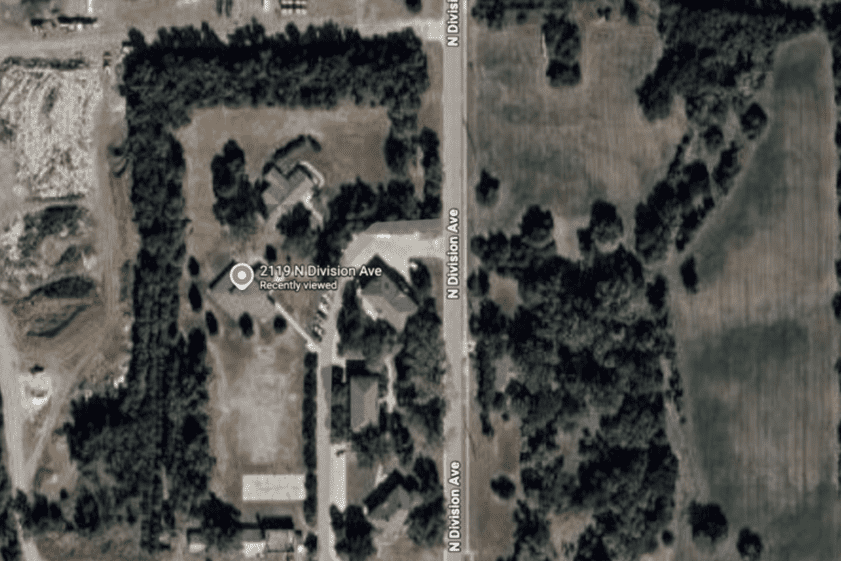
Photo by Nebraska News Service
There are nine buildings on 14 acres of land that house seasonal workers on the Google Maps aerial view.
Migrant housing
After working his career overseeing the agricultural and operational divisions of Advance Services Inc., alongside migrant workers and native Nebraskans, Sandall considers York to be the “seed capital of the country,” with temporary workers moving in and out of the state in need of a place to stay.
At EpWorks Workforce Housing, 2119 N. Division Ave., these workers — half from outside the U.S. — live temporarily while working for local employers. These workers, who enter the U.S. legally on H-2A temporary visas, send most of their earnings home to support their families.
“They want to work. They want to make money.”
– Frank Sandall, EpWorks owner
Agriculture is Nebraska’s leading industry, pumping $25 billion into the state’s economy annually, according to the Institute of Agriculture and Natural Resources at the University of Nebraska-Lincoln. Farmers and ranchers depend on migrant workers to seed, weed, harvest and work most of the 48,000 farms and ranches spread across nearly 45 million acres in the state. Farms and ranches use 92% of Nebraska’s total land area, and one in four jobs in the state are related to agriculture, according to the Nebraska Department of Agriculture.
Without seasonal workers, farmers and ranchers across the nation — and Nebraska — would witness a spike in production costs, causing significant crop and revenue losses and driving up food prices for consumers, according to Department of Agriculture data.
“They want to work,” Sandall said about H-2A workers. “They want to make money.”
On the first day of Donald Trump’s second term, the president signed an order titled “Protecting the American People Against Invasion,” in which he outlined several policies targeting American immigrants.
Since then, heightened immigration enforcement and policy changes have created confusion and instability among workers and for the farmers who employ them, said Ryan Pekarek, a farmer from Dwight, roughly 33 miles northwest of Lincoln.
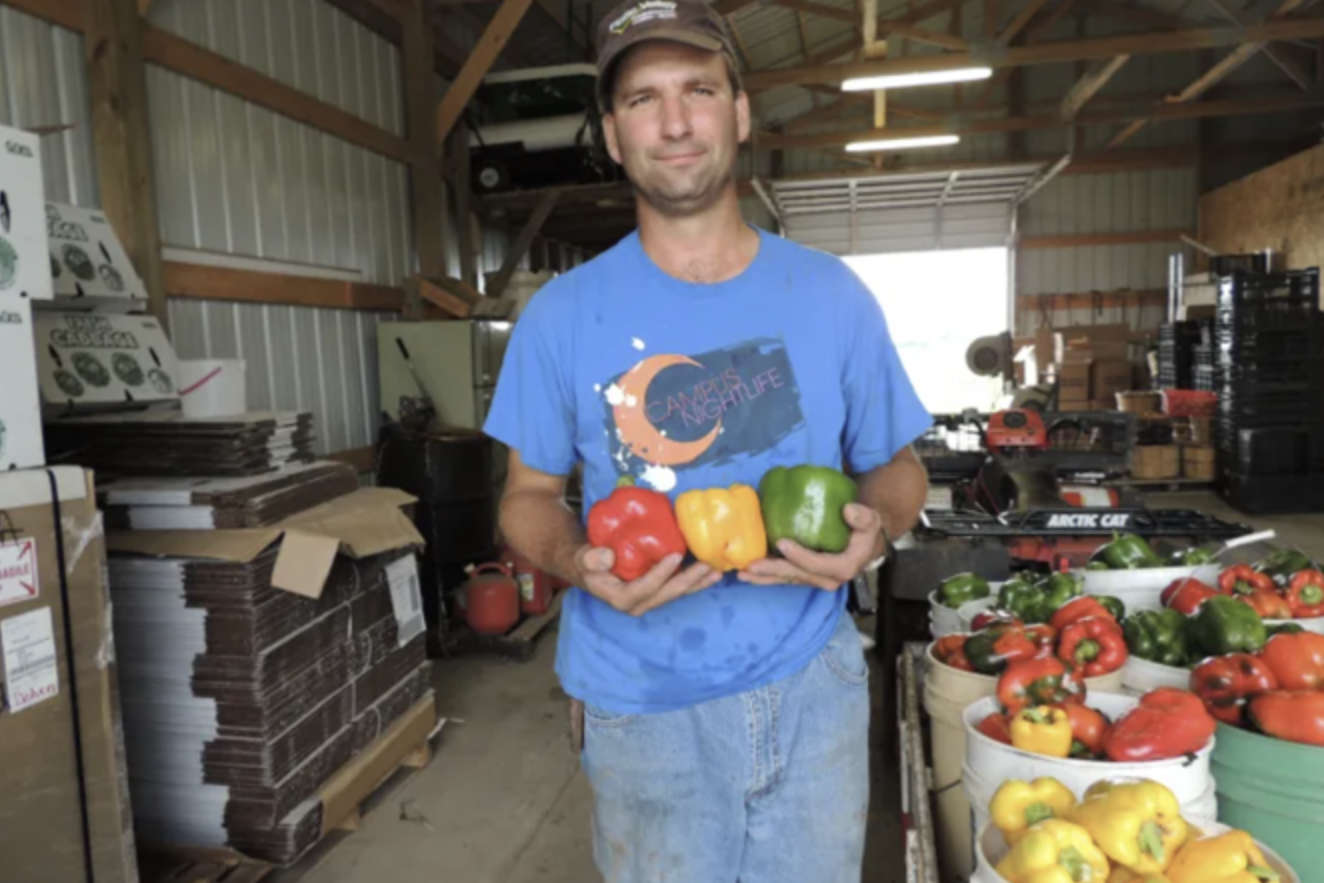
Photo by Ryan Pekarek
Ryan Pekarek holds three bell peppers he grew on his farm in Dwight, Nebraska.
Pekarek hires three men from Mexico using H-2A visas each year from May to mid-November, he said.
Pekarek’s Produce isn’t big enough to hire year-round employees, he said, but his company outgrew part-time high school workers, so he decided to turn to H-2A workers.
“We’re probably twice the size with these guys that we would be without, acres and dollars-wise,” Pekarek said.
The path to H-2A visas
To secure an H-2A visa, a potential employer must first submit a temporary labor certification application to the Department of Labor at least 21 days before workers are needed after filing a job order with their state workforce agency 60 to 75 days in advance, according to Erick Carrillo, reemployment services director from the Nebraska Department of Labor.
Once the Labor Department approves the certification, employers file Form I-129, which allows employers to request migrant workers, with U.S. Citizenship and Immigration Services. After USCIS approval, prospective workers outside the United States must apply for an H-2A visa with the State Department, completing a form and attending a consular interview. This is a process that can take many months according to Carrillo.
Unlike other guest worker programs, there is no cap on the number of H-2A visas allocated each year, according to program regulations. In Nebraska, hundreds of these visa holders arrive annually to work the fields, a number that increases each year, according to USCIS data.
Pekarek and Carrillo said it is increasingly difficult to find domestic workers to apply for open positions.
“The stuff these guys are doing is generally a young man’s game, so there’s not people in this country that are going to do this work,” Pekarek said.
Since 2015, the U.S. government has only denied six Nebraska employers from getting H-2A visas, according to the USCIS H-2A Employer Data Hub. All six employers work in the agriculture industry. Two of the six denials were in for 2025.
However, both employers had H-2A approvals alongside these denials.
Of employers who apply for H-2A visas, at least 87.9% are considered to be within the agriculture, forestry, fishing and hunting industry.
“The stuff these guys are doing is generally a young man’s game, so there’s not people in this country that are going to do this work,”
– Ryan Pekarek, farmer
Changing policy creates confusion
On Sept. 18, the Trump administration made it easier for H-2A workers to receive and renew visas.
Two weeks later, on Oct. 2, the U.S. Department of Labor implemented sweeping changes to how wages are calculated for temporary agricultural workers and suspended protections created to prevent abusive practices by employers.
The new rule establishes a two-tier wage system for H-2A visa holders, setting Nebraska’s rates at $14.20 per hour for entry-level positions and $19.26 for experienced workers. The change replaces a single statewide rate and allows employers to pay foreign workers $1.24 less per hour than American workers when housing is provided.
The regulation took effect immediately, citing what officials called an emergency situation driven by a 93% decline in illegal border crossings and the August discontinuation of the U.S. Department of Agriculture’s Farm Labor Survey, which previously provided wage data.
“In short, the agricultural sector is experiencing acute labor shortages and instability because it has long depended on a workforce with a high proportion of illegal aliens who previously cycled in and out of the U.S. through a porous border,” said Department of Labor officials in their policy memo.
The agency estimates that 42% of crop workers nationwide lack authorization to work in the United States.
“This change allows USCIS to support American farmers in their critical work for our nation while also ensuring that they hire thoroughly screened and vetted foreign labor. When migrants choose legal pathways to employment in the United States, it is beneficial for American businesses, the public’s confidence in the rule of law, and the foreign workers themselves,” said USCIS spokesperson Matthew Tragesser in a press release in October.
“There is nothing ‘America First’ about expanding exploitative guest worker programs that undercut and displace American workers.”
– Teresa Romero, president of the United Farm Workers
Kent Grotelueschen, president of the Nebraska Soybean Association, posted a letter on Dec. 1 on behalf of the association. The Nebraska Soybean Association represents about 33,000 soybean farmers in Nebraska, according to the letter. In 2025, these producers grew 307 million bushels of soybeans across 4.8 million acres.
“The IFR’s (interim final rule) decision to divide wages based on skill level is an important step toward returning decision-making authority to producers rather than the federal government,” the letter reads.
In response to the proposal, several farm worker labor groups filed a lawsuit in November seeking to reverse the order.
“There is nothing ‘America First’ about expanding exploitative guest worker programs that undercut and displace American workers,” said Teresa Romero, president of the United Farm Workers, in a press release.
The case is still ongoing.
An uncertain future
For Pekarek and Sandall, uncertainty lingers.
Pekarek said he has always paid his migrant employees according to the adverse effect wage rate, and he plans to continue doing so.
Despite the constant state of chaos in immigration policy, Sandall still has hope that seasonal workers will continue to migrate to Nebraska to help bolster the state’s economy.
Sandall has had up to 180 workers housed at EpWorks at a time, and even during off season, he houses an average of 25 migrant workers.
“I hope the demand continues to grow that I am forced — and forced is a good word — to convert my fifth building into housing,” Sandall said.
Note: This story was previously published by the Nebraska News Service as part of of a class at the College of Journalism and Mass Communications devoted reporting on the issue of immigration from various voices and communities.

A digital journalist at the University of Nebraska-Lincoln.
More from Journeys

European hockey prospects fight for their spot in the NHL
Story by Will Broad & Josh Solomon Photos by Ike Wood

Venezuelan asylum seeker faces deportation to Ecuador under Trump policy
Story by Camille Vocelka

Immigrants and ethnic eats fuel Salt City in Syracuse
Story by Jai’La Du Rousseau

SU student’s nonprofit delivers food to Kenya
Story by Jai’La Du Rousseau

Making time for traditions
Story by Kira Desai & Olivia Boyer & Maya Aguirre
Policy changes disrupt agricultural workforce
Story by Ruth Bailey