


Safe Haven
Fort Ontario was the only Holocaust refugee camp in the U.S. Its leaders say its story matters more than ever.
Despite growing up just under two hours away and having a childhood fascination with history, Rebecca Erbelding said she hadn’t heard much about Fort Ontario — or the nearly 1,000 people who sought refuge there — until she began formally studying the Holocaust.
Many visitors to the fort, and the on-site Safe Haven Holocaust Refugee Shelter Museum that commemorates its ties to World War II, haven’t either.
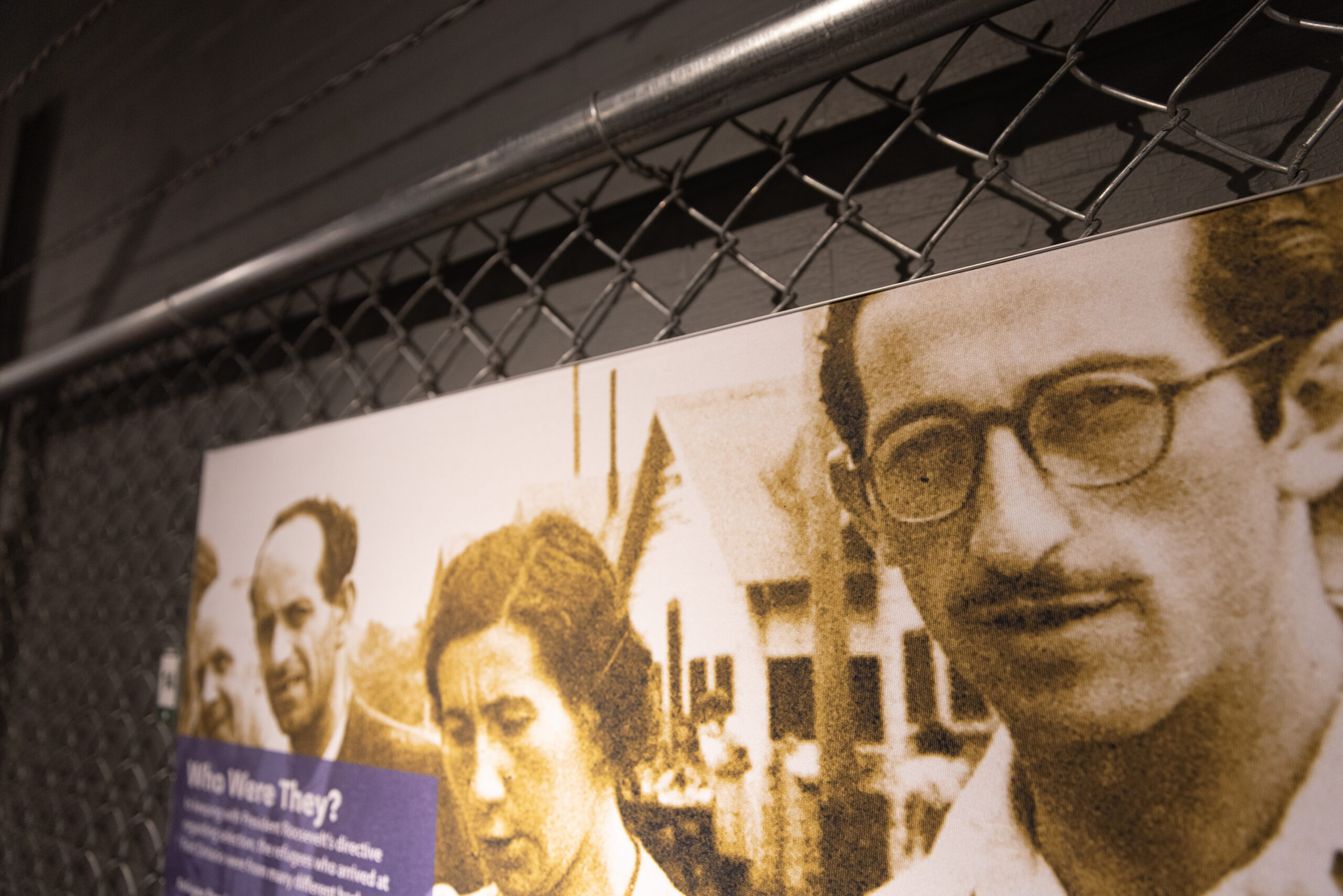
Erbelding, a historian and secretary of the museum’s board, first visited the site in 2014 to research its history ahead of the 70th anniversary of its designation as a shelter for 982 Holocaust refugees. She became “completely fascinated” by their stories — those of the only people the United States took in during the war. People who inadvertently shaped how the U.S. approaches refugees today.
The people who, she said, many in this country have never heard about.
“They’re the first of a lot of things. You can argue they’re the first refugees that we bring. They’re the first people who come outside the immigration system. And then they become the first displaced persons — first of hundreds of thousands of people who will follow,” Erbelding said. “And it’s almost forgotten, outside of Oswego, that these people were ever here.”
Museum president Paul Lear said Safe Haven has existed for 35 years, but its mission to keep the stories of these refugees “alive” has only grown more urgent.
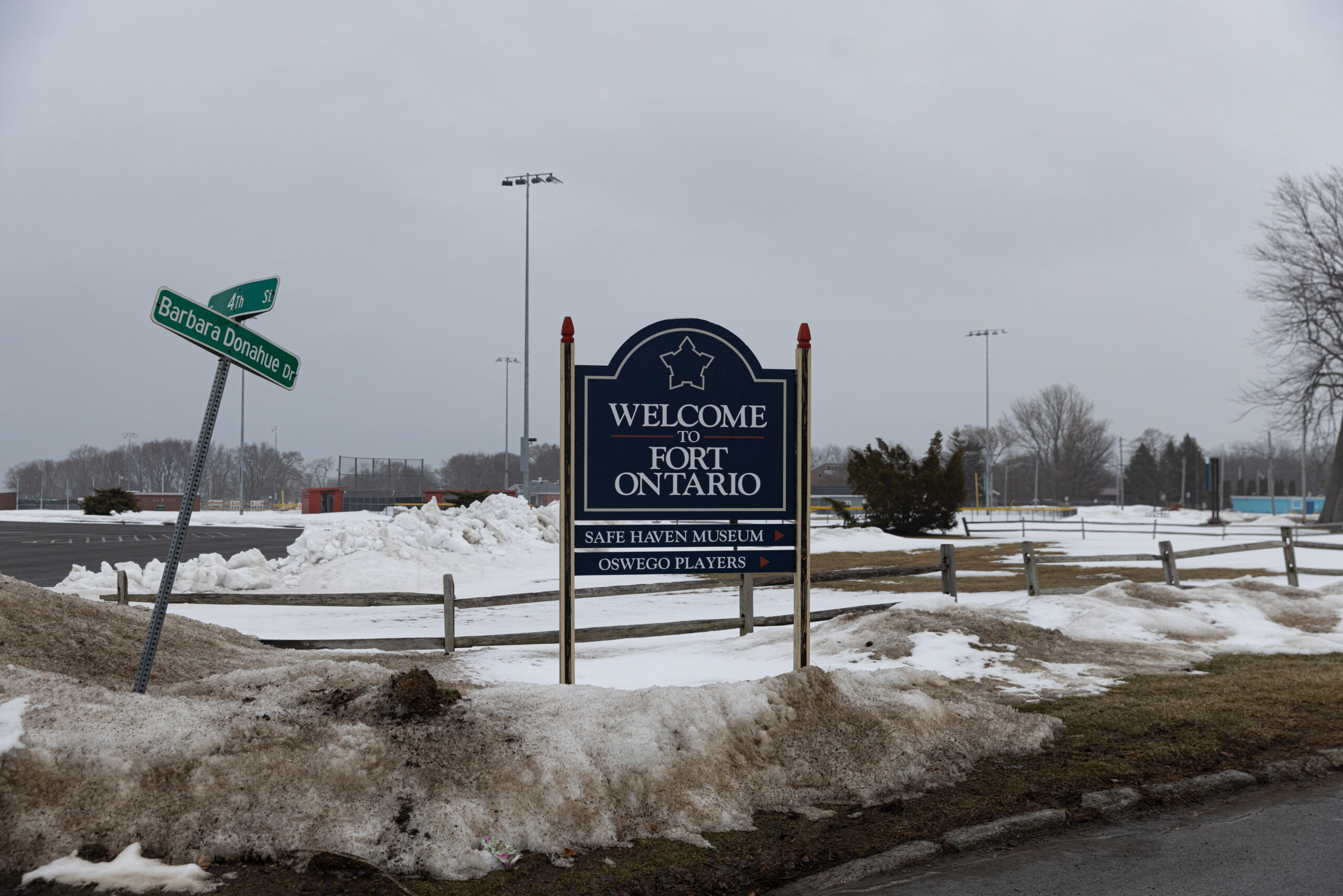
Photo by Cassie Roshu
In the snow, the "Welcome to Fort Ontario" sign also includes an arrow leading to the Safe Haven museum.
Amid recent rises in antisemitism, Holocaust denial and negative attitudes toward refugees and immigrants, Lear said he is working to help Americans recognize the site’s “international historical significance” — including by pushing for it to obtain national historical park status.
The Safe Haven museum sits just off Lake Ontario, where coastal winds once jarred refugees unaccustomed to the region’s frigid winters when they first arrived, Erbelding said. The museum is housed in a quaint, one-story building on the sprawling, 80-acre grounds of a fort originally built for the British during the French and Indian War.
During WWII, the U.S. faced pressure from the Allied forces to accept Holocaust survivors, though the country didn’t yet have any codified refugee policies. When looking into former military bases for its first refugee camp, then-President Franklin D. Roosevelt eventually chose Fort Ontario, having previously visited the site while serving as governor of New York.
At the time, the U.S. considered the 982 refugees from across 18 different countries as “guests” without any legal status. They were expected to return to Europe once the war came to a close. After the war ended, however, President Harry Truman instead granted the refugees first priority for legal status within the existing immigration quotas.
“This is really considered the birthplace of (U.S.) refugee policy,” Lear said.
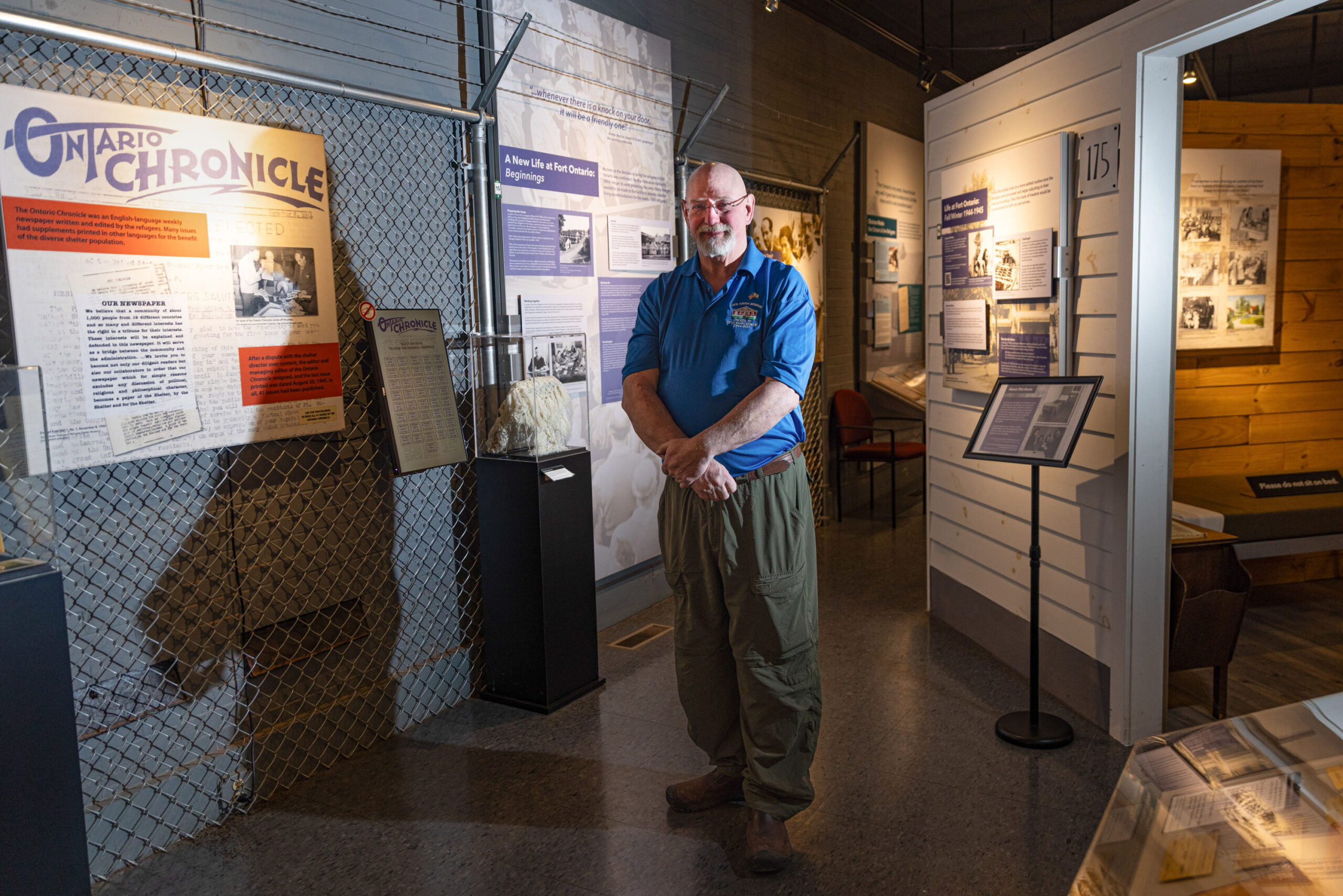
Photo by Cassie Roshu
Safe Haven Holocaust Refugee Shelter Museum president Paul Lear stands by one of the museum's exhibits.
Before Fort Ontario, the U.S. had no legal definition of “refugee” or “asylum seeker,” Erbelding said. The 982 people brought to Oswego were the first to enter the country outside of the parameters established in the Immigration Act of 1924, which placed annual limits on the number of migrants that could enter the U.S.
But Lear said that, when he helped found Safe Haven more than 35 years ago, the site’s significance within the broader context of refugee policy wasn’t a substantial part of the museum’s story in its early days. It wasn’t until Erbelding published her book on the War Refugee Board that it became a larger part of the narrative.
The refugees’ stories themselves drew Lear to create a committee in 1988 to establish what would later become the Safe Haven Museum.
Walking through the museum, visitors are greeted by walls lined with artifacts from the refugees who once called Fort Ontario home — clippings from a newspaper published by its occupants, dozens of photos of the families who sought refuge there and a replica of one of the makeshift bedrooms built in the former barracks.
Nearby, the names of everyone who lived there are displayed. Lear can tell you all about them.
One couple, Tanya and Ernst Breuer, fell in love at the camp and married on its grounds — their wedding shroud is now on display in the museum. Another refugee, Doris Schaefer, is photographed as a child trying a hot dog for the first time. Others went on to become doctors, lawyers, politicians, scientists and restaurateurs after leaving the camp, he said.
One story that stands out to both Lear and Erbelding is the refugees’ arrival in Oswego after a month-long quarantine. A fence — replicated in the museum today — divided them from local residents, making the site feel like a “prison,” Lear said. The fence didn’t dampen the community’s curiosity.
“The kids go to the fence because kids aren’t afraid of nothing. The refugee children and the Oswego children start talking. Then adults get together at the fence … Next thing you know, Oswegonians are passing food, snacks, beer, cigarettes, money, shoes,” Lear said. “Lifelong friendships are formed and they become advocates.”
Some of these children, as well as others who were born at the fort, are still alive today and have visited the museum, Lear said. But after the war ended, most left Oswego — leaving few ties between this group of survivors and the several refugee communities in the state today.
According to a June 2025 report from the American Immigration Council, New York has been home to nearly 18,000 refugees over the past seven years, accepting an average of more than 2,500 yearly.
The largest portion of refugees comes from the Democratic Republic of Congo, while Syria and Burma hold the next two highest shares of immigrant nationality. By contrast, most of Fort Ontario’s occupants came from central Europe — namely Austria, Poland and Yugoslavia.
Data from the Migration Policy Institute shows the discrepancy between the annual U.S refugee acceptance ceiling and how many were actually admitted. The U.S. has failed to reach its annual ceiling since 2019. The highest ceiling was set in 1980, allowing more than 200,000 refugees to migrate to the U.S. In contrast, the ceiling in 2025 was 125,000 – fewer than 40,000 refugees were actually allowed in.
Despite this shift in refugee demographics, Erbelding said she believes the story of how Holocaust survivors and Central New Yorkers connected through Fort Ontario remains relevant in the current political climate.
As the Oswegonians got to know the refugees, she said, they stopped viewing them as an “abstract” threat. That lesson, she added, may help curb the spread of “hateful” rhetoric surrounding immigration.
“History allows us to have discussions that might seem fraught today, because we have that distance and we know what happens,” Erbelding said. “For people who aren’t sure about refugees — or how they feel about the U.S. role — learning about Fort Ontario can help clarify where they stand today.”
Echoing Erbelding, Lear said he sees parallels between the “rumor mill” that claimed Fort Ontario’s refugees received better rations than Oswego residents and false claims made by President Donald Trump during a presidential debate that Haitian migrants in Springfield, Ohio, were eating pets.
The modern debate surrounding refugees is now “front and center” for Safe Haven visitors, he said, in a way that he didn’t expect when he began this work over 35 years ago. He recalls one visitor who previously worked in a refugee resettlement in Afghanistan being “astounded” by the story.
“History allows us to have discussions that might seem fraught today, because we have that distance and we know what happens. For people who aren’t sure about refugees — or how they feel about the U.S. role — learning about Fort Ontario can help clarify where they stand today.”
– Rebecca Erbelding, Historian and secretary of the museum’s board
After recently celebrating both the 80th anniversary of the refugees’ arrival in Oswego and approaching the 25th anniversary of the museum itself, Lear said he now has his sights set on helping Safe Haven and Fort Ontario receive national park status. In December, the U.S. Senate unanimously approved the designation.
“Its story deserves a permanent place in our national memory,” Sen. Kirsten Gillibrand said during a December Senate meeting. “Establishing the Fort Ontario Holocaust Refugee Shelter National Historical Park would give this site permanent protection and make sure it is preserved for future generations so they can learn about its history of hope, compassion and resilience.”
Lear rejoined the museum’s board in 2024 after a yearslong absence, taking up the mantle when no one else was available and returning to the museum he helped found.
Despite once planning a “quiet retirement” where he would write books, work at his wife’s candy store and spend time with their dog, he said he doesn’t see himself stepping down until Safe Haven achieves this goal, saying: “I can’t let it die. I finish things.”
Similarly, Erbelding is working on a book on the Fort Ontario shelter, set to be published in 2027. She said she hopes it will “spread the word about Oswego,” bringing attention to the work she and Safe Haven’s board — all volunteers — do to share the story of America’s only Holocaust site and its connection to modern-day debates over refugees.
“People seem to constantly resent people from outside groups. But once you get to know them, like the Oswegonians did here, then you become their advocates, ” Lear said. “That’s just the way humans are. You become their advocates and friends — you break down barriers.”
A digital journalist at Syracuse University.
A photojournalist from Oregon.
More from Journeys

Making time for traditions
Story by Kira Desai & Olivia Boyer & Maya Aguirre
Policy changes disrupt agricultural workforce
Story by Ruth Bailey
Oswego’s Safe Haven Museum CNY’s ‘forgotten’ Holocaust refugees
Story by Julia Boehning Photos by Cassie Roshu
LA street vendors risk deportation to work
Story by Lizbeth Solorzano

How international students navigate collegiate soccer
Story by Rohan Borges & Felipe Ferraz de Souza Miranda Photos by Ella Chan
Syracuse’s Italian Americans keep culture alive through charity
Story by Sofia Kissel Photos by Rebecca Beckas