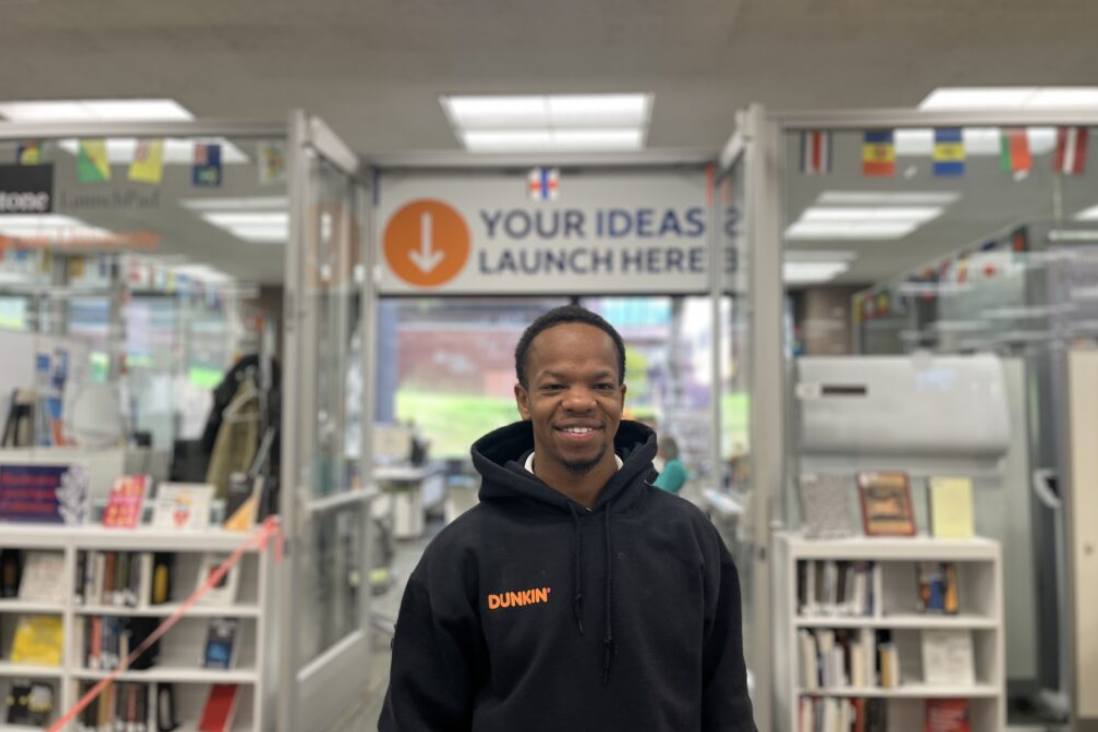
A SU student stands in a black hoodie in front f the Blackstone LaunchPad in Syracuse University’s Bird Library.

SU student’s nonprofit delivers food essentials to Kenya

Founded by Abdul Rahman Abdi, a refugee who came to Syracuse, Sadaqa Foundation Inc. provides food to communities in Kenya.

Five days a week, Rashid Saman Aden Kulow walks through the camps in the Dadaab refugee complex in Kenya. He sees men sitting idle outside their homes with no work, elderly men begging and children skinny and frail from hunger. He constantly overhears people discussing funding cuts, expressing frustration about aid organizations that make promises but fail to deliver. 

International aid that once sustained the camp was drastically cut, leaving more than 430,000 refugees struggling to meet their most basic needs: daily meals and clean water. 

“Most of them (tell) me the only challenge they’re facing is food, water and nutrition,” said Kulow, 24, who has lived in the “Ifo 2” camp at Dadaab since 2011 after relocating from Somalia for better education opportunities.

“So, people are (under) a lot of stress, a lot of mental stress and physical stress in the camp,” he said.
From Kenya to Cuse

Coming to Cuse

From Kenya to Cuse

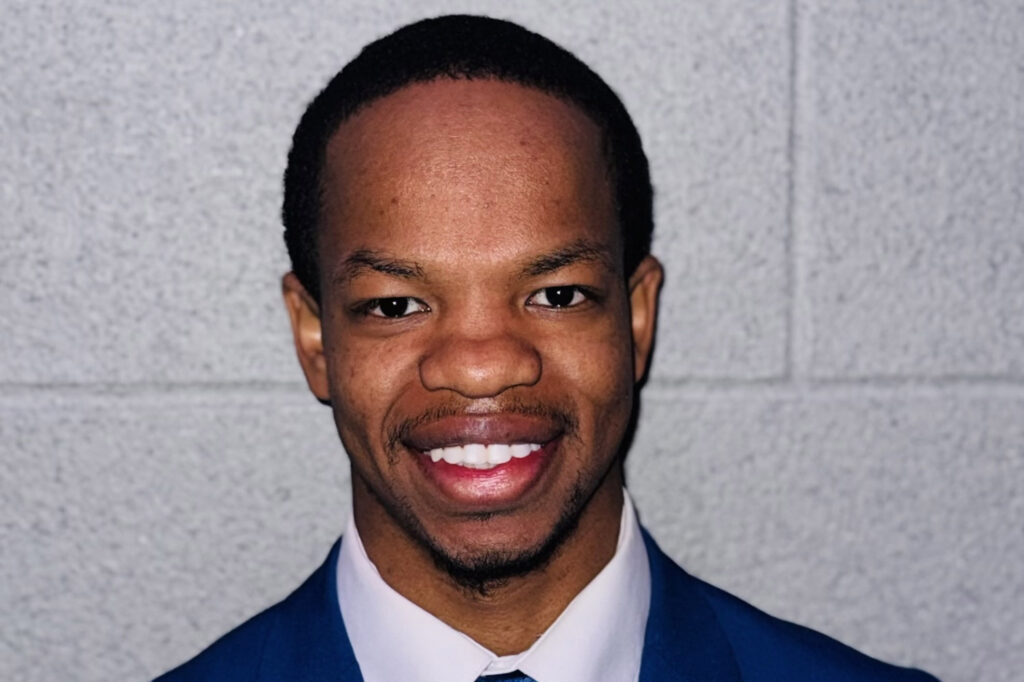
Abdirahman Abdi is a student, refugee, immigrant and nonprofit founder. Fueled by faith, giving back is his passion and what he aims to accomplish with the Sadaqa Foundation.

Now Playing

From Kenya to Cuse

0:00 0:00

Produced by Kira Desai

Transcript: From Kenya to Cuse

This transcript has been lightly edited for clarity


Abdirahman Abdi: Ubuntu, which means I am because we are; we are, so therefore I am. You know, I am nothing without the community that’s behind me and in front of me.

Kira Desai: This is Coming to Cuse, a podcast about immigrating to the Salt City. I’m Kira Desai. Abdirahman Abdi is a Syracuse resident and a Kenyan refugee. He runs an international nonprofit called the Sadaqa Foundation to give back to the Dadaab refugee complex. We spoke to Abdi about growing up in Syracuse and building community.

Abdi: I was born in Kakuma refugee camp. So when I came here I was a refugee and an immigrant. So were my parents, but they were born in Somalia. Initially didn’t come to Syracuse, we went to Connecticut, Hartford. And I was 2 years old around that time. And I have a little glimpse of Hartford. I remember stairs and a dog for the first time. I’d never seen a dog and that’s pretty scary. But I think we adjusted well.

So when I came to Syracuse I was 4 years old and as a kid we moved to Oak Street, which is on the north side of Syracuse We then moved to the south side of Syracuse, which is down the hill from Syracuse University called Syracuse Housing Authority. Around that, we had a community full of people from diverse countries in Africa: so Tanzania, Burundi, we have people from Kenya, we have people from Somalia. We have people from Puerto Rico. Yeah, it’s a diverse kind of people.

So yeah, everybody was speaking different languages. And we all had, in a sense, different cultures too, as well too. As a kid I loved dancing. I learned dance at an early age, at 7 years old, and that’s all I picked up. Then soccer was another thing my uncle taught me. So even soccer was a thing that in Kenya they play, and in Somalia as well too they play the sport of soccer. And they brought that with them to Syracuse, you know. And as a kid I played soccer from the age of 7 to the age of 18 years old. When we were growing up in housing we played soccer almost every day. It’s like a ritual, like a religion.

But as a kid I grew up identifying with the African American culture: so the music, the dancing, the clothing, the lingo, everything I identify with that in a sense, not really with my culture or some other culture because that wasn’t really – though it was emphasized within the households, the environment was more about the community was diverse in the sense so it made it hard for us to really hold down to our culture as kids raised in America. Our parents are different because they were raised back home. I just knew that I was African, just didn’t know what my ethnic root was, you know, in a sense. Consciously, I didn’t know. Those people I did grow up with, I call them family. Even if you don’t share blood, we share the same shared experience and same background, same community, and same upbringings, everything. We share everything in the same way, even though it’s not blood. You don’t have to be blood of be family. But that community really and the values that it taught me and how we were raised together has really made myself, my whole identity as a whole. So when I moved there, that’s the whole community that’s full of people that came from the same refugee camp or same city in Kenya.

When you go to Kenya, the first thing, like, the airplane rides is – I mean the airplane is very long, 13 hours, 14 hours. When you first arrive in Kenya, it’s warm. The weather automatically changes, it’s warm. It’s very hot. You know, you’re wearing a jacket first because it’s winter, you’re going during winter season. Then you come to the Kenya airport and the airport is very, very, very hot. You know, it’s like wow.

From Nairobi to Dadaab refugee complex, so it’s a complex, you take a bus. You can take the Zafanana, which one of the buses, you can take the Eagle, it’s one of the buses. The bus ride is usually 10 hours, you know. I can tell you, and I’m going to be upfront: The bus ride is not very comfortable, but it’s like, it’s doable. It’s hot. And then when you go from Nairobi to Dadaab, the road changes.

So within where I go, there’s a lot of people that have been there for a long time that have had organizations that have people abroad sending money to like develop their housing. They live in good housing now, in a sense, in their context. You know, the food is – food is food, if you can afford it. But the food, like, those people make it work. Within the refugee camp they make things work for them, you know. It’s not like all we’re hungry, in a sense. But no, it’s like they make things work for them. So they have to live through that heat as well. And then water borrows, so people, say a brother or elder brother or elder sister, goes to fetch water early in the morning, and it’s a line. It’s not only one household, everybody’s household, majority in that block. They go to that one borehole, they go to another majority one borehole, water borehole.

And they sit there for hours and they have these seven buckets and they have to fill those buckets up. You know, you have to wait in the long line. It takes probably like an hour, two hours, you know, maybe something like 30 minutes. But they have to bring it on a wheelbarrow, and they drag it home to bring it home. That’s how they get water in the refugee camp. It’s not like you go in a restaurant and you turn the sink on. No, within the households, you can’t go in the house and turn the sink on. There’s no such thing as a sink.

And then the bathrooms are different as well too. There’s not really you go in the bathroom, you flush the toilet, no. And then again, it’s amazing. I love the refugee camp more than I do love the city because it’s community. There’s more community within the refugee camp than it is within the city because everybody lives near each other. Everybody, anybody, child, somebody else’s child, the village takes care of that kid, you know? Somebody’s kid, even though it’s your kid, a village elder, or a village cousin, or a village neighbor will take care of that kid for you as well too. And it really does take a village to raise a child, and that’s what you have in the refugee camp. It’s a community, you know. If your neighbor is hungry, they will give them food. If your neighbor is without water, they will give them – if your neighbor is giving birth, they will go visit them. And there’s like a funeral, the whole community comes together. If there’s a wedding, the community comes, they come and they bring money together to like have somebody get married or have somebody help with their funeral. And that’s the thing: You get the kind of sense of community within the refugee camp and you don’t get in Nairobi.

So it’s more of sense of community and that’s why I think when we came to America we didn’t lose that because that’s how like growing up –  my family, they’re so tight and like you see within the refugee camp, they have community within the refugee camp so no one really ever goes hungry in the refugee camp. They say they’re hungry, but no one really ever goes hungry in the refugee camp. You always have your neighbor to rely on, and your neighbor will always there for you.

I like helping people. I always wanted to help people and that’s why the Sadaqa Foundation  came about. Charity is a big thing within Islam. So that’s my way of paying it forward as well too. And there’s some passion for me to help those who are less fortunate than me. So I got to be grateful for everything I have, and then when you go back to the refugee, when you go back to Kenya and you come back to America, you say I’m grateful for everything I have because those people that are there that have less than you that are more happy than you. You go there and they’re more happy than you. How can you be less fortunate and, in a sense, be less fortunate and still smile every day and be excited to wake up every day, you know? You wake up every day excited, you’re energetic. And I’m grateful for that. I come back and like I got to do the same thing. Even though some days you want to quit and sit back and you can’t, you got to keep moving forward because there’s people there out there that need your help.

Within that time, I think we as a family – my father, my brother was present, I think all my brothers were present. So we came in with discussing business ideas, and for me, personally, I’m purpose driven. So I’m like if we’re going to start a business it has to be a foundation, a charitable foundation that we can help people and have leave lasting impact, not a business that’s profit driven. Because I’m not really a profit-driven person. I’ll do this without the money. With or without money, I would do it, which we are to this day. So that’s when we came in and we all came together like yeah, we should start a foundation because we all have, in a sense, we align, had the same values as siblings. You know, it’s more this started with my brothers, not anybody else, with my brothers. So we all have the same vision and we all have the same mission.

So we started forming this foundation because we all have the same passion of giving back and helping people. We fundraise, and when we fundraise we have a business account that it goes to. So we open the business account and the money goes to the business account and we created a website as well. So you can donate through our website as well too, Sadaqa Foundation, and we do a lot of advertisement to our Instagram account too. Word of mouth works the most, but I guess social media is there for us to like help us out in this day and age.

So when you donate to there, it goes to the business bank account. And then from the business account we send to the community, and his name’s Abdul Rashid. We are grateful to him because we don’t live within the community, so we don’t know who’s in need and who needs support within that moment, within that time. So he goes out with a couple of volunteers and looks around within that camp and finds the families that are in need. And then we send that money to him and he, with the couple of volunteers, goes to the market and buys the staples that’s needed to serve those families. So the vision we have is to create a self-sustaining economy within the refugee camp. Aid is good, but that creates dependency. We don’t want to create dependency. And so that those people can rely more on themselves rather than rely on an organization abroad that don’t know what they need within that certain time – or anything can happen within that time, and they have the means to care to take care of themselves.

So I can help those who help me in a sense too. So we’re interconnected. So help them, they help me and I help them, they help me, in a sense, kind of growing as a person and they’re growing within as a community and we’re growing as a community. We’re interconnected, you know. That connection will always be there.

Desai: Coming to Cuse is a production of students at the S.I. Newhouse School of Public Communications at Syracuse University. This episode was reported by Kira Desai, Aiden Tseng and Maya Aguirre, and produced by Kira Desai.

Dadaab, established in 1991, now contains than half of Kenya’s total refugee population according to the UN Refugee Agency, also known as UNHCR. The majority of residents are from Somalia, and more than three-quarters are women and children. The original camps, DagahaleyIfo and Hagadera have become overcrowded, prompting the development of “Ifo 2” to accommodate increasing numbers of arrivals according to UNHCR.

As a community outreach employee with the Danish Refugee Council, Kulow meets regularly with families who inform him of their most urgent needs. Jobs are scarce, high school graduates face unemployment and students struggle under the new unaffordable education system. Access to health care is just as limited as the medication supply is short and people are forced to wait for ambulances that never arrive. 

The information Kulow gathers from families in “Ifo 2” informs African American studies and citizenship and civic engagement senior Abdul Rahman Abdi, 21, whose nonprofit, Sadaqa Foundation Inc., raises money in Central New York for Dadaab. There, Kulow and other volunteers distribute staples like flour, sugar and cooking oil to orphans, single mothers and families in need. 

Abdi and Kulow coordinate distributions almost daily. Since launching in 2023, the foundation has expanded into a 501(c)(3) nonprofit. Abdi estimates the nonprofit has assisted nearly 100 families so far. Depending on the funding received for the week, Abdi sends it out to Kulow. 
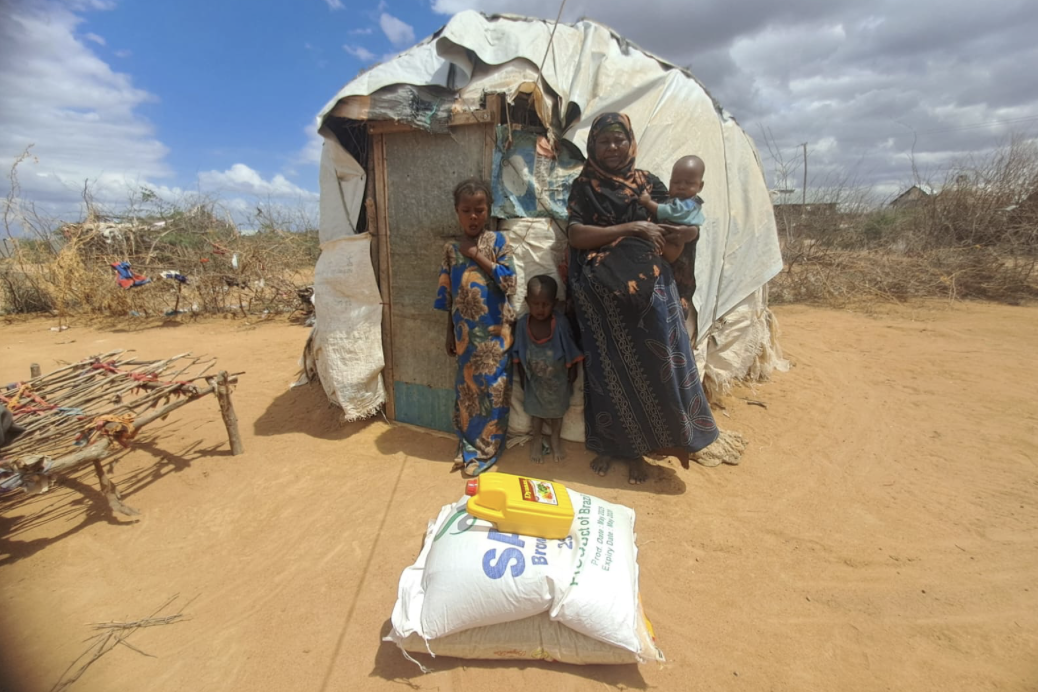
A family living in Dadaab’s Ifo 2 refugee camp in Kenya receives cooking oil, flour and sugar donated by Sadaqa Foundation Inc.

Photo by Rashid Saman Aden Kulow

A family living in Dadaab’s Ifo 2 refugee camp in Kenya receives cooking oil, flour and sugar donated by Sadaqa Foundation Inc.

“The funding is based on how much we are getting from donations and if we have a certain amount we send it out weekly to help those in need,” Abdi said. 

Data analytics senior Schneider Joachim, a friend of Abdi’s, donated $70 to the organization last June during Eid al-Adha. His donation, pooled with others, helped purchase three goats that fed more than 50 families.  

The day after donating, Joachim received a video and images from Abdi showing the goat meat being distributed to families. 
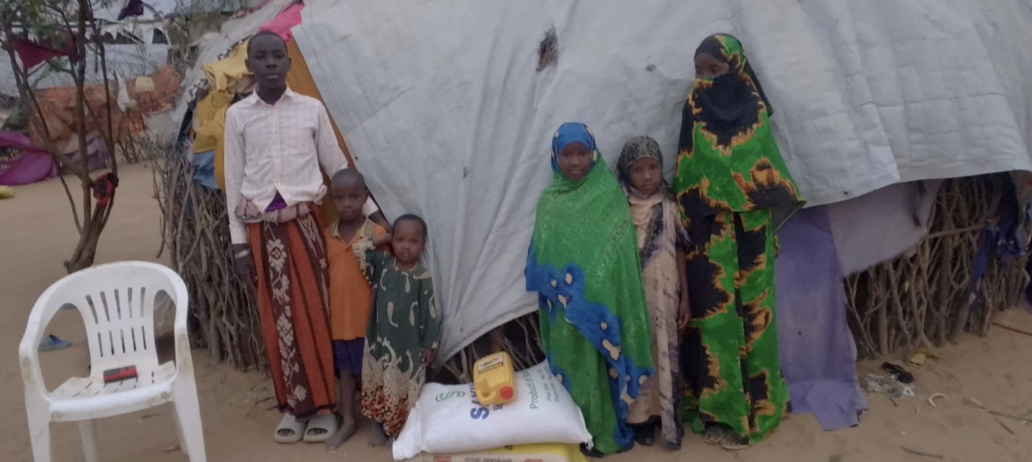
Children living in Dadaab’s Ifo 2 refugee camp in Kenya receive cooking oil, flour and sugar donated by Sadaqa Foundation Inc.

Photo by Rashid Saman Aden Kulow

Children living in Dadaab’s Ifo 2 refugee camp in Kenya receive cooking oil, flour and sugar donated by Sadaqa Foundation Inc.

“I’ve seen the impact because I participated,” Joachim said. “He gives you actual video proof of what they do as well. You know your money is going towards a good cause. You see how you impact these families.”

Joachim said he was surprised, in a good way, when Abdi told him he started a nonprofit. 

“He’s always been ambitious. He always wants to help the community. It does make sense that he went with the nonprofit route,” Joachim said. “To see Abdi, who is around my age, being able to put his foot down and create an organization that’s making a real impact and being the head of that and making sure the logistics and the operations are successful. I mean, I can only give my hats off to them.”  

Seeing Abdi’s success has made Joachim reflect on his own ambitions.

“Am I doing the things I say I want to do? Am I taking the proper steps to make those a reality? Or am I just stuck in, you know, talking to myself about it?” Joachim said. 

Abdi resettled with his family from Somalia at the age of two. Growing up in Syracuse’s Somali community, he remembers neighbors and local organizations providing support during his family’s early years. That sense of community shaped his decision to first launch the Sadaqa Foundation in 2023 as a small Ramadan initiative. 

“We like to help people and these are all our passions too,” Abdi said. “Ramadan is a month of giving, the month of charity for us islamically. I thought, let’s start a charity business. Let’s just start small.”

He developed his nonprofit at Syracuse University’s Blackstone LaunchPad, the innovation hub in Bird Library, where students test business ideas and receive mentorship. 
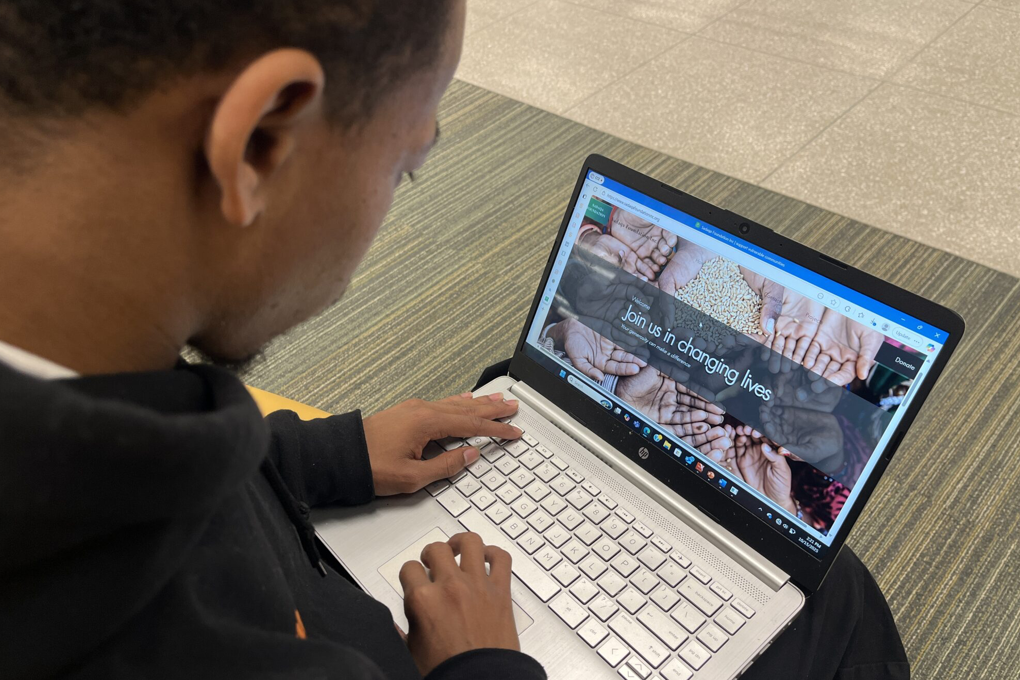
Abdul Rahman Abdi examines his nonprofit organization’s website for Sadaqa Foundation Inc.

Photo by Jai'La Du Rousseau

Abdul Rahman Abdi examines his nonprofit organization’s website for Sadaqa Foundation Inc.

Abdi had already launched the Sadaqa Foundation with help from his father, who runs his own nonprofit, but he came to the LaunchPad last semester seeking guidance on how to grow the organization. LaunchPad director Traci Geisler worked with him on a business model canvas, a tool that helped him identify a core problem and sketch out potential funding sources.

“We were actually all over the place,” Abdi said. “We were focused on the right thing, but we weren’t focusing on one thing.”

The business model canvas helped him narrow his focus to food insecurity among children in Dadaab, which was crucial when pitching at LaunchPad competitions like IdeaFest. Though he hasn’t won yet, refining his pitch and business strategy is still vital, he said.

“Without the business model canvas, I wouldn’t even know where we would be going,” Abdi said. “It’s like a roadmap.”

Geisler said refugee and immigrant students like Abdi bring a unique entrepreneurial approach shaped by their lived experience. 

“I think (immigrant students) have developed a skill set of being resourceful, incredibly resourceful and making and bringing a fresh perspective based on their culture to new ideas that people here in this culture may not have recognized as a potential area to develop a business,” Geisler said. 

Joachim is also using the LaunchPad for his own business venture. He has participated in pitch competitions and has used Blackstone LaunchPad resources since 2022. 

“A lot of people in the world do want to do something. They just don’t know how to approach it, where to start,” Joachim said. “Having the space that is Blackstone to connect with like minds, I feel like that would motivate others to pursue what they want to pursue as well and not get stuck and they move where you’re just saying you want to but you actually start taking action.”

He describes Geisler as a supportive mentor who helped him even through his business pivots, helping him extract lessons before moving forward.

“They’re really there to just act as a support person for you and they really excel at that,” Joachim said.
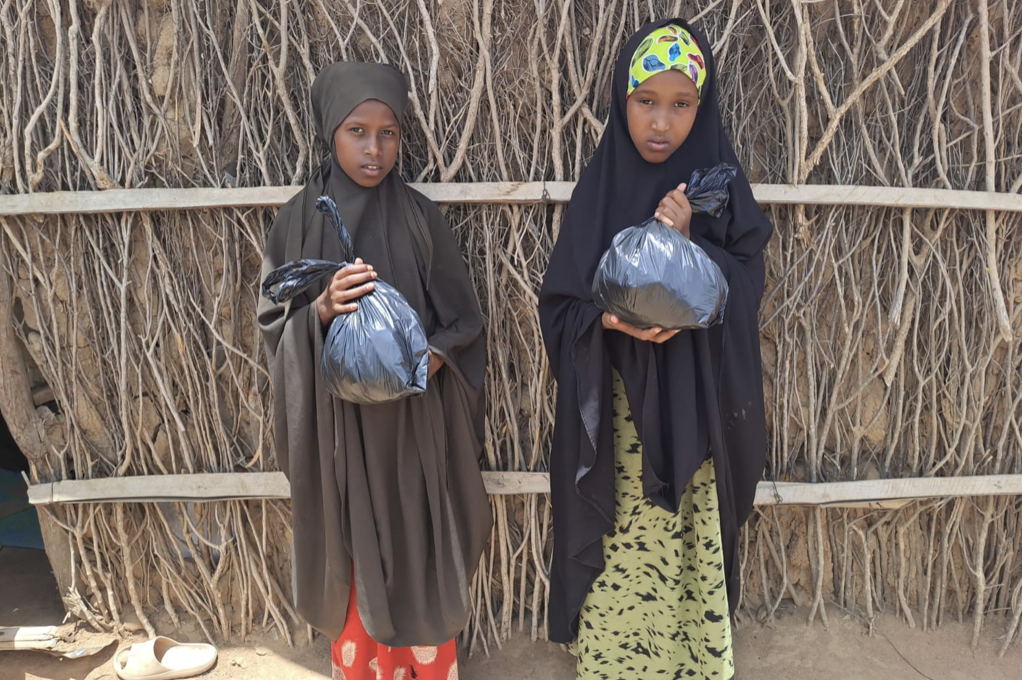
Children at Dadaab’s Ifo 2 refugee camp in Kenya hold a black bag filled with clothing donated by Sadaqa Foundation Inc.

Photo by Rashid Saman Aden Kulow

Children at Dadaab’s Ifo 2 refugee camp in Kenya hold a black bag filled with clothing donated by Sadaqa Foundation Inc.

Last summer, Abdi returned to Kenya and visited Dadaab. In Ifo 2, he saw children battling sickness and fevers, families making long distances for water and others living in tents, some without doors. For him, the visit was both personal and sobering.

Back in Syracuse, the weight of Dadaab stays with him. He remembers how families fled Somalia for Kenya to escape famine, drought and civil war, only to face new struggles once inside the camp. 

“These people need our help,” Abdi said. 

For Kulow, that need drives his work inside the camp. “I’m doing this job voluntarily,” he said, “to support people in need and make their lives better.”
More from Journeys