


Making time for traditions
Some U.S. immigrants and international students have followed two different calendars and work harder to maintain their traditions from home.
It’s about an hour before sunrise, and Xinyu Lu is on FaceTime with her mother. The first-year Syracuse University law student smiles sleepily, wishing her family members a happy Lunar New Year in Mandarin as they pop their heads into the frame. Lu tries not to think about the thousands of miles between her and her loved ones in China, or all the hours they’ve been celebrating while she’s been asleep.
This is not Lu’s first Lunar New Year spent away from her family. Like many other international students, she’s come to learn that celebrations like these, which felt like a given back home, are something she must intentionally upkeep in the United States.
Coming to Cuse
From Kenya to Cuse
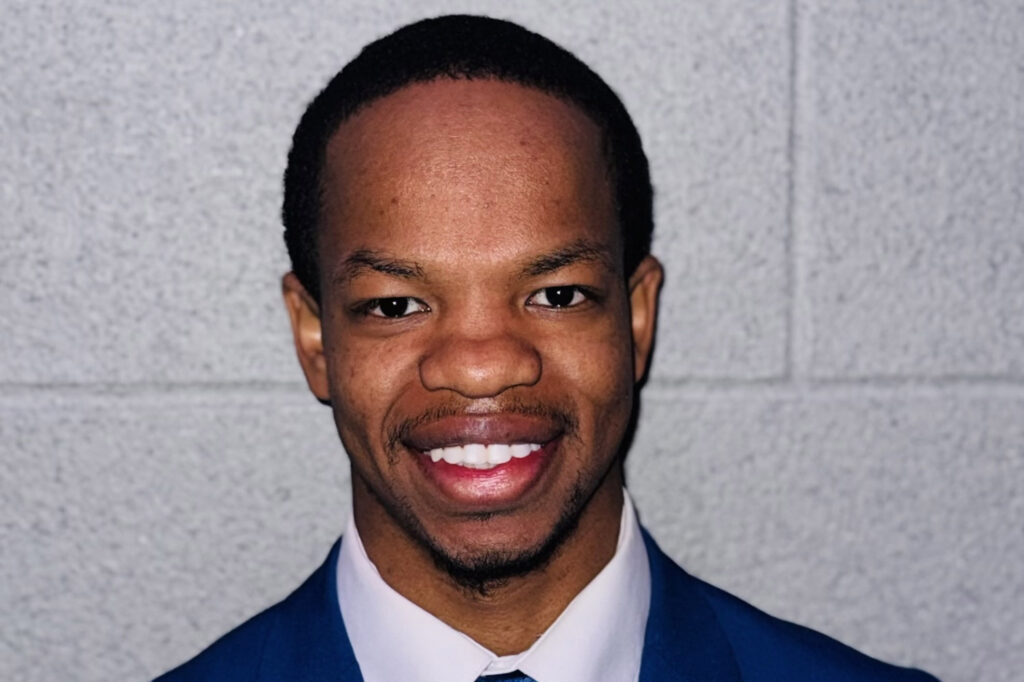
Abdirahman Abdi is a student, refugee, immigrant and nonprofit founder. Fueled by faith, giving back is his passion and what he aims to accomplish with the Sadaqa Foundation.
Now Playing
From Kenya to Cuse
Produced by Kira Desai
The first day of the Lunar New Year coincided with the start of the Muslim holy month of Ramadan. SU senior and Somalian refugee Abdirahman Abdi will spend the next month praying and fasting during the day. But his busy life will not slow during Ramadan: Tomorrow at 3 a.m., Abdi will clock in for his morning shift at Dunkin’. By the end of his shift, Abdi will have already begun his first fast of the holy month.
Lu and Abdi have developed a skill they say they share with many other U.S. immigrants: operating on two different calendars, and even two different ways of life, often neglected by the “melting pot” mentality of U.S. culture. In higher education in the U.S., international students and immigrants who have often traveled long distances to earn their degrees said they have to alter how they practice their traditions to fit their new environments.
Religious observances on campus
Daily life in the U.S. has not historically accounted for the holidays of the Lunar Calendar. In 2023, Gov. Kathy Hochul signed legislation declaring Lunar New Year a public school holiday in New York state. But Syracuse University does not officially observe the holiday and classes took place as usual. The university’s religious observance policy underscores the importance of accommodating the practices of all community members. But Lu is in the most notoriously challenging year of law school and knows that missing a full day’s worth of lectures would put her at risk for falling behind her peers.
After Catholicism, Islam has the highest number of adherents in Onondaga County. Muslim places of prayer make up 5% of all congregations. For Abdi, early-morning shifts at Dunkin’ during Ramadan can be advantageous: While 2 a.m. wake-up calls are typically an energy drain before a full day of classes, during the holy month Abdi has more hours awake before the sun rises, allowing him to fuel up before the school day. However, this is not the case for everyone who observes Ramadan.
Reyad Abedin is a graduate student from Bangladesh studying at SU’s College of Visual and Performing Arts. He’s also a teaching assistant for two courses: Introduction to Analog Photography and Film and Media Theory.
As a TA, Abedin has not filed religious observance forms like undergraduate students typically do. To celebrate Eid al-Fitr, which marks the end of Ramadan, with his friends in Syracuse, Abedin planned his absence from his Friday section of Analog Photography in advance. He was able to find another graduate student in his cohort to teach.
“I have to make sure that I have good friendships with my cohort and other students. But 30 days, it’s a long period of time,” Abedin said. “And you will eventually feel bad … because you are giving excuses. And other people will suffer for it.”
According to the university’s policy, if a student does not file the religious observance paperwork by the deadline set in the academic calendar, it is up to the discretion of their professor to decide what accommodations they’re willing to grant that student.
Dara Harper has worked as the communications director at Hendricks Chapel for four years, over which she’s gotten to know the many religious communities that make up SU’s population.
Harper said that freshmen who are new at school might not think about the religious observance policy and end up forfeiting their excused absence. While class syllabi have the religious observance policy printed, the process might not be on the forefront of students’ minds at the start of the semester when there are countless other items on their to-do lists.
“Suddenly you can’t travel home because you forgot to turn in the paperwork, so now you have a test on one of your faith tradition’s biggest holidays,” Harper said.
Over the past few years, Harper has realized the importance of educating more professors at the university on religious observances and how to help the students who make up the multicultural, diverse religious community at SU.
Harper remembers the moment a faculty member at the law school approached her during Harper’s first year in her role at Hendricks. The law school operates in 80-minute blocks, and on Fridays, the school’s schedule formerly had a mandatory block for class. For Muslim law students, this conflicted with jumu’ah prayer, the Islamic Friday congregational prayer.
Working alongside law school Associate Dean Suzette Meléndez and her team, Imam Amir Durić worked to change the law school’s calendar to eliminate Friday classes from the schedule. While this demonstrated major progress at the law school, many of the other colleges within SU still have conflicting schedules with the Friday prayer, Durić said.
Lunar New Year at SU
Twelve hours after Xinyu Lu’s early morning FaceTime with her family, the sun has set in Syracuse. In a lecture hall inside SU’s College of Law, Lu sits next to her classmate, Bokang Jia, who is also a first-year Chinese international student.
Tonight, the first-year law students aren’t here for a class: They’re here with SU’s Asian-Pacific American Law Student Association to usher in the Year of the Fire Horse. In front of Lu and Jia are paper plates piled high with Chinese food. The lecture hall is filled with the comforting chatter of their law school classmates. It’s not quite like home, Lu and Jia said, but it still feels special – just in a different way.
At home, Lu and Jia developed an expectation that customs would be carried out without fail each year: Dumplings would be prepared. Red envelopes containing money would be distributed. But in the U.S., far from family, the weight of maintaining tradition falls on the shoulders of the AAPI students and staff who organize events like the law student association’s Lunar New Year celebration.
“My role changed once I came here. In the past, I was just a part of the people who enjoyed the celebration, but now I’m kind of becoming a cultural ambassador who is in charge of sharing the things – sharing the culture, of representing my own background,” Jia said.
Moving from China to the U.S. means that Jia and Lu, who are both Chinese, have also become a part of a broader Asian diaspora community. At the front of the room, K-Pop music plays over a small speaker. Next to the table filled with platters of catered Chinese food is another table with Japanese paper origami for students to craft.
“Back home, we only celebrate with people who share our culture. But now I’ve been talking to people from all kinds of backgrounds, like Chinese-Chinese, American-Chinese. We have a few Korean friends here. I also know a few Iranian Americans,” Jia said. “Everybody is representing their own culture, which is quite unique.”
A few seats down from Lu and Jia sits May Lee, a 2003 graduate of SU’s College of Law who recently moved back to Syracuse. Lee had been invited by Mary Szto, a teaching professor at SU’s law school. Back when Lee was at SU, the AAPI community was much smaller. There weren’t events like this Lunar New Year celebration, she said.
“I feel like there’s been a lot of growth.” Lee said. “And then also just having Professor Szto – I mean, she invited students that are not part of the law school in different areas to study in Syracuse University. So it’s great that she’s able to connect different people from different schools and different levels.”
Found communities
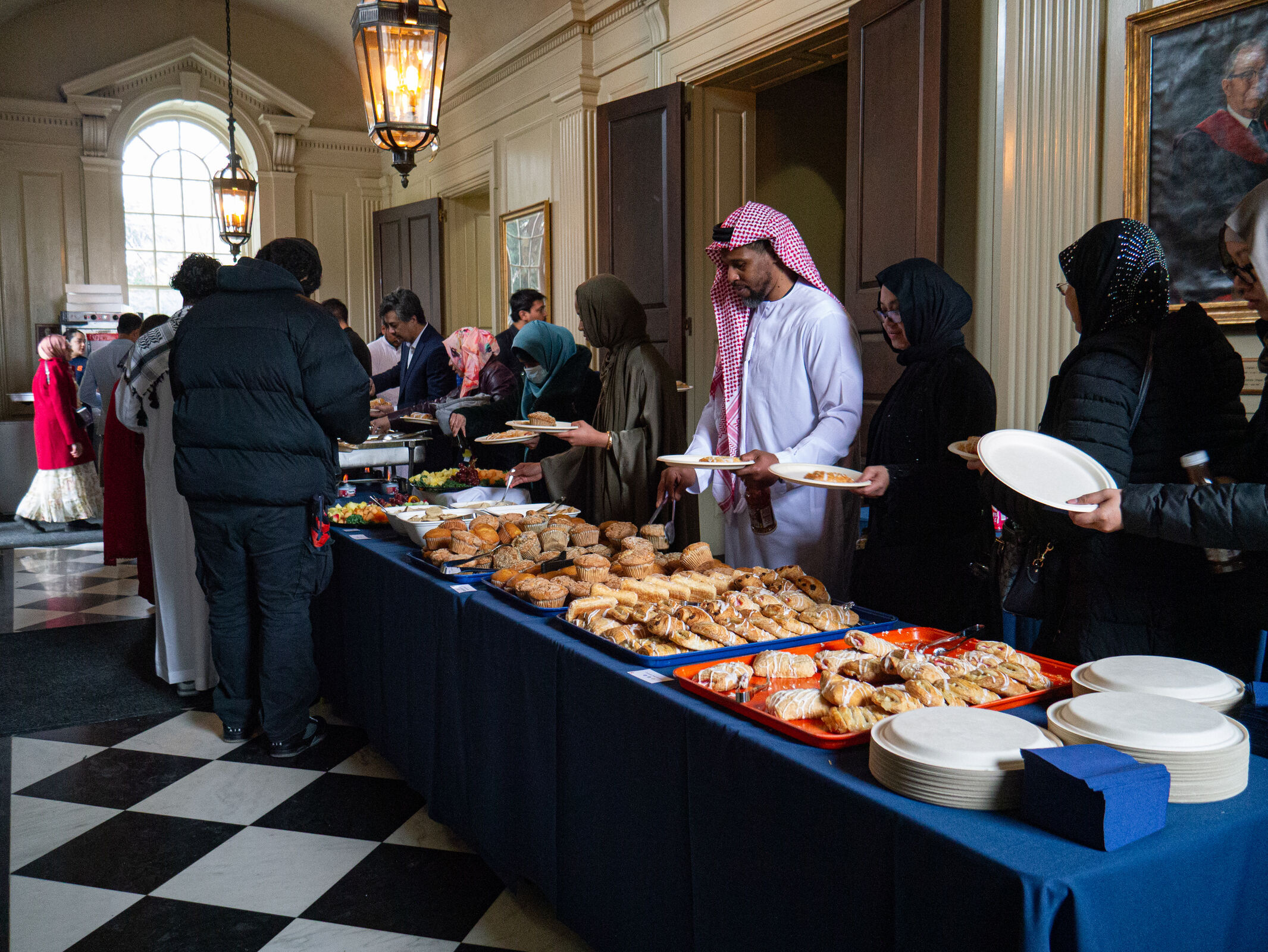
On a mid-march Friday morning, just over a month after the first night of Ramadan and the first day of the Lunar New Year, SU’s campus bustled with school tours and students rushing to their discussion sections. Inside Hendricks Chapel, Muslim students and community members celebrated Eid al-Fitr. The imam leading the prayer reminded his jama’at that while they are bidding farewell to the holy month, they can take the lessons they’ve learned from the past month forward.
As the congregation prayed, SU’s dining staff set up a feast in the entrance area of the chapel. The scent of hot coffee, sandwiches and pastries traveled through the building.
Abdi, the SU senior, said he’s grateful for Ramadan, despite how busy his schedule gets. Even while running on little sleep and finding time for his many responsibilities, he said Ramadan energizes him and allows him to reconnect with his community and core values.
“It’s a month of building your character and a month of seeking forgiveness. That’s what Ramadan is about,” Abdi said.
A digital journalist from Bethesda, Maryland.
A digital journalist from Akron, Ohio.
A digital journalist at Syracuse University.
A digital journalist from Los Angeles, California.
More from Coming to Cuse Podcast
View All Stories
Syracuse’s Italian Americans keep culture alive through charity
Story by Sofia Kissel Photos by Rebecca Beckas
How Syracuse’s immigrants navigate a changing system
Story by Sara Oppenheimer & Evan Edmiston Photos by Christine Kao
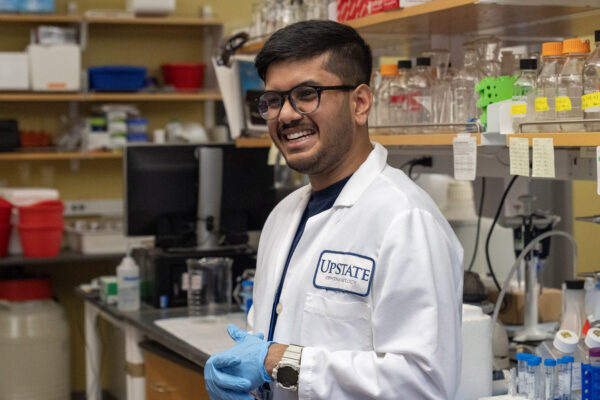
International students come to US to chase their dreams
Story by Trinity Corbett & Kyra Wood & James Mullarkey & Max Olson
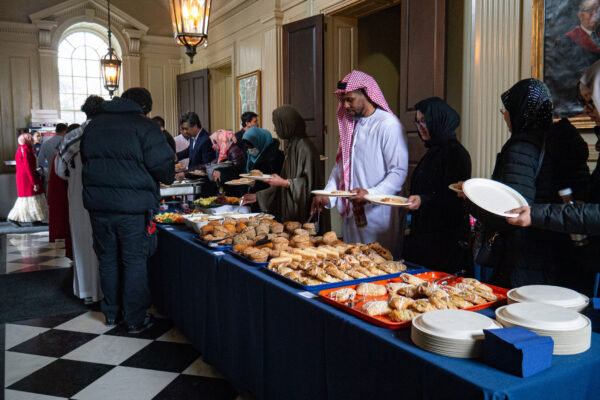
Making time for traditions
Story by Kira Desai & Olivia Boyer & Maya Aguirre
How international students navigate collegiate soccer
Story by Rohan Borges & Felipe Ferraz de Souza Miranda Photos by Ella Chan
European hockey prospects fight for their spot in the NHL
Story by Will Broad & Josh Solomon Photos by Ike Wood