


ICE raids and visa pauses: How CNY immigrants are navigating a changing system
As backlogs grow and ICE enforcement expands, immigrants across central New York face a process that feels more uncertain — and more hostile — than ever.
Nana Asifa Owusu-Ansah knew from a young age she was not allowed to fail.
Owusu-Ansah immigrated to the U.S. from Ghana as a dependent on her mother’s student visa 23 years ago. She knew to always keep her head down, be respectful and make as little trouble as possible both in and out of school. Owusu-Ansah and her little sister understood something as simple as a suspension or disrespectful comment could put her family under scrutiny.
“My mom did a great job reminding us we are not from here,” Owusu-Ansah said. “I was always thinking about the amount of time I had left here. It was motivation for me. I was always focusing on the task at hand.”
Owusu-Ansah‘s mother, Patricia Birago, worked toward a degree for 20 years while working full time to support her children and keep them in the United States.
“I studied information health technology, but I couldn’t complete the degree until I got my green card,” Birago said. “I had to take care of my kids and make sure they could stay.”
Owusu-Ansah and her family applied to be permanent residents in 2017, but administration changes and the COVID-19 pandemic delayed paperwork significantly. They received their green cards in 2022.
In 2025, as Owusu-Ansah applied for citizenship, her future once again felt uncertain.
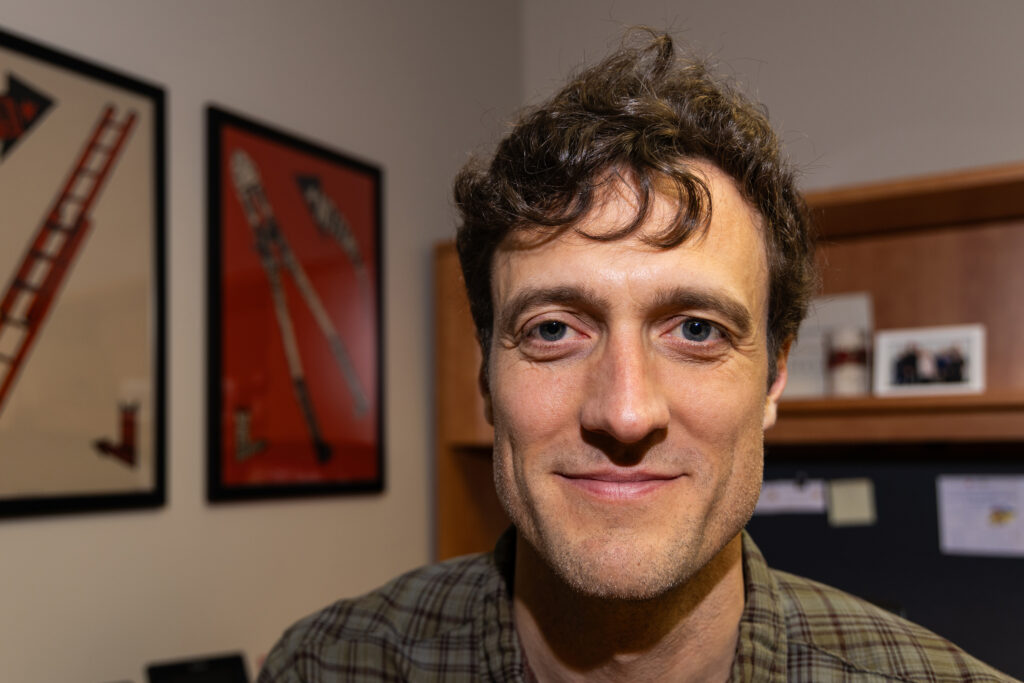
Photo by Christine Kao
Coming to Cuse
Legal Troubles Part I: Navigating through chaos
Benjamin Vernon supervises the immigration counsel team at Hiscock Legal Aid Society, a nonprofit in Syracuse, New York. After the Immigration and Customs Enforcement raid on the Nutrition Bar Confectioners factory in Cato in February 2026, Vernon said the nonprofit saw a steep uptick in cases. Vernon discussed the current administration’s changes to immigration law, and how it has affected his life and career.
Now Playing
Legal Troubles Part I: Navigating through chaos
Produced by Sara Oppenheimer
Immigration policy in the U.S. took a significant turn during President Donald Trump’s first term in 2016. According to the Migration Policy Institute, Trump signed over 400 immigration-related executive orders during this time, including a tightening of visa processing and asylum policies, such as increased fees for visa applications. President Joe Biden’s administration overturned many of those policies. Biden’s second year in office saw a record 1.6 million new U.S. immigrants, the biggest single-year increase since 2000.
Now in Trump’s second term, the immigration process is in a constant state of change, local lawyers said. The path of legal immigration is fraught with previously unheard-of roadblocks, such as widespread pausing of and stricter qualifications for visas, nationwide Immigration and Customs Enforcement raids and the removal of areas where immigrants are protected from deportations such as churches and schools.
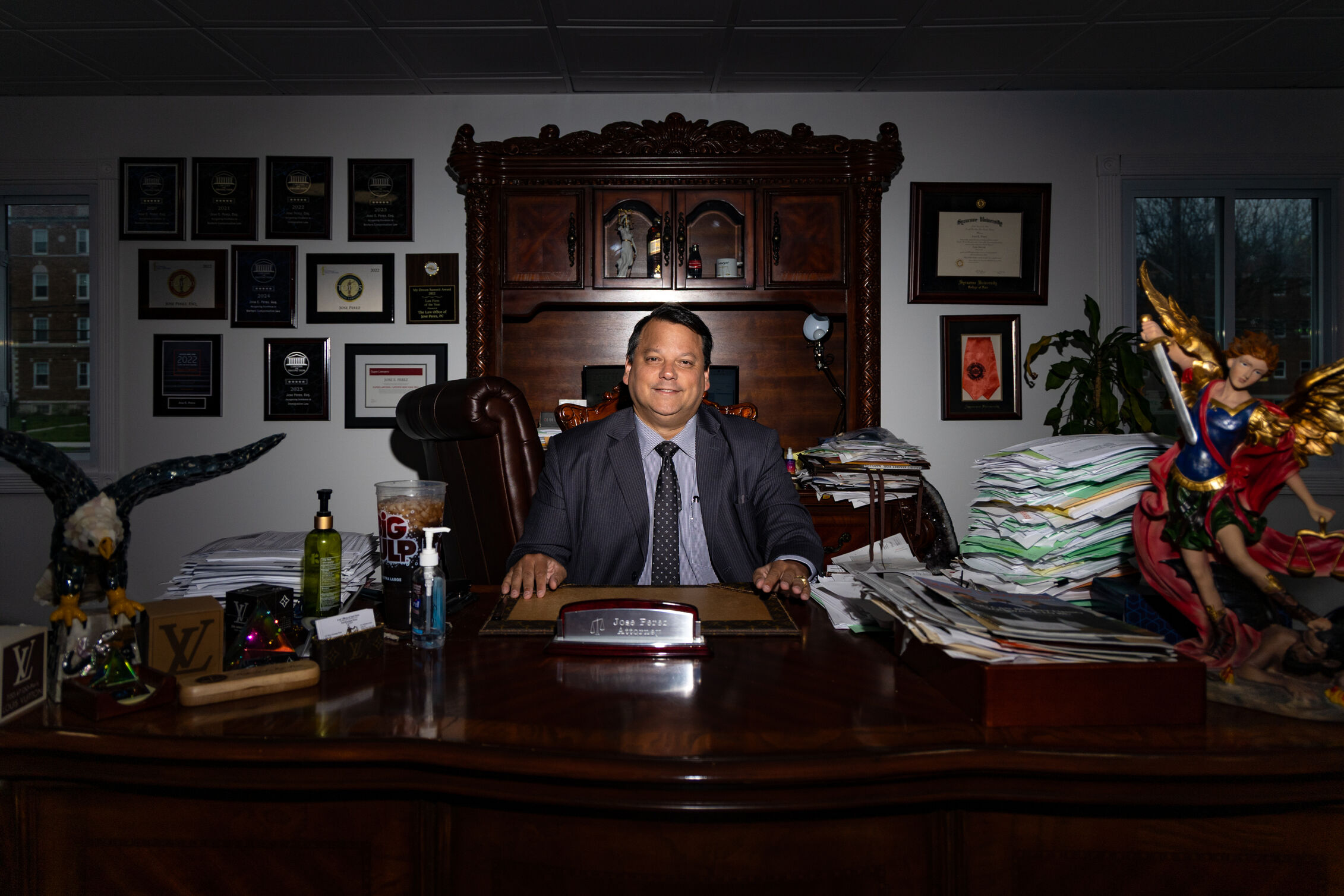
“There is a lot of confusion out there on what to do and how to proceed,” said Jose Perez, a Syracuse-based immigration lawyer. “The government has created that on purpose. People are in panic mode right now because of everything that the government is doing. This is not easy for anybody.”
The state of immigration in central New York
Some Syracuse lawyers say that the same issues affecting clients in central New York are affecting immigrants nationwide: increasingly postponed processing times, the Trump Administration’s aggressive deportation policy and rhetoric causing constant fear.
Increases in wait times and evidence necessary for approval often come without any communication for prospective visa and green card holders. Wait times published on the U.S. Citizens and Immigration Services Case Processing Times website show the time it took to complete 80% of processing requests, but it is unclear how often these numbers are updated.
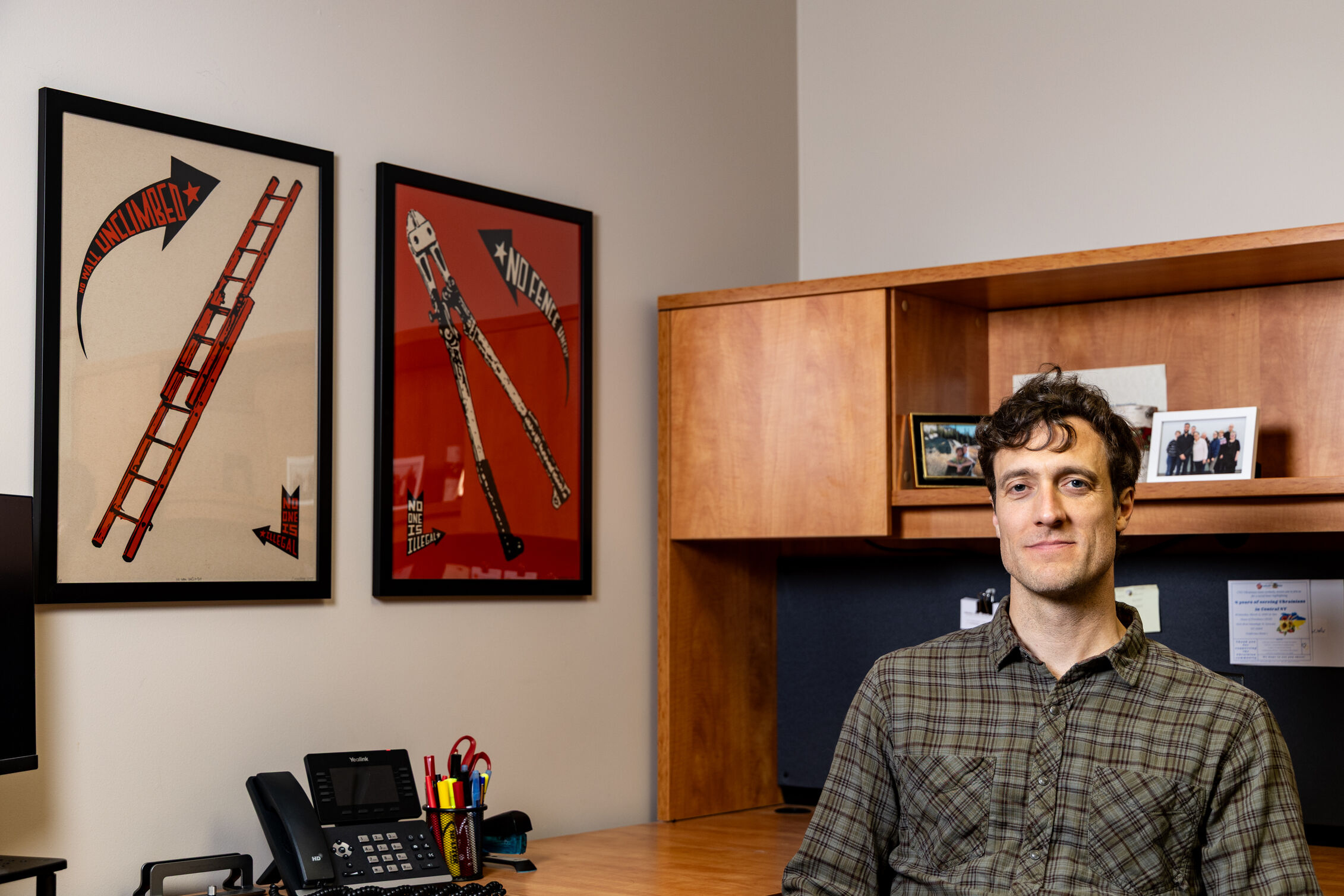
Photo by Christine Kao
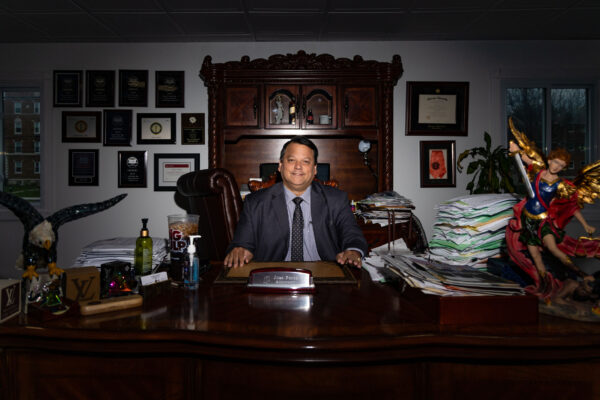
Benjamin Vernon is a lawyer with the Syracuse-based Hiscock Legal Aid Society.
“The courts are now demanding a higher volume of evidence that may not be justified under the law,” said Benjamin Vernon, a lawyer with the Syracuse-based Hiscock Legal Aid Society. “This and the constantly increasing wait times means that people are wrapped up in court for months or years. Often they get deported with their application for a green card still pending. It is then automatically denied.”
Depending on visa type, origin country and backlog of applications, prospective visa holders could wait between 15 days to over two years for applications to be processed, according to the USCIS. There is no guarantee of approval, and for relatives and asylum seekers, the waiting period can be decades.
“You put in your application, you get no notice today, you might get a notice tomorrow, but who knows,” said Ethan Ferris, who immigrated from England in 2021. “It’s a long time to have your future up in the air. It’s a lot of anxiety. You build this life, you’ve got all these opportunities around you, and there’s this voice at the back of your head that it can all be taken away.”
As of Jan. 21, 2026, all visa processing requests for nationals from 75 countries deemed “high risk” are paused indefinitely, affecting both visa renewals and green card applications.
“If you’re from a country subject to processing pauses, you’re not necessarily getting a bad outcome. You’re getting no outcome,” Vernon explained. “That’s not something somebody can change. No amount of lawyering can change what’s on somebody’s passport.”
A report by the think tank Nikansen Center revealed that visa completions decreased across the board, with the USCIS reporting 59% fewer visa completions in January 2026 than in January 2025.
In 2025, 818,000 immigrants applied for permanent residency, with 540,000 applications being approved, according to U.S. Citizenship and Immigration Services. As of October 2025, 1.2 million applications for permanent residency are still pending.
“I think the system fails at every stage at this point, but it has been failing a lot with wait times,” Perez said. “We have people that wait for an asylum meeting for three or four years. When you have those types of waiting periods and backlogs, that’s an absolute problem for any type of immigration system.”
Along with administrative hurdles, the Trump Administration granted ICE agents the overarching power to detain individuals regardless of immigration status or location, oftentimes resulting in ICE detaining immigrants after court hearings or outside of their own houses. In some cases, immigrant children have been detained on their commutes to and from school.
“We try to tell the clients that everything is going to be OK, that if they do the right steps, things are going to be fine,” Perez said. “But right now it’s very difficult. ICE is kind of doing a lot of rogue agent operations.”
Internal data from the U.S. Customs and Border Protection collected by NBC News shows the number of detainees in immigration centers at 60,311, an all-time high, and arrests made by ICE nearly double pre-Trump administration numbers.
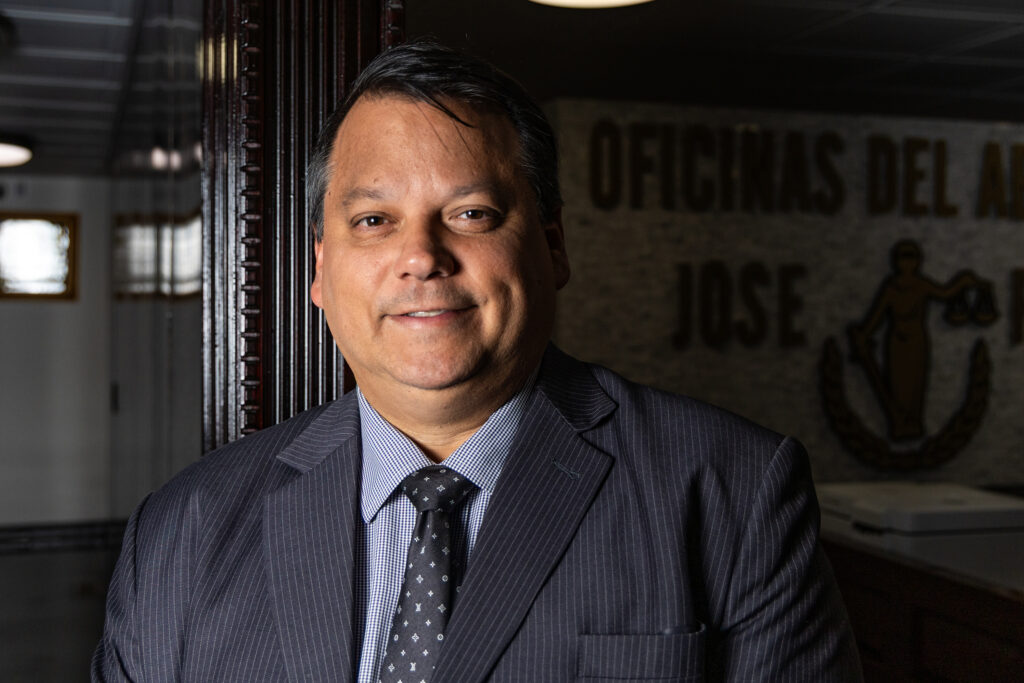
Photo by Christine Kao
Coming to Cuse
Legal Troubles Part II: No time off
Jose Perez faces a unique challenge as an immigration lawyer in Syracuse, New York: He must balance his Latino identity with his profession, working every day with clients across 32 states.
Now Playing
Legal Troubles Part II: No time off
Produced by Luisana Ortiz
In January 2026, The Trump administration announced 675,000 deportations since Trump took office. An investigation by the New York Times estimated the total closer to 230,000.
Perez has seen his clients miss documentation due to their hesitation to step outside.
“A lot of people are confused about what to do,” Perez said. “You have people that want to go to court and meet their duty of going to court, but all the TV outlets are reporting people being detained during their hearing. So many of our clients are scared that if they go to court, they will be arrested.”
Local response
The Syracuse Immigrant and Refugee and Defense Network, a volunteer group that aids low-income migrants, ramped up their efforts in advocacy and rapid response in the last year.
SIRDN’s rapid response group, one of two branches of the organization, reports local ICE sightings on their Instagram account, @sirdn315. One alert from November was shared by nearly 800 users.
Volunteers also help relatives of detainees locate family members in the detention system, a process that Annegret Schubert, a long-time volunteer with SIRDN, described as “very emotional” for those involved.
“You have to figure out how to do the work and deal with your own reactions to it at the same time,” Schubert said. “What immigrants are dealing with is 1,000 times scarier.”
At the state level, immigrants’ rights organizations are working to pass policy they believe will benefit those at risk of deportation.
Kayla Kelechian, the director of organizing and strategy at the New York Immigration Coalition, said the organization is prioritizing two bills related to immigration: the Access to Representation Act, focused on expanding the right to counsel to immigration cases, and the New York for All Act, which would give ICE less access to state resources.
“I think it’s very important,” Schubert said. “If we don’t stand up for the rights of immigrants, who will stand up for the rights of you and me?”
Perez’s firm advises immigrants to avoid minor infractions. He said to record interactions as much as possible, as video evidence can play a crucial role in getting clients released.
Finding community has also been helpful for people like Ferris during his immigration process from England.
“I didn’t really have an outlet when I first arrived here,” said Ferris. “Now that I’ve been here for five years, I have connections with others who have gone through the process. I’ve seen other people get through it. I know I’ll be OK.”
“Tired of the journey, but blessed”
In a courtroom packed with the loved ones of 41 prospective citizens, Owusu-Ansah stood in a green crocheted cardigan, smiling ear to ear. She shook the hand of Magistrate Judge Mitchell J. Katz, officially becoming a citizen of the United States before running into the arms of her mother, who was naturalized a month before. Her sister is still waiting for her petition to be approved.
“I’m proud of my culture,” Owusu-Ansah said after the ceremony. “But I also recognize and am so appreciative of the opportunity to be here. I’m so tired of the journey, but I’m so blessed.”
Ferris, not far behind her, kept his face straight, his chest rising and falling with deep breaths.
“It was such a beautiful service. It’s such a weight off my chest,” Ferris said after. “It’s really meant to be the land of opportunity.”
Judge Katz’s voice broke as he gave his final remarks to the room.
“I wish you great success as new American citizens. I hope that you will measure your success not in terms of the things you own, but according to how you preserve and share this American dream while staying connected to your heritage,” Katz said to applause as families rejoined tearfully in celebration.
Luisana Ortiz contributed to this report.

A digital journalist from Miami, Florida.

A photographer at Syracuse University.
A digital journalist from California.

A digital journalist from Miami, Florida.
More from Coming to Cuse Podcast
View All Stories
Making time for traditions
Story by Kira Desai & Olivia Boyer & Maya Aguirre
How Syracuse’s immigrants navigate a changing system
Story by Sara Oppenheimer & Evan Edmiston Photos by Christine Kao

Syracuse’s Italian Americans keep culture alive through charity
Story by Sofia Kissel Photos by Rebecca Beckas

How international students navigate collegiate soccer
Story by Rohan Borges & Felipe Ferraz de Souza Miranda Photos by Ella Chan
International students come to US to chase their dreams
Story by Trinity Corbett & Kyra Wood & James Mullarkey & Max Olson

European hockey prospects fight for their spot in the NHL
Story by Will Broad & Josh Solomon Photos by Ike Wood