


The quiet work of giving
From shoe drives to church food pantries, Syracuse’s Italian Americans carry forward a legacy of generosity.
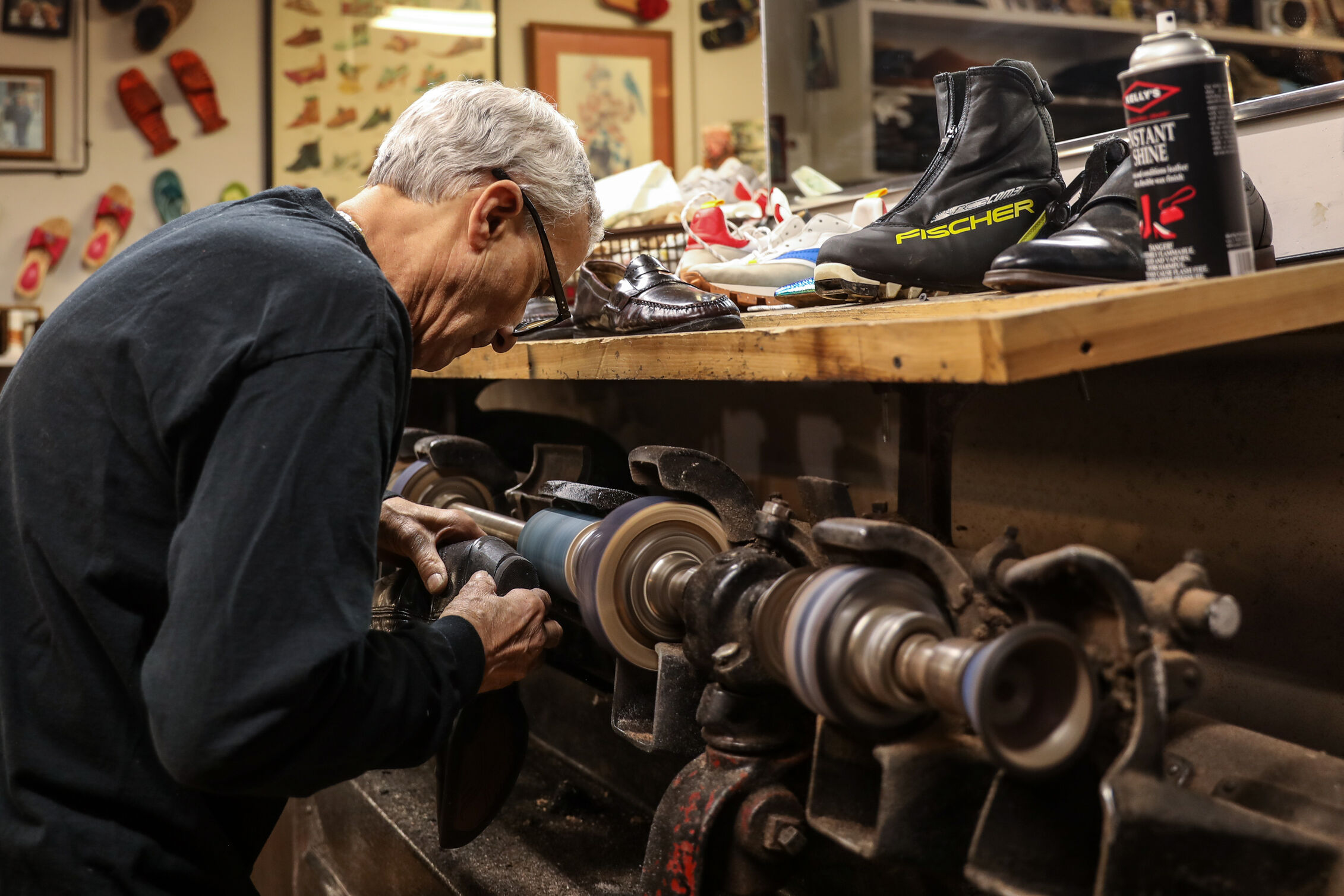
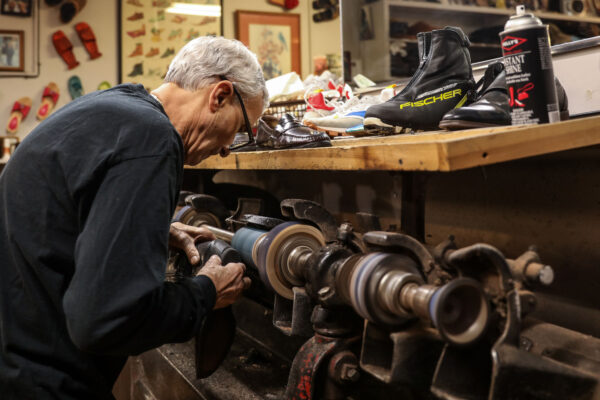
It was the brutal winter of 2011. A shoeless man lingered in front of Discount Shoe Repair on the corner of Bank Alley and East Washington Street in downtown Syracuse. Inside, shop owner Ralph Rotella tossed aside worn and abandoned pairs of shoes. He welcomed the man inside and picked out a pair: sturdy winter boots with fresh soles and a warm lining. They were strong enough to withstand the February cold and snow. The man stepped forward, silent, and Rotella handed him the boots. The man put them on, walked away and never said thank you.
“After he left, I wanted to do a shoe drive,” Rotella said. “It is better than people leaving shoes behind.”
Rotella immigrated from Calabria, Italy, to Syracuse in 1970. He spent five years learning the Rotella shoe repair method from his grandfather, whom he and his family followed to the United States. The owner of Discount Shoe Repair has donated over 300,000 pairs of shoes through his now-annual drive, including 45,000 pairs last year.
“This is what it means to be Italian,” Rotella said with a smile. “We got a good heart. The heart, it’s open for everybody.”
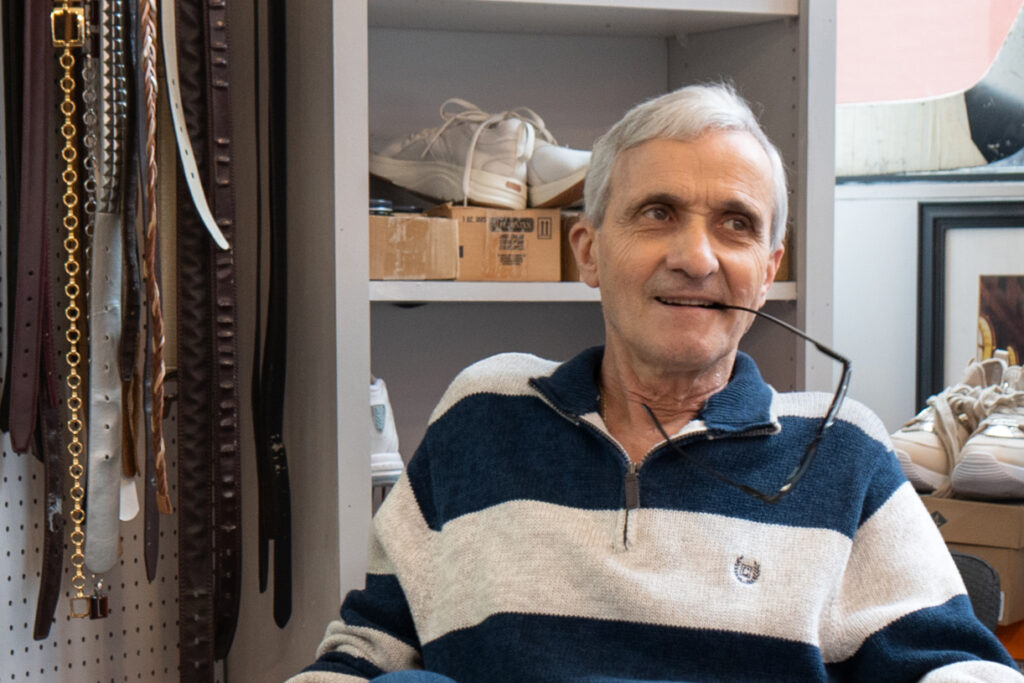
Photo by Rebecca Beckas
Coming to Cuse
The cobbler behind a quarter million pairs of donated shoes
Ralph Rotella, 71, has repaired shoes and served the Syracuse community for over 50 years. He immigrated from Italy at 16 and learned the craft from his grandfather. Now, he runs an annual shoe drive that donates tens of thousands of pairs each year.
Now Playing
The cobbler behind a quarter million pairs of donated shoes
Produced by Arwen Parmelee
Italian heritage remains a significant part of Syracuse and the broader Onondaga County region, reflecting a long history of immigration and settlement across New York State. Cities like Milan, Rome and Corinth have Italian origins, and Syracuse shares its name with Siracusa in Sicily.
While the size of the population has changed, many of the cultural practices established by Syracuse’s early Italian immigrants have persisted. In tightly knit neighborhoods where families once relied on shared food, labor and care, giving was a necessity. Over time, that practice evolved into a lasting tradition, seen in community efforts such as Rotella’s shoe drive, church food pantries serving local residents and a festival that raises funds for charitable organizations while maintaining cultural traditions.
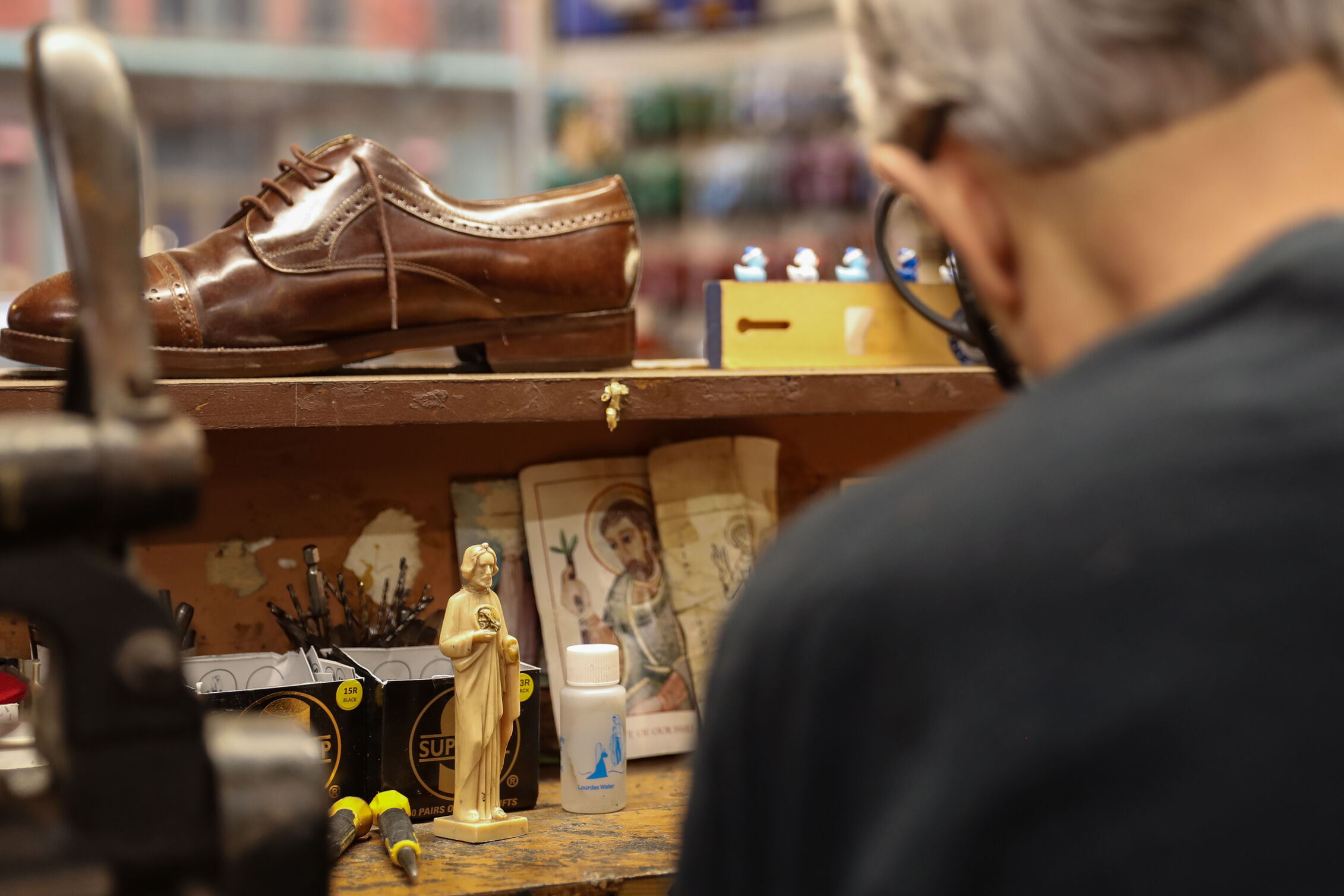
Photo by Rebecca Beckas
Ralph Rotella in his shoe shop where at his desk sits a leather shoe and a small figure of Jesus.
“We would help people who needed help, and we didn’t expect to be paid for it … that was how we were brought up,” said Frank Ricciardiello, a former Italian professor at Le Moyne College. “That was part of the Italian mentality: to help others.”
For Ginnie Lostumbo, president of Festa Italiana Syracuse, honoring her Italian heritage takes place in the form of following her father’s footsteps in managing the city’s Italian festival. The September 2026 festival will be the 28th annual event.
“He designed a festival that we could celebrate all of the Italian interests and the gifts that the Italians brought to Syracuse,” Lostumbo said.
The three-day celebration of Italian culture draws thousands to downtown Syracuse, where the sounds of live music fill the streets, vendors line the sidewalks, and the air carries the scent of pasta, sausage, espresso and fresh cannoli. Local organizations and families host booths, serve traditional dishes passed down through generations and share pieces of their heritage through food, music and storytelling.
“This is what it means to be Italian. We got a good heart. The heart, it’s open for everybody.”
– Ralph Rotella, Owner of Discount Shoe Repair
“Italians love to give,” Lostumbo adds. “You go to an Italian home … the mother will always say, ‘Come on down, sit down.’ There’s always pasta sauce or cookies available.”
While Festa Italiana brings people together to celebrate culture, it is also structured around giving back. Proceeds from the event support local charities, including food pantries like St. Lucy’s, the Samaritan Center and Assumption Church.
Brother Joseph Krondon of the Assumption Church said his Italian heritage manifests in his work.
“When my family came over from Sicily they would boil tree bark for tea,” Krondon said. “But they always had the emphasis of helping other people who don’t have as much, never letting anything go to waste: donating it or donating our time, which is just virtually how I became a friar. Focusing on generosity and giving back to those who don’t have as much.”
Krondon can’t point to the food pantry’s exact start date, but those who carry it forward trace it back to the late 1800s, when the sisters who lived at the church handed sandwiches out of a back door to travelers stepping off trains who were looking for work in the salt mines.
Many Italians came seeking economic opportunity in the United States and brought with them occupational skills, family networks and cultural traditions, Ricciardiello said.
Italian immigrants settled in cities like Syracuse where industrial and infrastructure-related work was available. Some intended to return to Italy after earning money, which led to the term “birds of passage,” though many ultimately settled permanently in the U.S.
Italian immigrants became part of the central New York region’s growing industrial workforce, taking jobs in factories such as General Motors, Chrysler and Carrier.
Driven by limited prospects in Italy’s agricultural economy, many found stable employment in blue-collar labor that supported both local industry and the expansion of Syracuse.
“They [Italian immigrants] provided the labor for the American infrastructure,” Ricciardiello said. “We needed people to build roads and tunnels and subways … to work in textile mills and coal mines. The children that I taught were the children of these blue-collar workers who worked in these factories.”
While those industries shaped daily life for many immigrant families, the traditions they carried – of food, family and generosity – outlived the factory floors.
“(As) long as I can walk and I can see and I can do stuff, I will be here,” said Rotella, who organizes the annual shoe drive. “It’s good to be Italian. I’m proud to be Italian. We like to make people smile.”

A digital journalist from Miami, Florida.

A photographer from Tarentum, Pennsylvania.

A digital journalist from New Jersey.
More from Coming to Cuse Podcast
View All Stories
How Syracuse’s immigrants navigate a changing system
Story by Sara Oppenheimer & Evan Edmiston Photos by Christine Kao

European hockey prospects fight for their spot in the NHL
Story by Will Broad & Josh Solomon Photos by Ike Wood
International students come to US to chase their dreams
Story by Trinity Corbett & Kyra Wood & James Mullarkey & Max Olson
Making time for traditions
Story by Kira Desai & Olivia Boyer & Maya Aguirre

How international students navigate collegiate soccer
Story by Rohan Borges & Felipe Ferraz de Souza Miranda Photos by Ella Chan
Syracuse’s Italian Americans keep culture alive through charity
Story by Sofia Kissel Photos by Rebecca Beckas