


Far from home, closer to opportunity
International students come to the United States in search of opportunity, but the journey requires them to navigate unfamiliar environments and redefine what home and belonging mean.
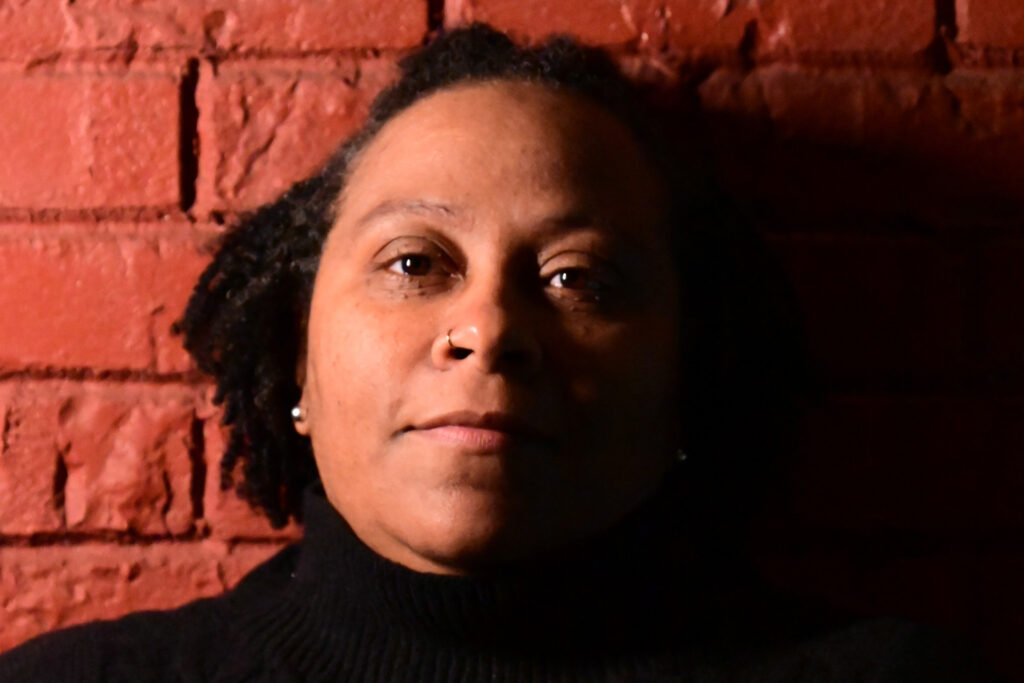
Amirah Ali Guerra followed the perfusionist into the operating room, where a patient lay naked on the table. Her eyes darted to the patient’s cracked-open chest and their still-beating heart. A woman operating on the body was performing a process called electrocauterization, burning through skin to stop the bleeding.
“It smells like burnt meat,” Guerra said.
While working at a blood bank, Guerra became interested in where the blood went after it left the facility. She learned about perfusionists, who use equipment like a heart-lung machine to temporarily serve as a patient’s circulatory and respiratory functions during procedures like open-heart surgery. Guerra reached out to shadow a perfusionist near her college in Albany, New York.
Guerra had never seen a naked, unconscious body before. The smell and blood were a lot for her to take in. Unsettled and nauseated, she began to get dizzy and took a seat away from the body. Her response to the operating room caused her to question whether becoming a perfusionist was really for her.
Coming to Cuse
Putting learning into context
Amona Major is trying to answer this question: When a lesson doesn't reflect the life of a student, who does education really serve? She left Angola to earn a Ph.D. in instructional design at Syracuse University and hopes to bring a missing perspective back to education in Africa. In this episode, Amona talks about colonial history, cultural context and why she believes the classroom must reflect the realities of its students.
Now Playing
Putting learning into context
Produced by Kyra Wood and Trinity Corbett
“It had me doubting a little bit. Like, oh, am I cut out for this?” Guerra said.
After taking a moment to gather herself, she continued to observe. Guerra was inspired by the seamlessness of the perfusionist’s work and the care she took in her job.
“She had this beautiful flow and feng shui of her actions and communicating to the field with the doctors (and) handling multiple things at the same time,” Guerra said. “She did it so gracefully and so artfully that I was convinced that, you know, this is it. I want to be her.”
The perfusionist warned her that the career would be difficult, and she would have to endure long hours, time away from family, little to no personal life and stern surgeons. Guerra didn’t care. Now more than ever, Guerra was convinced that this was what she wanted to do.
From a young age, Guerra knew that she wanted to pursue a career in healthcare and technology. But back in Panama where Guerra is from, “our healthcare system is collapsed,” she said. Guerra started her education journey in the United States in 2019, studying biology at Albany College of Pharmacy and Health Sciences, and is now a student at SUNY Upstate Medical University. She and her parents knew she’d have to leave her home country to get a better education in the career she wanted to pursue.
“They called it when we were young,” Guerra said. “They knew that it’s not the same graduating from a university back home than a university that’s renowned.”
In the 2024-2025 academic year, there was a 5% increase of enrollment in international students in United States colleges and universities, according to the Open Doors 2025 Report on International Educational Exchange, though the number of international students enrolling in an American college or university for the first time decreased by 7%. Almost 70% of international students who’ve studied in the U.S. since 2000 are from Asian countries, the majority of students coming from China and India. For international students, that decision often means adjusting to a new way of life: giving up familiar routines, traditions and the support systems they grew up with.
Benefits of a U.S. degree
Several international students said they choose to come to the United States for the global recognition of a U.S. degree compared to degrees from other countries.
“It’s almost like a green card. It’s like a passport to the job market globally,” said Amona Major, a Ph.D. student from Angola studying instructional design, development and evaluation at Syracuse University.
The difference for students like Major comes down to access: access to resources, technology and connections that may not be available in their home countries.
“That’s a sacrifice I’m willing to make because then I know when I leave here that the world will definitely be open for me in a different way than it would be if I just had my degree from Africa,” Major said.
Adjusting to the education system in America can be difficult, especially if students are coming from a place where the curriculum wasn’t as complex or didn’t provide as many resources and opportunities. Major said that she could’ve gotten her degree in Africa or anywhere else in the world, but the technology that many U.S. institutions have readily available to students is hard to find elsewhere. Major said a degree from the U.S. could help her learn more about making educational curriculum relatable for students and teachers.
Many international students said that adjusting to living and studying in the U.S. is less challenging when they can connect with others who share a similar experience. Major said that Syracuse University cultivates a community of international students who support each other through this difficult transition. Major attended a mixer for international students when she first arrived on campus and used her Ph.D. research to connect with other international students.
“I conducted research in the sense of belonging [for] international graduate students within the United States higher educational system,” Major said, “and how technology might impact how they belong in those spaces as well. So that was one way that I thought of to kind of adapt.”
Guerra found the intensity of adjusting to graduate school in the states much more difficult than her undergraduate experience, where she was able to work and send money back home to her family in Panama.
“You really have to dedicate yourself … to get through my classes, lectures and everything because every single detail, it’s a piece of information that could help you change a room when you go in to see a patient and, you know, save their life,” Guerra said.
Finding support away from home
While some students have an idea of where they want to go with their careers after graduation, other students are still figuring out their areas of interest. Nyaari Kothiya moved to the U.S. from India 10 years ago on a student visa. Away from her friends and family, Kothiya had to grow up and learn on her own. She started her journey in high school, living with her cousin while the rest of her family stayed home.
For Kothiya, moving to the United States has been both rewarding and challenging.
“It is a double-edged sword because once you move (you) lose a lot of the social support that exists back in India,” she said.
Kothiya said that although India is diverse, everyone is ultimately Indian. While that can provide opportunity for support through shared experiences, languages and cultures, she said she values how the U.S. is like a big melting pot.
“It’s a very nice amalgamation of a lot of things or of a lot of cultures … it’s been very rewarding to see all of these different backgrounds,” she said.
Kothiya said that she is the only Indian person in her friend group in the U.S.
“Coming here, it just opened up your world to a lot of other worlds … you find your people and you learn about them,” she said.
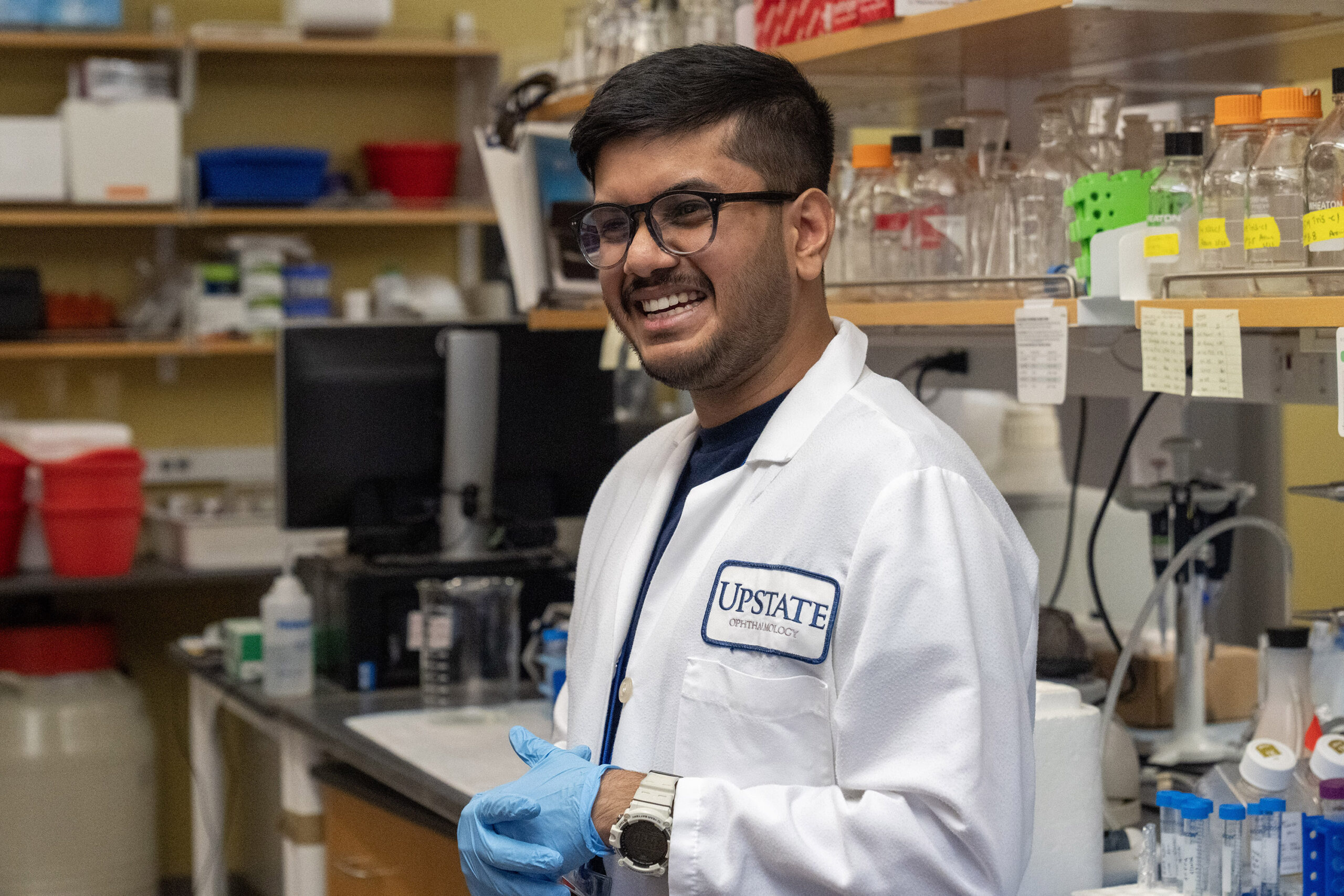
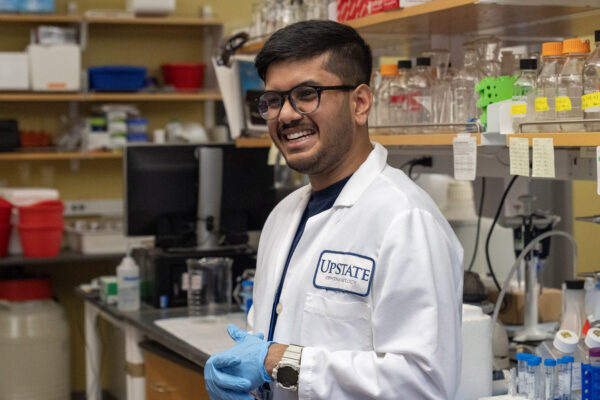
Arpan Banerjee, a third-year Ph.D. candidate studying ophthalmology and visual sciences at Upstate Medical University, says he was “pampered” growing up. When he lived with his parents in Kolkata, India, he didn’t have to worry about things like making sure his laundry was done or whether there were groceries in the kitchen until he came to the U.S.
“It’s one of those moments when you finally get your bubble burst by reality,” Banerjee said. “When you come from there and try to settle down here, it’s a bit of a cultural shock. I come from a massive city, and here I am in Syracuse… sometimes I just felt like the silence was deafening.”
Banerjee said his parents remind him to take things one day at a time when school and living alone while being far from home feels overwhelming.
“Just take it as a day. It’s not a bad life. It might just be a bad day,” he said.
Banerjee said their constant encouragement kept him motivated through his time in the U.S.
“I’ve been very fortunate when it comes to my parents because they were so supportive,” he said. “They always knew that if you want to shine and prosper in life, you have to get out of your comfort zone.”
Banerjee said his principal investigator, Audrey Bernstein, has helped him adapt during his time in the U.S. A principal investigator is a professor who serves as a supervisor overseeing students conducting research. Thanks to her guidance, Banerjee has been to several conferences and published multiple first author papers in the three years he’s been at Upstate.
“She’s always pushing me forward and always trying to get me out of my comfort zone because that’s where growth happens,” he said.
Outside of supportive friends and professors, some students have found family inside the classroom. Guerra said in her graduate program it’s common to take most of your classes with the people in your cohort. This means spending most of the day, almost every day, with the same group of people. For some, this may seem like a nightmare, but students like Guerra have found it beneficial.
“I have family that supports me, but my classmates are supporting me,” Guerra said. “It’s definitely like friends for life at this point.”
Looking toward the future
Despite coming to the United States for their degrees, many international students wish to use their newfound knowledge to support their home countries. Major says her dream career would be to be the leader of education back home.
“Wherever I am in the world, (even) if I stay in the U.S. working, my idea is that I should be doing something – research, anything – that is going back to the continent (of Africa),” Major said.
Unlike her mother and father who are both doctors who have worked in multiple specialties, Kothiya’s mind isn’t made up and she’s open to pivoting if need be.
“I’m going to apply into ophthalmology,” Kothiya said. “But if I don’t get into it, then we’ve got to figure out another specialty.”
Although Banerjee isn’t sure whether he wants to use his degree to pursue ophthalmology in academia or take his talents to industry, he values that his principal investigator encourages whatever pathway he may choose.
“She sees industry and academia both as equal opportunities and not as rivals of the other,” Banerjee said. “Which is very important … because your PI or your boss should always give you that mental space and that environment where you can think of all possible directions.”
Guerra, on the other hand, already has her vision in mind for what she wants to do once she’s well into her career.
“I do wish to perhaps start my own school of perfusion and be able to train perfusionists back home,” Guerra said. “There’s definitely a debt that has to be repaid. I just love being Panamanian so much.”
A digital journalist from Buffalo, New York.
A digital journalist from Atlanta, Georgia.
A digital journalist at Syracuse University.
A digital journalist at Syracuse University.
More from Coming to Cuse Podcast
View All Stories
Making time for traditions
Story by Kira Desai & Olivia Boyer & Maya Aguirre
How international students navigate collegiate soccer
Story by Rohan Borges & Felipe Ferraz de Souza Miranda Photos by Ella Chan

European hockey prospects fight for their spot in the NHL
Story by Will Broad & Josh Solomon Photos by Ike Wood
International students come to US to chase their dreams
Story by Trinity Corbett & Kyra Wood & James Mullarkey & Max Olson
Syracuse’s Italian Americans keep culture alive through charity
Story by Sofia Kissel Photos by Rebecca Beckas
How Syracuse’s immigrants navigate a changing system
Story by Sara Oppenheimer & Evan Edmiston Photos by Christine Kao