


Cases of chaos, despair and hope
In Chicago’s immigration court hundreds of immigrants go through proceedings that will determine whether they will be able to stay in the U.S.
The girls wore heels and flowy dresses, and spent much of the hearing laying their heads on the back of the pews, or each other, or their brother.
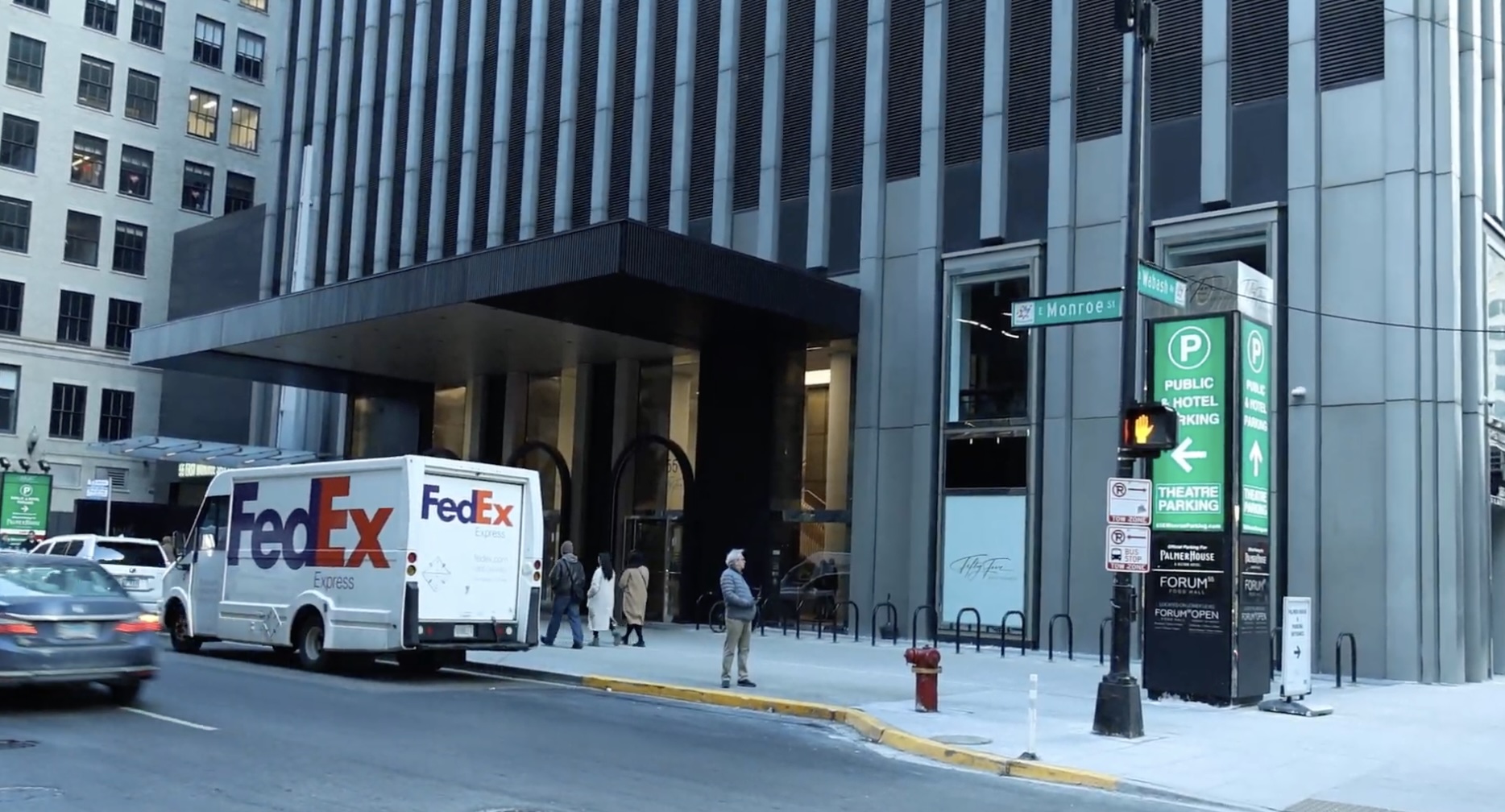
They were in Chicago’s immigration court, on the 15th floor of a nondescript downtown office building, where every day hundreds of immigrants go through proceedings that will determine whether they will be able to stay in the U.S.
In many cases, that decision also determines whether they will be separated from their families, whether they will be able to earn a living, whether they will be sent to a country they’ve never even visited, whether they face violence and persecution or even whether they will live or die.
These girls, like many of the immigrants in Chicago’s immigration court this year, were from Venezuela. Their parents were seeking asylum for the family of five based on political persecution they said they’d faced as members of an opposition political party in Venezuela. A vehicle intentionally rammed them on the highway, and masked people broke into their home and threatened them, they said. But Judge Michelle Venci found inconsistencies in their testimony and asylum applications, and ordered them removed from the U.S.
The older girl began to cry quietly and wiped her face with her sleeves. Their mother asked the judge what to do. She is scheduled for surgery in two months. The family has 30 days to appeal the order.
“After it becomes final it’s up to ICE,” Venci told them. “I wish you the best of luck.”
One after another such scenes play out, before judges and attorneys who report being overwhelmed by an increasingly chaotic and backlogged system.
One afternoon in late April, immigrants lined the halls outside Judge Carla Espinoza’s Chicago courtroom, waiting for their hearings. She never arrived.
Espinoza is one of nearly 100 immigration judges nationwide who was fired by the Department of Justice last year. She is now suing the Trump administration for terminating her employment without cause, alleging she was let go for her sex, race and past work as an attorney representing immigrants.
Yet cases on the daily docket were assigned to her, nine months after she left the bench.
"After it becomes final it's up to ICE. I wish you the best of luck."
– Judge Michelle Venci, immigration court in Chicago
The confused and frightened families waiting to see her are not AR numbers, but people. These respondents have been thrust into an already complex system, rich with legal jargon, changing legislation and cultural differences. Now, under the Trump administration, the disorganization, confusion and even injustice of immigration courts has only increased.
Over five months in Chicago’s immigration court, a team of 14 Medill reporters observed a system that has been simultaneously accelerated, destabilized and stripped of the institutional memory needed to keep it functioning. Since Trump’s second term began, the administration has not only fired judges but rocket-docketed cases for specific ethnic groups and for unaccompanied minors, deployed a little-used legal tool to bypass hundreds of asylum hearings, and issued removal orders in absentia at a pace that has alarmed even veteran practitioners.
“[It’s] death by a thousand cuts of trying to create these metrics that force judges to move really fast on cases, which incentivizes just denying things as quick as possible, not really giving someone a fair day in court,” said Elizabeth Gibson, a managing attorney at the National Immigrant Justice Center.
One example of the quickly changing and to many, terrifying, policy changes seen in Chicago was the pretermission of asylum cases to so-called safe countries, with whom the U.S. had signed Asylum Cooperative Agreements allowing immigrants to seek asylum in those countries.
Motions to pretermit – or quickly end – asylum cases were a relatively rare occurrence in years past, according to attorneys, until guidance from the administration last spring and a fall ruling from the Board of Immigration Appeals paved the way for pretermission to third countries.
This winter, many cases were observed wherein the government asked, and judges agreed, to send asylum-seekers to Ecuador, and in some cases Honduras, Guatemala or Uganda; though they may never have been to those countries. A Dominican man argued he would face severe racism in Ecuador. A Venezuelan man who has never been to Ecuador has seen chilling reports of organized crime there. A child loudly played with a toy dinosaur as the government motioned to pretermit the Colombian family to Ecuador, Guatemala or Honduras.
The move to pretermit cases to third countries appeared to be part of a broader strategy to maximize immigrant removals as part of the administration’s hardline anti-immigration campaign. Since March, the practice has been halted, as noted in a memo obtained by The Seattle Times. But those ordered to third countries are still facing an uncertain and frightening future.
Meanwhile in Chicago as elsewhere, hundreds of Somali asylum seekers have had their hearings moved up from dates years away, giving them just weeks to prepare complicated asylum pleadings with evidence that often must be sent from abroad. The fast-tracked hearings, coming amid intense scrutiny on Somali immigrants from the federal government, have overwhelmed attorneys and immigration judges and created a system of categorical denial for Somalis seeking asylum.
Judge Craig Defoe, whose days consisted almost entirely of long, intense asylum hearings with Somalis during much of April and May, often appeared exhausted or frustrated by the schedule, and skeptical of claims that people would be killed if they returned to Somalia. While Defoe’s rates of denying asylum are the highest among current Chicago immigration court judges, at over 70% last year, in May Somali cases began to be heard by a judge working remotely from Texas, whose denial rate last year was 90%.
Unaccompanied minors who came to the U.S. alone are also seeing their court dates speeded up, so attorneys representing children – from teens to toddlers – are forced to prepare asylum or other applications for relief on short notice under intense time pressure.
These are just some of the most visible of the hundreds of policy changes and directives to hit the immigration court system since Trump took office less than a year and a half ago.
As the courts weather these changes, immigrants continue to appear dutifully for their court dates to advocate for their rights to remain in the country where many have lived for years. They often must represent themselves since immigration courts do not provide attorneys. The attorneys who do appear in court are often overtaxed and struggling with newly compressed timelines. Immigrants who speak minority languages struggle to understand and communicate due to inadequate interpretation services.
After hearings end, families often spill into the courthouse hallways trying to decipher what just happened, whether they can appeal and how they are supposed to continue navigating a legal system few understand.
Meanwhile, some do receive asylum – showing that the U.S. can still be a haven for those described in the iconic 1883 sonnet inscribed on the Statue of Liberty – those “tired…poor…tempest-tost,” and “yearning to breathe free.”
A Russian man with his wife pleaded for asylum because his Muslim faith and ethnic minority status meant he was likely to be sent to the front lines of the war in Ukraine. Judge Marc Stahl granted him asylum.
In just one other example, Judge Samia Naseem heard the case of a Honduran man captured and held hostage in a forest – three times – by gang members who terrorized him. He feared his family would be killed if they returned to that country. Naseem granted them asylum.
“Thank you,” the man said, “for protecting my family.”
Note: The Medill Investigative Lab-Chicago at Northwestern University reported this story with contributions from Feixu Chen, Julian Gonzalez, Grace Herzog, Clare Kirwan, Ben Lauren, Jasmine Lewin, Kari Lydersen, Mary Ellen Ritter, Richard Taylor Robinson, Madison Roth, Navya Shukla, Vani Subramony, Camille Vocelka and Molly Wallace.

Staff reports from the Lives in the Balance team.
More from On The Docket

Immigration judges face firings and pressure
Story by Molly A. Wallace
What we observed in U.S. immigration courts
Story by Griffin W. Fellows & Brenne Sheehan Photos by Ike Wood
Chicago’s immigration attorneys adjust to Trump’s policy changes
Story by Madison Roth
Due process at risk in Trump’s immigration courts
Story by Bryan Nicolas-Nicolas
Interpreters can shape asylum hearings
Story by Wesley J. Pérez Vidal & Ben Butler & Olivia Boyer Photos by Cassie Roshu

What is a habeas corpus petition?
Story by Laura Robertson & Mikayla Melo