


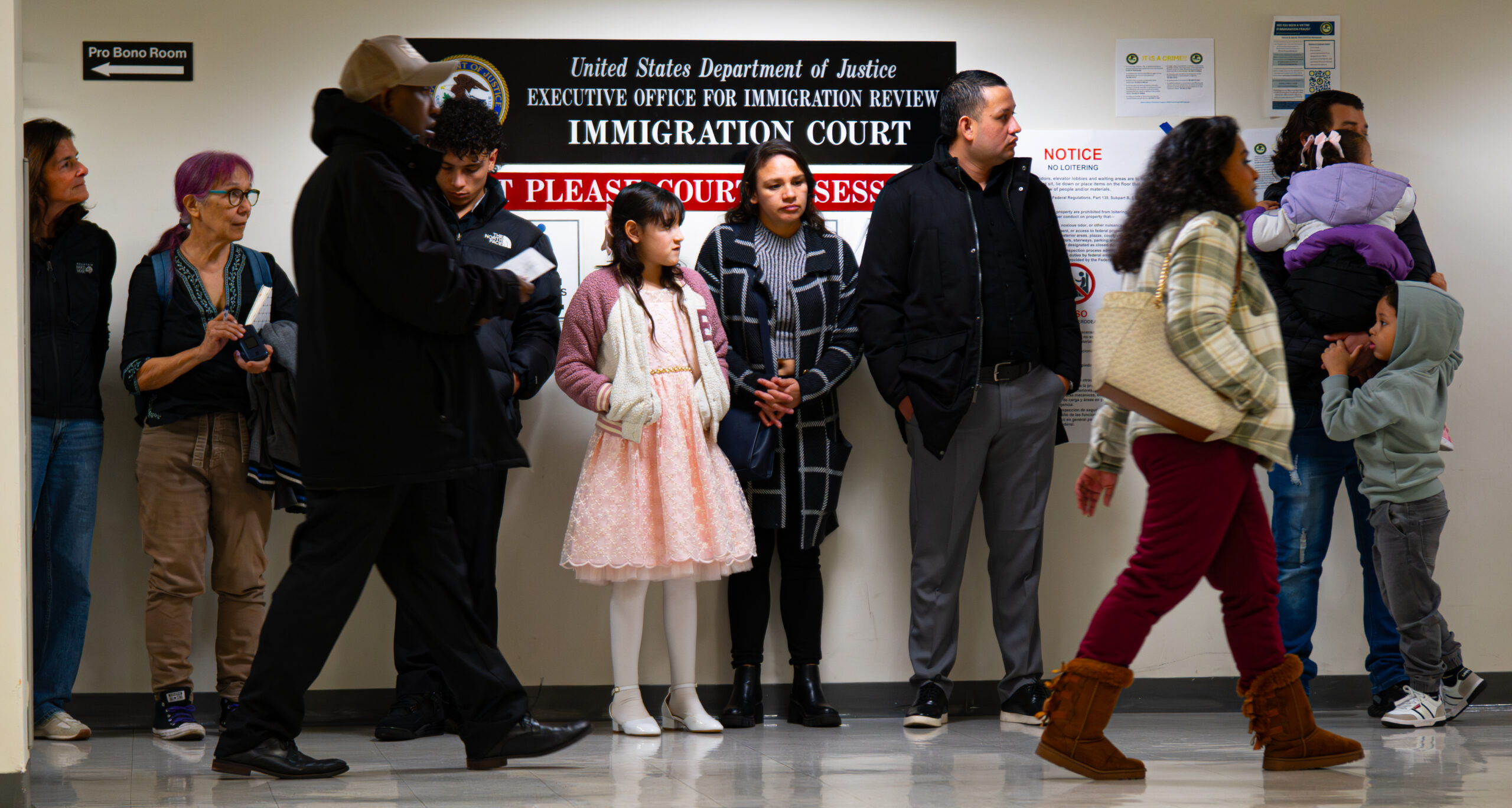
A family fights to stay together
A Venezuelan mother recalls the fear of walking into immigration court, where every hearing carries uncertainty for families seeking to stay in the U.S.
A mother walks the 12th floor of Federal Plaza in New York City. She’s worried her husband and four children will be late for their hearing. Speaking Spanish, she asks for help finding the courtroom.
The official asks for the room number and guides them. Stopping in front of the courtroom door, she takes a deep breath and turns to kiss her children, then her husband, on their foreheads.
“Okay, we are on time,” she tells the kids. “Go with your dad.”
She doesn’t go inside with them. Instead, she walks into a waiting room, sits, covers her face with her hands, and cries.
The woman, who goes by Melis, tells me the family requested asylum together as a unit, but for reasons she didn’t understand, her case became a separate proceeding. Now, she worries the judge will order her family back to Venezuela as she lingers alone in the waiting room.
“We enter those doors,” she says, “but we don’t know if we are going to get out.”
“They entered shooting”
When I got a chance to talk with Melis outside of immigration court, she told me her story, much of which has not been independently verified beyond the basics of her case on the court docket. But that is enough to know she had a long journey to get to the United States and that she now faces the prospect of being removed and sent back.
Melis is 33 while her husband, Luis, is a year younger. The couple and their children came to the United States after traveling for months across Latin America, fleeing violence in Venezuela.
“There are days when I remember everything we went through,” she said. “There are smells, words, things that people say that bring it all back.”
Those memories begin in Aragua, Venezuela, where Melis says armed men stormed into her home in broad daylight after her husband refused to pay a monthly “protection” fee.
“They entered, shooting into the house,” Melis said.
Inside were children, including her baby daughter — only months old at the time. The attackers shot Luis in the hand, Melis said, and her nephew was shot in the arm.
Melis said the men were believed to be part of armed groups linked to Nicolás Maduro’s government, known locally as “Tupamaros.”
“They are people from the same state,” she said. “They use uniforms to take advantage of people.”
They reported the attack, but nothing happened.
After leaving Venezuela, the family first relocated within the country, staying with relatives. Eventually, they decided to leave altogether and moved to Chile, where they lived for nearly three years. But they were never accepted, Melis said.
“People didn’t want immigrants,” she said.
With few options, they decided to leave again and head north. Their journey took them through Colombia and into Central America, where they eventually crossed the Darién Gap, a dense jungle between Panama and Colombia.
She found the Gap — a treacherous jungle depicted in the Apple TV show “Pluribus” — beautiful and felt safe in it, despite seeing others fare much worse.
“I saw people beaten,” Melis said. “Children who came out of the jungle without their father.”
Melis’ children became sick from the water during the crossing and she saw families separated along the way.
After the jungle, the journey continued through Central America into Mexico, where the conditions became more difficult. At times, the family did not have enough money to continue traveling and had to rely on whatever work they could find.
At one point, they hopped on a moving train because they could not afford another way forward. As they tried to climb on, Melis fell.
“My head was bleeding,” she said. “But I got up, ran, and managed to get on.”
They rode through the night until they were dropped off in San Luis de Potosí. There, they spent a week sleeping on the street.
They made their way to Monterrey, where they stayed for about three months. Both Melis and her husband worked during that time, trying to save money and to wait for an opportunity to continue their journey.
But progress stalled and they decided to move again.
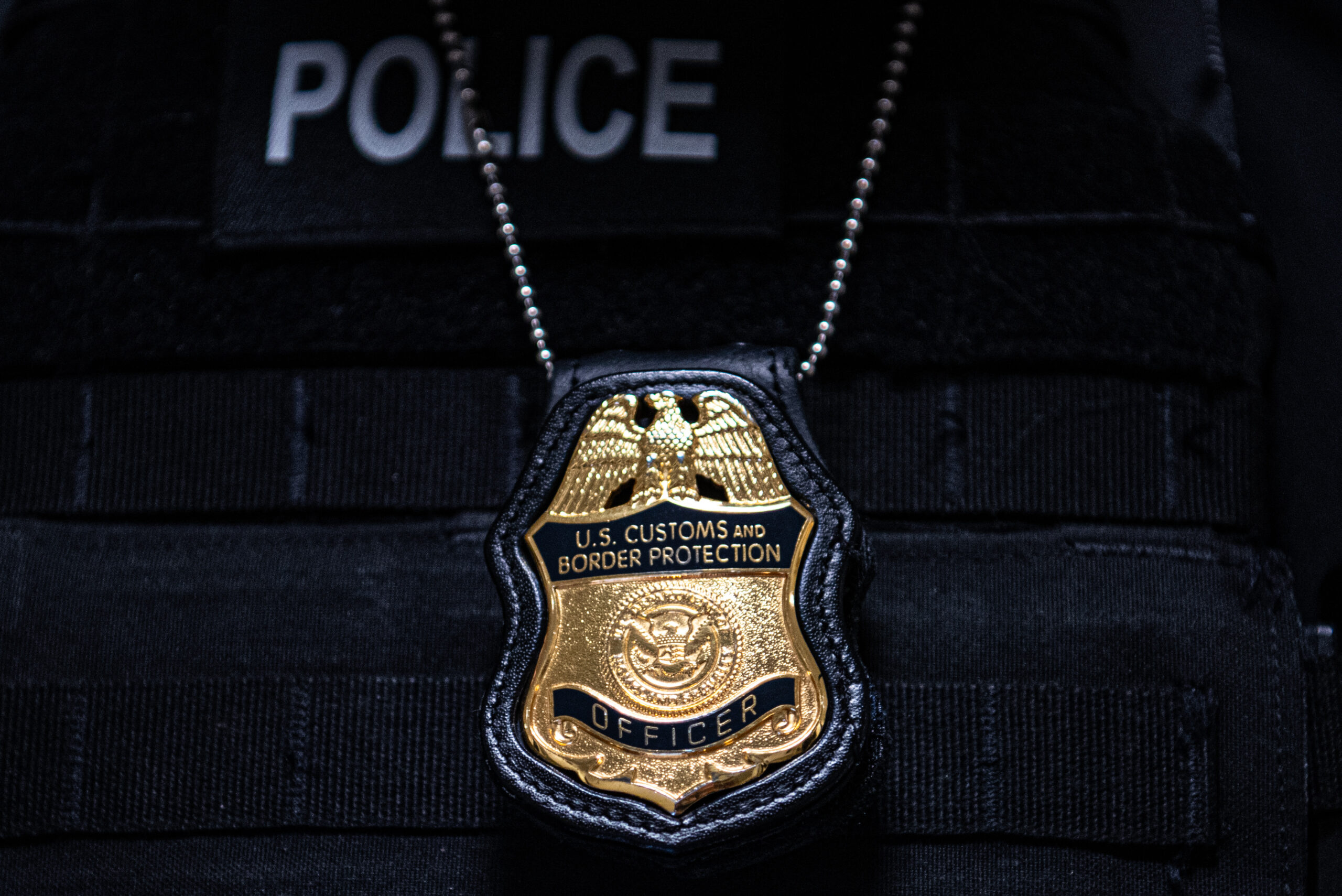
Photo by Ike Wood
A badge hanging around the neck of an officer reads "U.S. Customs and Border Protection Officer."
“They want to kidnap us”
Near the northern border, in Piedras Negras, they were approached with an offer to be taken across the river into the United States. Instead, they were taken to a house along with more than 50 other migrants.
They were told to wait and that they would be helped across, but hours passed and no one was moved.
“They didn’t take us out; they didn’t take us anywhere,” she said.
Her husband realized what was happening.
“They want to kidnap us,” Luis told Melis.
Inside the house, conditions were harsh. There was only one bathroom for everyone.
“It was horrible,” Melis said. “There were small children.”
Fear set in as they waited.
“I felt a lot of fear,” she said. “I even wanted to go back.”
But, she held on to faith.
“I asked God, and He gave me strength,” she said.
The next day, they were released and Melis and her family were able to leave and make their way toward the river.
As they tried to cross, her husband was briefly pulled back by Mexican immigration officers. “I went back and pulled him into the water and we all got in,” she told me.
Once on the U.S. side, they climbed over a barrier and were soon detained by border patrol. They were taken to a processing facility, where they stayed for about two and a half days.
“You don’t know if it’s day or night,” she said.
After being released, they were transported to Texas and eventually boarded a bus to New York City, a trip that lasted more than three days.
When they arrived in Manhattan, they went to 42nd Street, where they had been told they could find help. From there, they were placed in a shelter in Brooklyn, where they lived in large tents for nearly a year.
Now, the family remains in New York, living in another shelter while navigating the immigration system. Melis used to work as a housekeeper in hotels, but after one of her hearings for asylum, she now has to wear an ankle monitor. No one explained to her why.
At that moment she felt like a criminal. Since then, she tries to hide it using long jeans so school teachers or people in the street don’t look at it.
“What they do to us is abuse,” she said.
Melis said that it looks like one of the hotel guests complained about their safety because someone was using an ankle monitor in the hotel areas. Her boss asked her to leave and come back only when she no longer has the ankle monitor.
Life in the shelter has also been difficult. Melis said they are required to buy food daily because they do not have access to a kitchen. She also described the treatment there as degrading.
“They humiliate you, but we endure it because we have nowhere else to go,” Melis said.
For now, Melis said, everything remains uncertain. But she still has hope her journey to the U.S. will bring a better future for her family.
“If God allowed the five of us to arrive here together,” she said, “it’s for a reason.”
A digital journalist from Puerto Rico.
A visual journalist from Syracuse, New York.
More from Enforcement
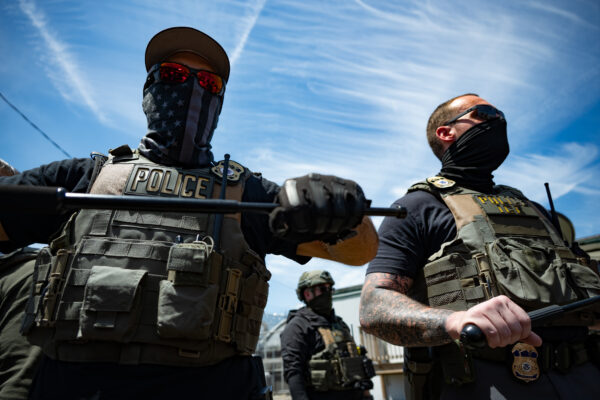
N.J. protests meet tear gas as hunger strike ensues
Photos by Ike Wood
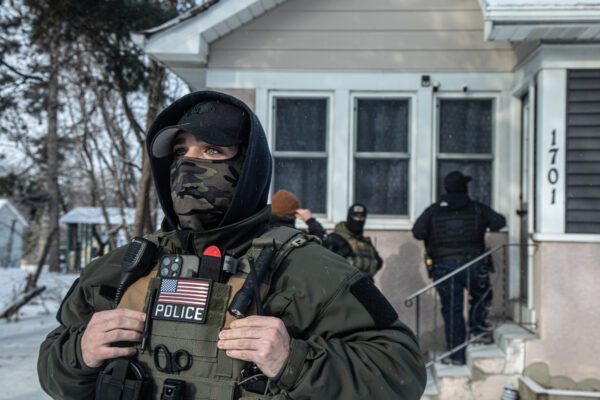
Protests, clashes and home raids in Minneapolis
Photos by Ike Wood
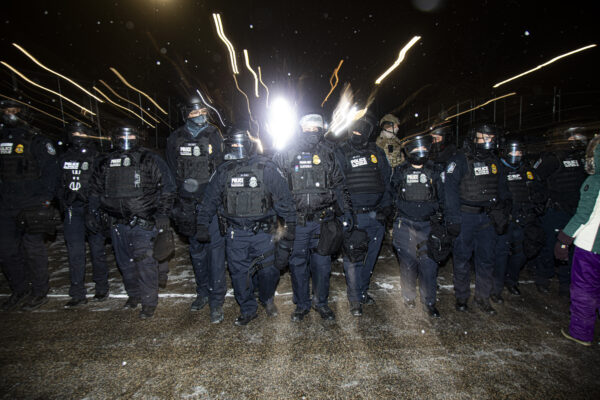
DHS after a turbulent and deadly year
Story by Gian Marco Velásquez Photos by Ike Wood
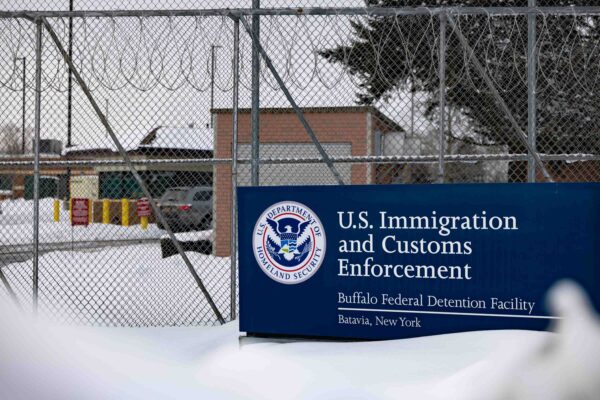
Life inside Upstate New York’s ICE detention center
Story by Project Staff
Financial questions linger over ‘Cornhusker Clink’
Story by Ruth Bailey Photos by Julia Trost
ICE split her family apart
Story by Elany Romero Cruz & Megan Ebken Photos by Ella Chan