


Chained and cuffed
A same-sex Cuban couple in Syracuse, previously cleared in the asylum process, were unexpectedly detained and ordered to be deported, highlighting the human cost of the Trump administration’s intensified immigration crackdown.
It was late October when ‘Alex’ Ramirez Gonzalez and ‘Yan’ Vazquez Hidalgo arrived for what they believed would be a routine check at the U.S. Immigration and Customs Enforcement offices in Mattydale.
A meeting that was supposed to mark the end of a long-winded process and begin a new chapter in their lives in Syracuse took a devastating turn, ending with both men being chained and handcuffed by federal authorities.
The four-month detention and now pending appeal regarding their deportation have situated the couple’s case at the intersection of long-standing U.S. and Cuba relations and the current immigration landscape.
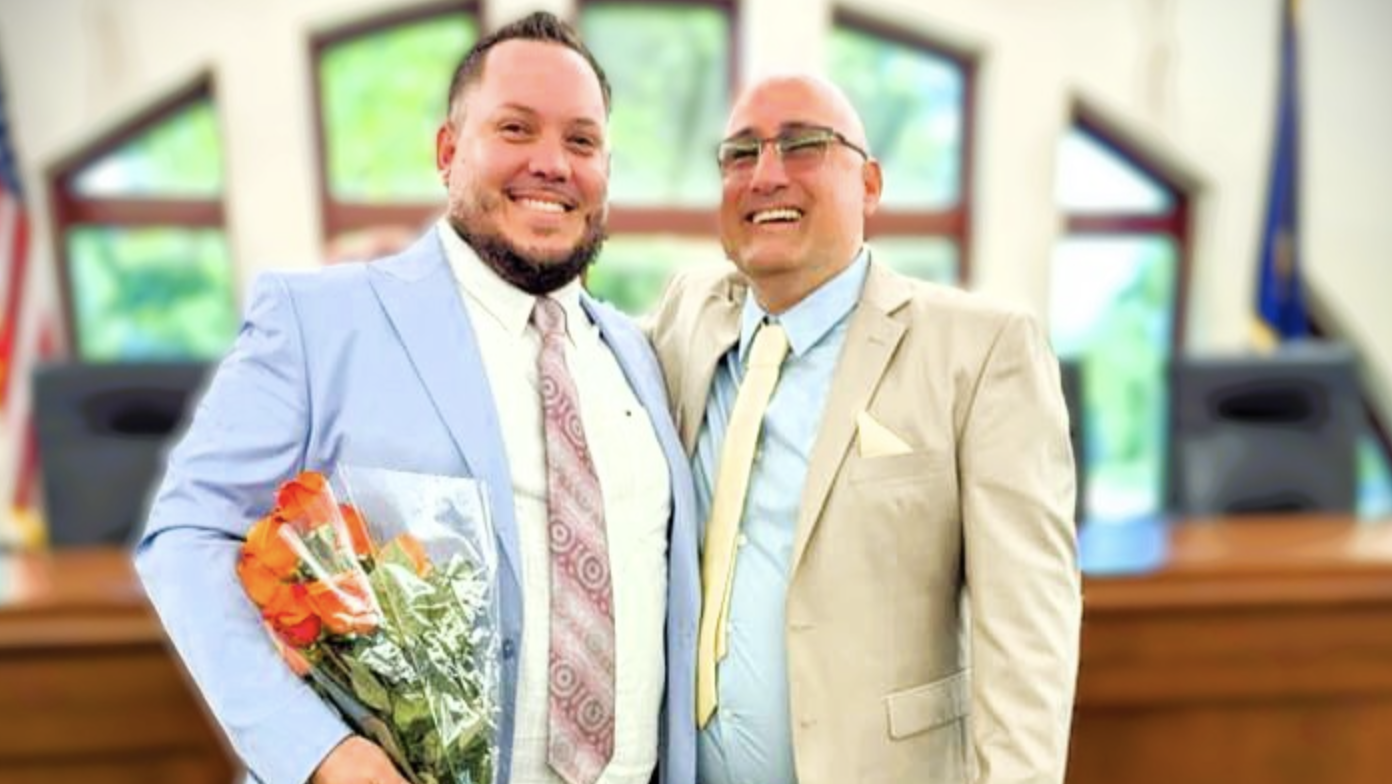
Photo by GoFundMe
Alex Gonzalez and Yan Vasquez stand in suits in a courtroom smiling with their arms around each other.
Alex arrived in the United States in 2021, with Yan joining him the following year. The couple had left Cuba, where their marriage was not fully supported at the time. Cuba legalized same-sex marriage in September 2022.
As part of their formal asylum requests, they had already undergone a credible threat assessment, a key step in the process to determine whether someone faces a legitimate fear of physical injury or death, with U.S. authorities concluding they had a valid fear of returning home to Cuba.
Following their Oct. 29, 2025, arrest, Alex and Yan were detained at the ICE Service Processing Center in Batavia. They spent the first 11 days sharing a cell before being separated for the remainder of their four-month detainment.
When a judge released the couple in February, both were issued deportation orders to Ecuador, a country where they have no family or ties. Released on bond, the judge’s decision is currently under appeal.
Coming to the United States in search of a better life, Alex and Yan were unaware that they would ultimately be caught in the tightening grip of President Trump’s renewed immigration crackdown. Around 70,000 individuals have been detained by ICE and more than 675,000 have been deported since the start of Trump’s second term in 2025, according to federal data.
In Syracuse, Alex and Yan had built a life together and found jobs at Syracuse’s Upstate Medical University. Yan worked as a custodial staffer and Alex as a supervisor in the same department.
Both were active in their union, United University Professions (UUP). Through their work and community, they built close relationships with family members and friends, many of whom were devastated by the news.
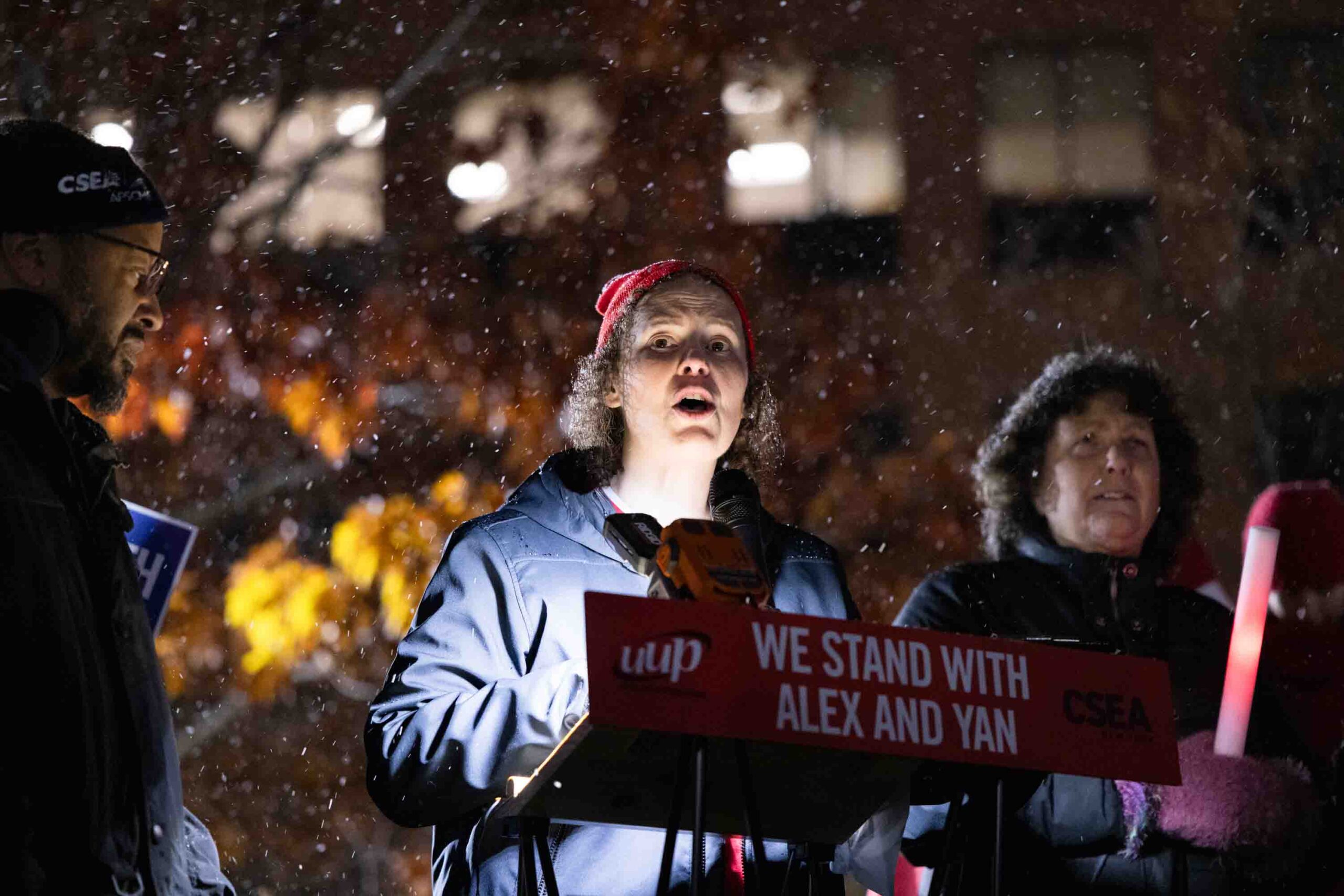
“The rhetoric had been they were going after the ‘worst of the worst’,” UUP Upstate Chapter President Mindy Heath said. “Here we are looking at two New York state employees who have both been vetted through the processes of Upstate and have worked there for a significant period of time.”
Since their arrest, community support has grown in solidarity with the couple, with community rallies and a UUP-organized GoFundMe raising almost $24,000 toward a $28,000 goal.
While Alex and Yan await their appeal, that minimal freedom comes with uncertainty and a long and complicated path to legal status in the United States.
Life in Cuba under Trump’s foreign policies
Since the beginning of 2025, the Trump administration has deported at least 1,600 Cubans, according to a report by The New York Times, doubling the number from the previous year. At the same time, arrests of Cuban nationals have soared in numbers, rising by 460% since late 2024. According to a report by the Cato Institute, green card approvals have also dropped by about 99.8%, making the path to permanent residency in the U.S. nearly impossible.
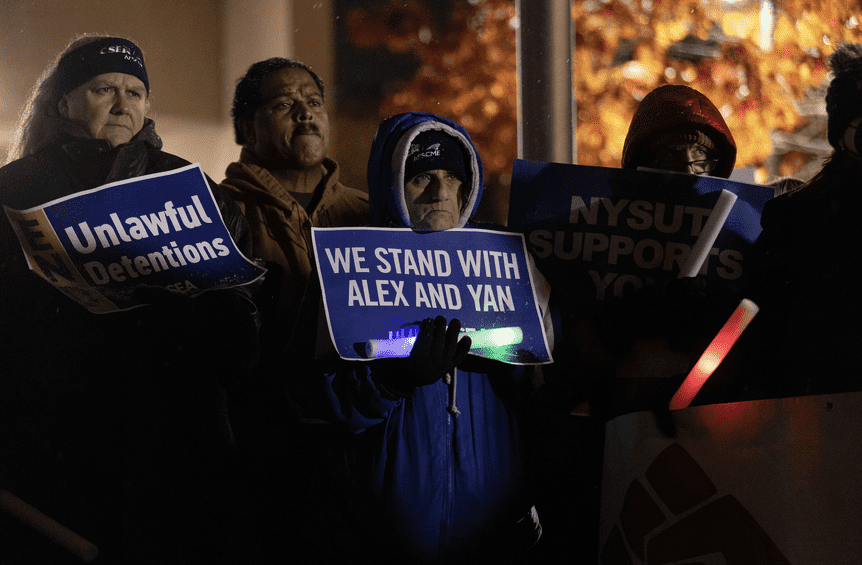
Photo by Cassie Roshu
CSEA New York, United University Professions, and the Central New York Labor Council hold a community rally demanding ICE to release Alex Gonzalez and Yan Vasquez.
This surge comes amid a deepening humanitarian crisis on the island, where fuel is scarce, food supplies are limited and the power grid has collapsed, consequences of the U.S. administration’s intensified blockade. The country, long a focus of U.S. attention, became even more central under Trump and Secretary of State Marco Rubio, a U.S. citizen born to Cuban immigrant parents.
The origins of the longstanding conflict between the U.S. and Cuba date back to the early 1960s, and the Trump administration’s intensified focus on the Caribbean nation is bringing past tensions back to the surface.
“The current moment we are in is being weighed down by history,” said Gladys McCormick, a political science professor and Latin America expert at Syracuse University.
Beginning with the installation of the first embargo during the Cold War, Cuba was unable to trade goods with the United States – nothing coming in, nothing going out. In the decades that followed, some restrictions were relaxed, but during Trump’s second term, the embargo was reinstated and hardened once again, making it harsher and more far-reaching.
Regional allies like Venezuela, which had previously supplied Cuba with much-needed fuel, have also been blocked from providing aid, deepening the island country’s ongoing energy and humanitarian crisis.
In late March, the U.S. allowed a Russian oil tanker to dock in Cuba, supplying the country with some fuel. Yet even that amount still fell short of what Cuba needs to meet its basic energy requirements and the country ran out of diesel and fuel oil reserves on May 14.
“They have no power; people are dying in the hospitals,” McCormick said. “It’s devastating. Even with embargos, you need to negotiate some of the humanitarian stuff because it doesn’t mean you have to make people suffer.”
While Cuban migration to the United States is not new, what has changed is the routes migrants take to get there. In the past, many Cubans fleeing the island sought asylum in neighboring countries such as Mexico. Under the second Trump administration, however, that pathway was effectively closed, leaving many Cubans stranded and internally displaced across the Western Hemisphere.
“When you close that pathway to the U.S., it gets displaced elsewhere – especially with Cubans because they don’t have the option of going back, ” McCormick said.
An uncertain future for Alex and Yan
Since their detainment, Alex and Yan have made regular visits to the western New York Federal Detention Facility in Batavia. In the future, they will be able to have those appointments locally in the Syracuse area, sparing them the nearly two-hour drive.
As of now, the couple waits in uncertainty as the appeal decision has yet to be finalized.
“There’s no court date set for that, no timeline, they’re kind of in limbo,” Heath said. “In the meantime, they are working. They just want to be part of the community. They want to be home.
“They just belong here.”

A digital journalist from Princeton, New Jersey.

A photographer from Temple City, California.

A photojournalist from Oregon.
More from The System

The cost of deportation
Story by Lilly Roseburrough

On the road: South Omaha to ‘Cornhusker Clink’
Story by Justin Diep
Students shut out
Story by Angelique Rodriguez & Oriana Torre
Out of ICE detention, a Syracuse man still lives in fear of deportation
Story by Laura Robertson & Mikayla Melo Photos by Liam Kennedy
The chilling effect on international student journalists
Story by Charlotte Calmès Graphics by Jesse Renee Kennedy
“We couldn’t take it anymore”
Story by Bea Anhuci