


Life inside ICE Detention
A delayed Christmas, detainee testimony and a surprise DHS inspection offer a rare window into conditions inside the Buffalo Federal Detention Facility in Batavia.
A Cuban father and his family celebrated Christmas — in March. His wife, 15-year-old daughter and 10-year-old son had waited for him.
On Christmas Day, he was in a 6-by-8-foot holding cell at the Buffalo Federal Detention Facility in Batavia, crowded alongside other detainees.
The conditions took a toll. He lost more than 12 pounds.
“No es tanto ni por mi perro,” he said of the food. “It’s not even good enough for my dog.”
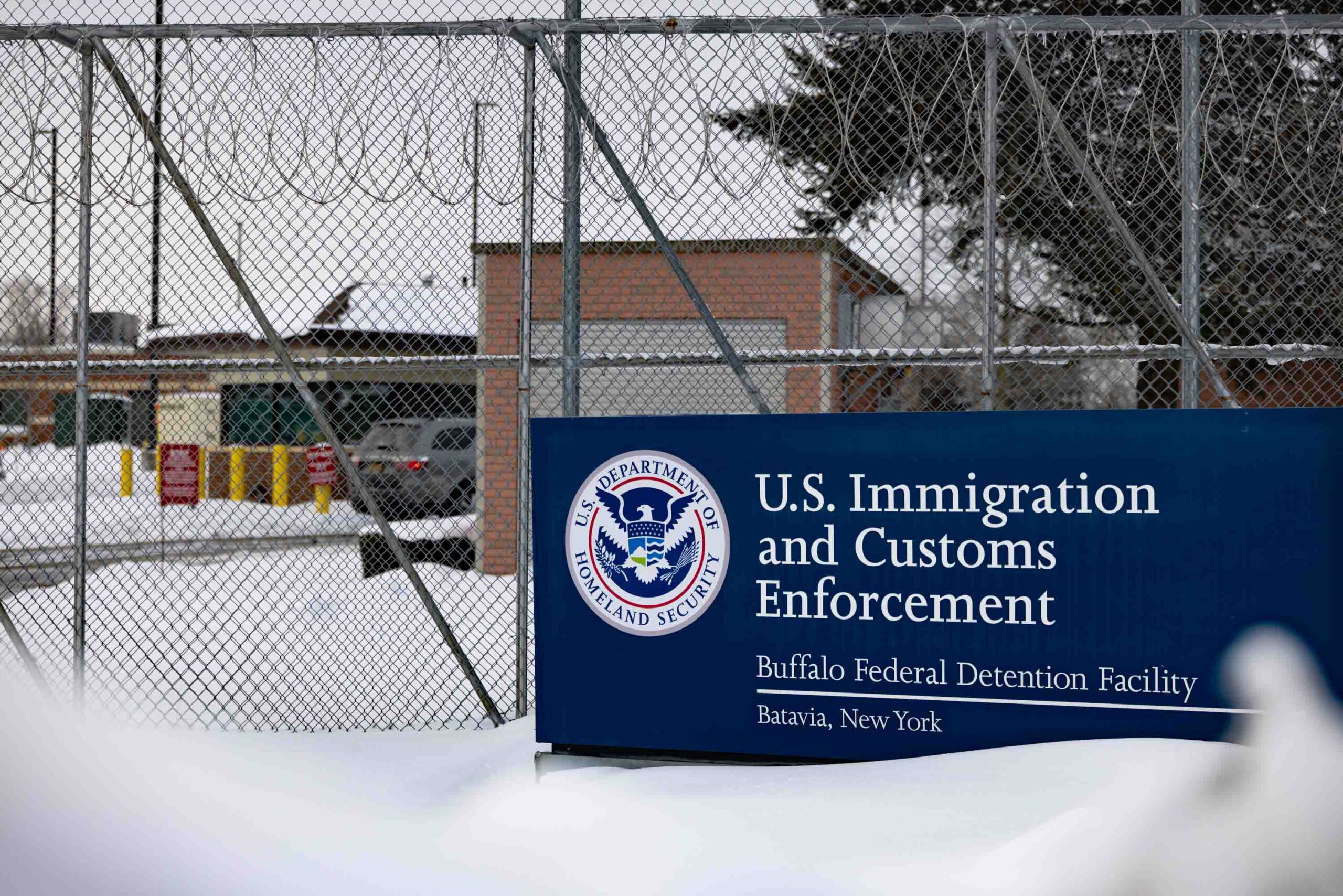
Stories like this Cuban father’s provide a glimpse inside the Buffalo Federal Detention Facility in Batavia, a city of about 15,000 residents just under a two-hour drive west of Syracuse. Visitors pass hotels, warehouses and an auto parts store before reaching the end of Federal Drive, where barbed wire and the first of two security checkpoints come into view.
Over the past year, the number of people held in ICE detention on any given day has increased by more than 75%, according to the American Immigration Council. By November 2025, ICE was operating 104 more detention facilities than it had at the start of the year, yielding a 91% increase in capacity, the Council reported.
At the Buffalo Federal Detention Facility in Batavia — the only ICE-run detention center in the state — detainee accounts and official documents challenge the idea that immigration detention is intended to ensure court appearances or facilitate removal, rather than punish those caught in the system.
A 2025 unannounced inspection by the U.S. Department of Homeland Security Office of Inspector General identified serious concerns at the facility, including use-of-force incidents that violated policy. Officers inappropriately escalated situations by using immediate force, despite the fact that detainees posed no threat to themselves or others, the Inspector General’s report found.
When complaints followed, they were not always addressed within required timelines. Records were incomplete, and appeals of grievances were sometimes left unreviewed, the report concluded. The inspection also found that medical staffing shortages led to delays of up to five months for dental care; that detainees in segregation lacked access to outdoor exercise equipment; and that staff allowed low and high-custody detainees to intermingle, increasing risk.
ICE did not respond to requests for comment. In its response to the Inspector General’s findings, the agency said it had implemented or planned additional staff training and improvements to medical care, grievance processing and use-of-force compliance.
‘Crying, desperate to leave’
Another man, José, had lived in the Syracuse area for about 30 years when he was detained by ICE in January and sent to Batavia.
At the detention facility, officers ordered him to change into a color-coded uniform. Detainees held solely for immigration violations, with no criminal history, wear blue. Those with nonviolent offenses are assigned orange, while red is reserved for individuals considered higher risk — though there are few, if any, in that category at Batavia.
Nationally, over 73% of detainees have no criminal convictions, according to the Transactional Records Access Clearinghouse, or TRAC. And yet, detainees describe dehumanizing conditions that some have called even worse than prison.
At his church, All Saints Parish in Syracuse, José stood near the altar, behind a podium facing a congregation that already knew part of his story. “Good morning everybody,” he said in English, before turning to Spanish to continue his account.
“Hay mucha gente que sufre, llora, desesperado por salir,” he said. “There are many people suffering there, crying, desperate to leave,” a fellow All Saints parishioner would translate after José finished speaking.
He described what happens when you first arrive. How quickly everything changes. How little is explained.
Inside the detention center, José said, detainees move through a series of spaces not meant for long stays, but which often end up serving that purpose.
The first stop is what detainees call a congeladora — a freezer.
The room is cold and overcrowded, built for about a dozen people, José said. It held twice that number when he arrived. Men sat shoulder to shoulder or stood for hours, trying to make space where there was none.
The lights stayed on. There was no privacy. The bathroom sat fully exposed. The only barrier was what detainees created themselves: turning their backs, standing in front of one another, offering what small dignity they could.
He stayed there for two days. Then he was moved. And moved again.
At one point, José said, he and others were placed in a gymnasium, where they slept on the floor for days. Each person was given two thin blankets, one underneath, one on top. Some used shoes or folded clothing as pillows.
Federal data and reports from lawyers and others who have been inside back José’s account of overcrowding. ICE documents and prior reporting have put Batavia’s capacity at about 650 beds, while a guard told one lawyer we spoke to that the facility was really only designed for 450.
TRAC data shows the facility had a contract with ICE for a minimum of 400 detainees, an indication of how many detainees the facility is prepared to house, from 2019 to January 2026. The facility’s average daily population has been over 500 since October 2023, over 600 since June 2025 and over 700 since November 2025. Yet the minimum, now at 650, wasn’t raised until February.
Dr. Simone Martin-Howard, associate professor of public management at John Jay College, said she was not surprised by allegations of poor conditions at Batavia. She said living conditions at detention centers can be “pretty horrible” and that the spaces often function like “holding cells” within the immigration system.
José’s testimony at All Saints described the emotional toll of the conditions, the waiting, the uncertainty and the sense that he no longer controlled his fate.
“Me detuvieron por ninguna razón,” he said. “They detained me for no reason.”
In the pews, parishioners who had spent weeks organizing rides to Batavia and writing letters to the court listened as the details filled in the gaps of what they had only imagined.
The Rev. Fred Daley stood nearby. Days earlier, he had addressed the congregation with visible emotion. “This is happening all across this nation, and it’s evil,” he said, according to syracuse.com.
In a separate interview, Daley echoed that sentiment: “People are dying out there,” he said, describing a detainee left stranded without access to his diabetes medication.
All Saints Parish has a long history of immigrant advocacy. Parishioners have provided sanctuary to families facing deportation and mobilized quickly when José and another man were detained leaving a construction site. Within days, more than 70 people wrote letters to support them.
Others drove family members to Batavia to visit detainees through plexiglass barriers.
“It hurt seeing my dad dressed the way that he was,” José’s daughter told syracuse.com after visiting him in detention and seeing him treated like a criminal.
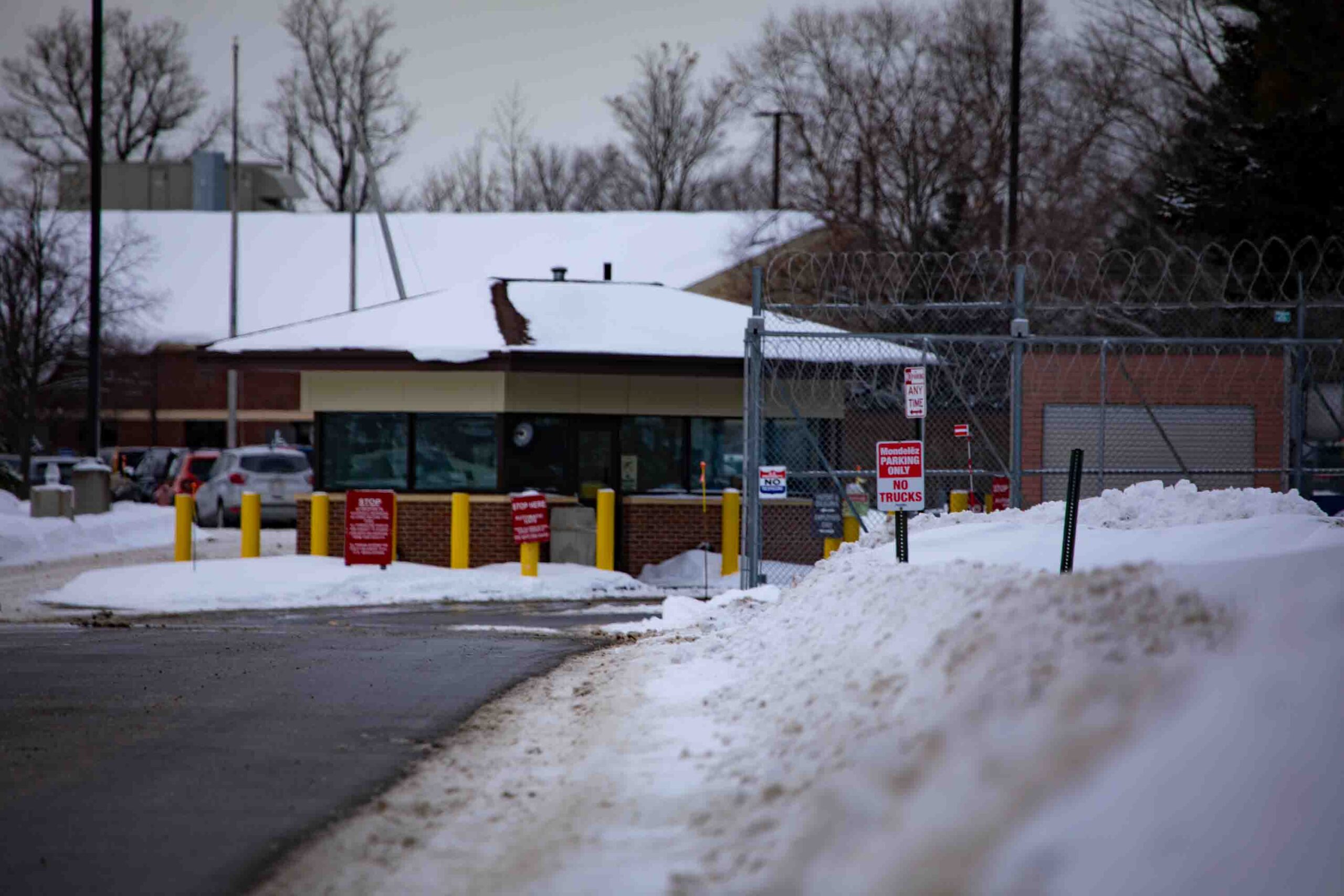
Photo by Ella Chan
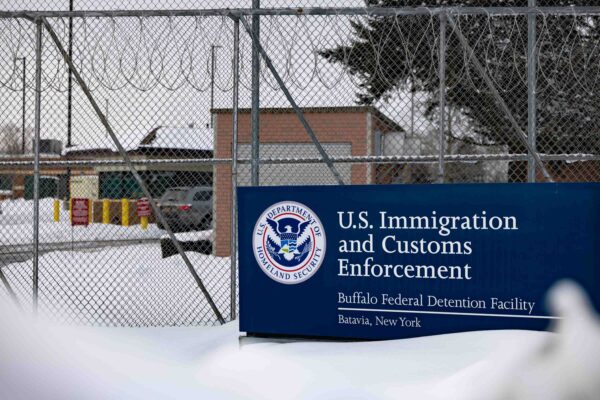
Outside Batavia, NY's ICE Detention Center sits a barbed wire fence covered in snow.
Forced to work for $1 a day
José’s experience unfolds within a broader system that the American Immigration Lawyers Association has described as “mass incarceration of immigrants,” where ICE contracts private companies like Akima Global Services to operate detention centers such as the one in Batavia.
Daniel Feldman, a professor at John Jay College and former chair of the New York State Assembly’s Corrections Committee, said privately run detention centers carry added risks.
Detaining “people against their will,” Feldman said, is already a complex operation, even in state-run facilities. “When you put profit motive on top of that, you almost guarantee that you’re going to have very poorly run facilities.”
Workers within privately run facilities like Batavia tend to receive lower pay, less training and weaker oversight, he said. Detainees also have fewer protections than prisoners, as people held in immigration detention and facing immigration charges are not guaranteed legal representation. Their families may hesitate to speak out for fear of repercussions, further limiting accountability, Feldman added.
Within these centers, daily operations — cleaning, cooking and maintenance — rely heavily on detainees through what is framed as a “Voluntary Work Program.”
Those earnings often become a detainee’s only means of accessing basic necessities such as toiletries and food through the commissary system, and of making phone calls to family members or legal counsel.
In court filings, plaintiffs argue the system effectively coerces detainees into working by tying basic needs to commissary credits. The allegations extend to Akima controlling detainees’ “wages, hours worked, and working conditions,” while they faced a “constant implicit threat” of losing access to bare essentials.
Plaintiffs contend the company’s security guards had “complete control … over every aspect of their lives in detention,” with the understanding that non-compliance could lead to discipline or worse conditions—a dynamic amounting to exploitation, according to the complaint.
One plaintiff described working 4 to 5 hours a day, seven days a week, transporting food carts, cleaning and serving meals — all for daily credits deposited into a commissary account rather than wages. The lawsuit notes that many of the same jobs were performed by non-detained employees who received standard pay.
Akima did not respond to requests for comment. In court filings, the company has denied wrongdoing, arguing that detainees voluntarily participate in the program. The company says long-standing federal detention rules permit compensation of $1 per day for certain tasks performed inside immigration detention facilities.
Martin-Howard of John Jay College explains that the use of food as a control mechanism extends across jails and prisons. The nonprofit organization Freedom for Immigrants, for example, has documented at least 1,600 people participating in hunger strikes across 20 facilities between May 2015 and early 2020.
Food, Martin-Howard said, “can be used by officers and staff, but also by detainees themselves. It works in both directions.”
A system few can untangle
Back inside the Batavia detention center, many men are left waiting and sink into despair as they attempt to understand the proceedings without any legal help.
“Someone without counsel would never be able to do it,” said David Rasmussen, a retired attorney in upstate New York who works pro bono for detainees in the Batavia facility.
For years, Rasmussen said, there was a clear path to release. When someone without a criminal record was detained, attorneys could go directly to the Department of Homeland Security to negotiate a bond.
The standard was straightforward — whether the person posed a danger to society, a threat to national security, or a flight risk. If not, a bond would be set, paid to the court, and they would be released, with the understanding that failing to appear would result in its forfeiture.
That pathway has largely disappeared, Rasmussen said.
The Department of Homeland Security has taken the position that detainees should not be released on bond voluntarily. Instead, securing release now often requires going through federal court to obtain an order for a bond hearing, and then to return to immigration court to argue for release. The result is a far more complex and time-intensive process.
“It’s a tough task,” Rasmussen added.
When working in the Cuban father’s case, Rasmussen had to go to federal court in Rochester to obtain a judge’s order mandating a bond hearing before being able to return to immigration court and proceed.
But most detainees do not have that level of support. They are often handed lists of pro bono lawyers and left to reach out on their own. Access to legal representation is limited, and those who succeed are among the few.
With support from family, community, and legal advocates, the Cuban father and José were released.
Yet the system that held them remains in place and continues to expand, with $85 billion in new federal funding, including roughly $45 billion allocated to expanding detention over the next four years.
That system, for the Cuban father, meant nearly five months apart from his partner and two children. When he returned home, the living room was still decorated for Christmas.
They sat together and celebrated as the calendar turned from winter into spring.

Staff reports from the Lives in the Balance team.
More from Enforcement
Venezuelan mother worries family will be separated
Story by Elany Romero Cruz Photos by Ike Wood
DHS after a turbulent and deadly year
Story by Gian Marco Velásquez Photos by Ike Wood
Financial questions linger over ‘Cornhusker Clink’
Story by Ruth Bailey Photos by Julia Trost
N.J. protests meet tear gas as hunger strike ensues
Photos by Ike Wood
Protests, clashes and home raids in Minneapolis
Photos by Ike Wood
Life inside Upstate New York’s ICE detention center
Story by Project Staff