


A letter from Washington ended a decade-long dream
After years of organizing, immigrant farmworkers in upstate New York were poised to buy an 80-acre farm and train a new generation of producers — until the USDA terminated the grant that made the plan possible.
For 17 years, Gabriel milked cows he will not profit from, on land he will never own.
He’s 40 and works almost 80 hours a week milking the herd, mucking out stalls and monitoring the health of the cows. The long-hours, he said, are physically demanding in ways most people never imagine when enjoying dairy products.
“When we sit at a table and drink a glass of milk, we don’t think about the work behind it,” said Gabriel, who asked that we not to use his full name out of fear of retaliation from the government and his employer. “We don’t ask how long the person who milked that cow worked, or what time they got up so (someone) could have that glass of milk.”
Of New York’s 30,650 farms, only 673 are operated by Hispanic producers. Gabriel and fellow immigrant farmer Luis Jiménez hoped to join those ranks and were on the verge of doing so.
“We have always carried in our blood the culture of farming, of planting, of producing,” Jiménez said. “We want our own business, our own ranch where we could produce, integrate this ancestral knowledge from our grandparents, from our parents, about production.”
It looked like their dream might come true through a U.S. Department of Agriculture program to help underserved farmers. The program, which started during the Biden administration, awarded money to groups to purchase community-owned farmland.
Last year, President Donald Trump ordered federal agencies to review programs prioritizing diversity, equity and inclusion, arguing it discriminates by prioritizing certain ethnicities over other groups. Then in March, nearly 50 awarded nongovernmental organizations received letters from the USDA that those funds had been terminated and the money would not be coming.
Those letters brought an abrupt reversal: The promised funding was gone, and with it the farm deal Gabriel, Jiménez and their colleagues had been preparing to close.
Where USDA land-access grants would have funded projects
For Gabriel, Jiménez and hundreds of farmworkers who would have benefited from the Increase Land, Market and Capital Access program, the news was a crushing blow. For the immigrant farmworkers, the money would have meant a chance to own a stake in the industry they have toiled all their lives.
The letters of termination leave a promise made to the farmworkers in limbo, said Kristian Villa, who worked to help Gabriel and Jiménez qualify for the program as members of their organization, Alianza Agrícola.
“They were more deserving and needed this more than anyone,” Villa said of Alianza. “I cannot stress enough that losing this project is painful and it matters, but it’s not the end.”
A community and a coop take shape
Organizing a group to support Hispanic immigrant farmworkers started with soccer games a decade ago, Jiménez said.
Gabriel met Jiménez at an informal soccer game, which became the only space immigrant farmworkers could find each other across the distances between farms, both told Lives in the Balance. Hispanic men, women, teenagers and toddlers came together. Some played and others observed the game seated in a beach chair or at the trunk of a car.
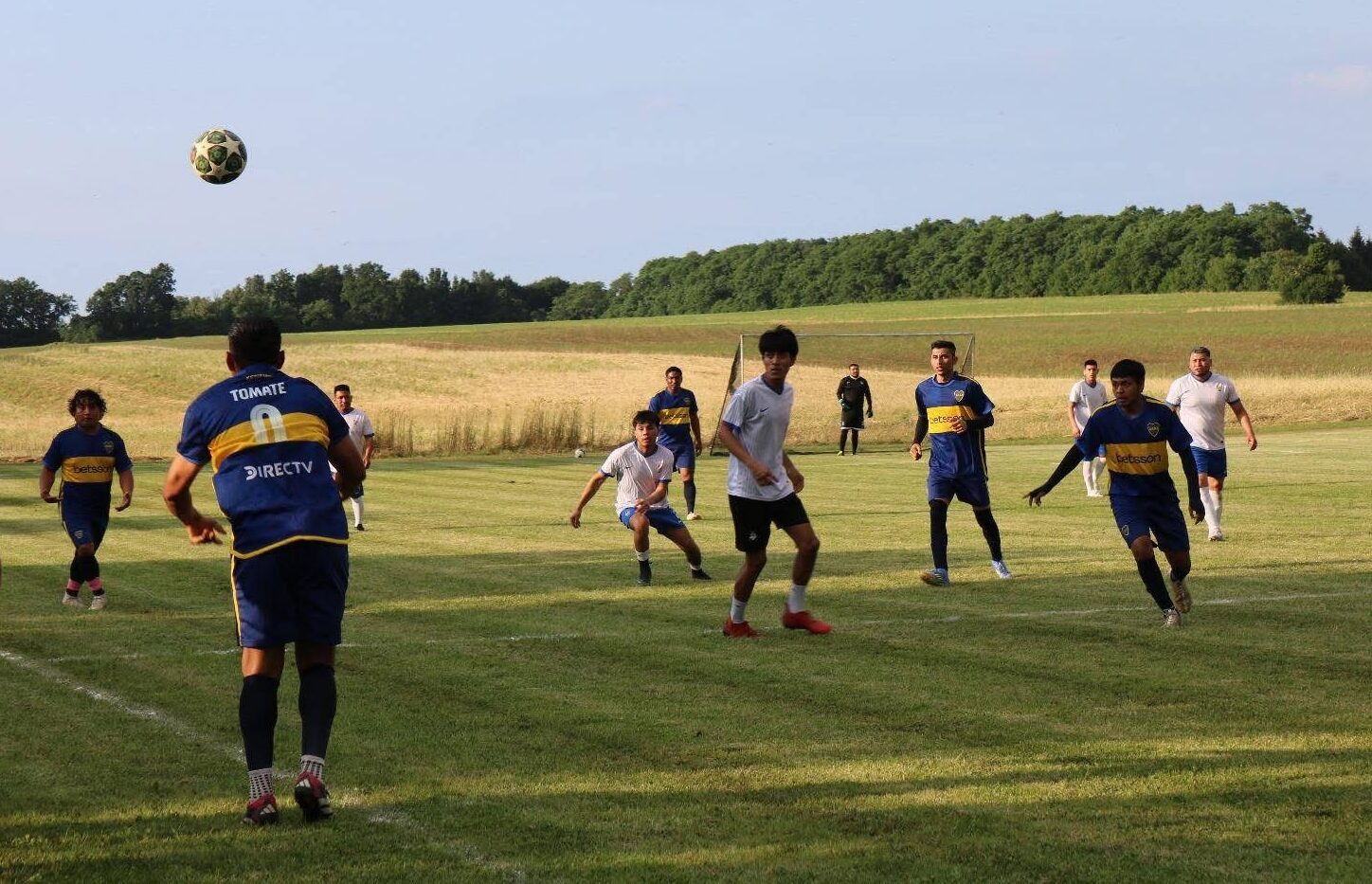
Photo by Alianza Agrícola
Hispanic farmworkers take a rare day off to meet and play soccer.
The groups were divided in two teams, dressed in uniforms with nicknames on the back of their jerseys: Tomate, Estudillo, Garcia and a few more, surrounded by the cheerful crowd.
Those gatherings led to what would become Alianza Agrícola, a first for New York state: a nonprofit, organized and led by immigrant farmworkers since 2016.
For the past decade, Alianza members have organized to access driver’s licenses, employment benefits and a competitive salary. The group campaigned in Albany, knocked on farmhouse doors across the region and gathered signatures in their free time. Nearly 10 men took what could have been their day of rest each week to commute to other farms to reach other Hispanics workers. Gabriel said he visited farmworkers who lived in battered houses, often more than a dozen in a single small home.
“Today, we have the right to a more dignified home, a mandatory day of rest per week, sick days, vacation days,” Gabriel said of their efforts. “We work a little less and earn a little more.”
The mobilization also helped them register in New York state as a nonprofit, enabling the group to benefit from private or government funding. The funding they most wanted to benefit from with their new status: The potentially life-changing Increase Land Access federal program, which meant to distribute $300 million in funding to address three barriers facing new farmers: access to land, capital and markets.
Alianza’s path to benefit from those funds and own land was possible through the efforts of a nonprofit that coordinated with farm groups to pursue the federal funds. Agrarian Trust and its national network of beneficiaries, which includes Alianza, were not the only ones affected by last year’s funding freeze and recent program termination. Hundreds of groups represented by 50 organizations that had received awards were forced to stop plans in more than 45 states and two U.S. territories.
The urgency behind the program was to support a new generation of farmers, when the average age of an American farmer is 58 and land prices make farming inaccessible for younger growers — especially farmers of color, immigrant farmers and other groups that are underrepresented as farm owners, said four experts in separate interviews. Under the USDA’s guidelines, each group is considered an underserved farmer or rancher across the country.
Agrarian and other organizations that would have benefited from the Increase Land Access program are trying to fight back and have called on policymakers and supporters to recognize the impact of the USDA cancellation of the Increase Land Access program.
“Land access is directly tied to food access, local production, and regional nutrition outcomes,” Agrarian Trust wrote in a statement. “When land transitions fail, the effects ripple outward while reducing local supply, limiting market participation, and weakening community-based food systems at a time when they are already under pressure.”
USDA received applications requesting nearly $2.5 billion in funding in response to the program. It ultimately awarded $300 million to the top applicants through a competitive process, said staffer with the Senate Agriculture Committee who was familiar with the process.
The nearly $13 million awarded to Agrarian Trust was meant to fund land purchases in Texas, Nebraska and New York, each property led by local community organizations. Alianza stood to receive more than half a million dollars to buy land and train farmers.
Alianza members focused their energy on getting ready to run the farm, which they would operate as a cooperative owned by members and managed by a board of directors with approved bylaws and the guidance of agricultural experts. The funds would also allow them to hire an employee to support the effort for the cooperative’s first five years.
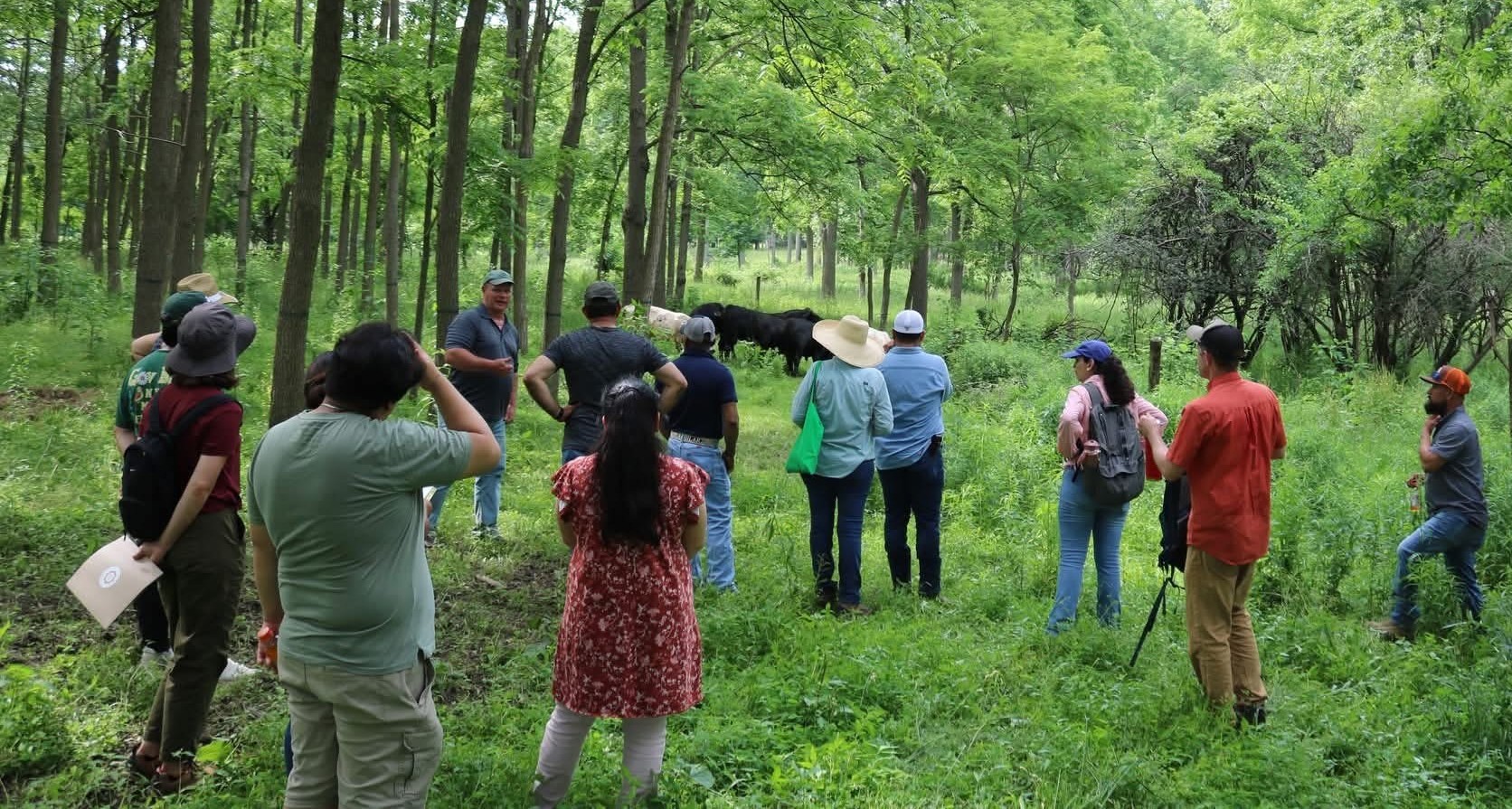
Photo by Alianza Agrícola
Alianza Agrícola farmworkers receive training on land management.
News of the successful grant application came at a good time as other policy decisions were squeezing the amount the farmers could earn in New York, Gabriel said.
Gabriel dreamed of spending hours at Alianza’s farm, planting vegetables or taking care of the herd, earning a few bucks to offset the hours reduced in his salary as a result of the regulation approved by the state’s farmworkers wage board. Chickens, sheep, cows and certain vegetables would be added to their space to sell and join commercial farming.
Gabriel and Jiménez said the farm would become a space for elderly farmers and others who struggle to find regular farm work with a commercial operation, as well as create an opportunity for a new generation of New York’s Hispanic producers to work on a farm they might one day have a stake in.
For them, owning a farm is their biggest dream and how they see themself, moving from workers to land owners. The farm cooperative provided a legal system where all of its members are partners and share ownership of the land. The federal program awarded the money, Agrarian Trust administered the grant and Alianza would run the farm in New York.
Alianza’s business plan for the cooperative included a community center, a cultural center and other initiatives where all of its members can feel a sense of belonging, Jiménez said.
“I’m most hoping in the future to create our own agricultural institute for education about agricultural production,” Jiménez said, envisioning educating children on the working farm.
Last year, Alianza’s members had identified the farm they intended to buy and had begun negotiating the purchase: 80 acres in western New York with a farmhouse, a wooden barn and a silo, according to members with knowledge of the contract. The funding freeze, issued by President Trump to review all programs with DEI language, put it all on hold.
A dream differed
After nearly a decade working to build a cooperative, the group found itself on the precipice of success before a March 23 letter from Washington — Trump’s executive order terminating DEI programs — ended it.
Agrarian Trust and most of the awarded organizations received the letter ending the program in late March. Steven Peterson, associate administrator at the USDA Farm Service Agency, sent the four-page letter terminating 49 of the 50 grants awarded through the Biden administration. The termination letter accused grantees of spending funds for purposes outside the grant’s intent and argued that the grant discriminated based on race and ethnicity.
Alianza and its allies started to discuss how they can make their dream possible, even under the federal decision to first freeze and later terminate the Increase Land Access program.
“We don’t want it to remain just a dream,” Gabriel said.
Once the Trump administration issued the funding freeze earlier last year, most of the program’s beneficiaries navigated late reimbursement and limited communication with the agency’s employees, which effectively ended the training programs they hoped to provide and blocked them from purchasing the proposed farm lands.
Jonathan Rosenthal, Agrarian Trust’s interim executive director, said the grant’s intent was to fund community-owned farmland at a national scale, pulling together dozens of organizations into a shared effort.
“The work is as great as ever, maybe even more given the current political climate,” Rosenthal said. “We will continue the work even if the federal government succeeds in canceling the rest of our grant, we will continue to do fundraising through private sources and it will slow down the timeline of being to purchase land. It will take time to raise that kind of money, millions of dollars, but that’s our commitment to the groups that are doing the work on the ground.”
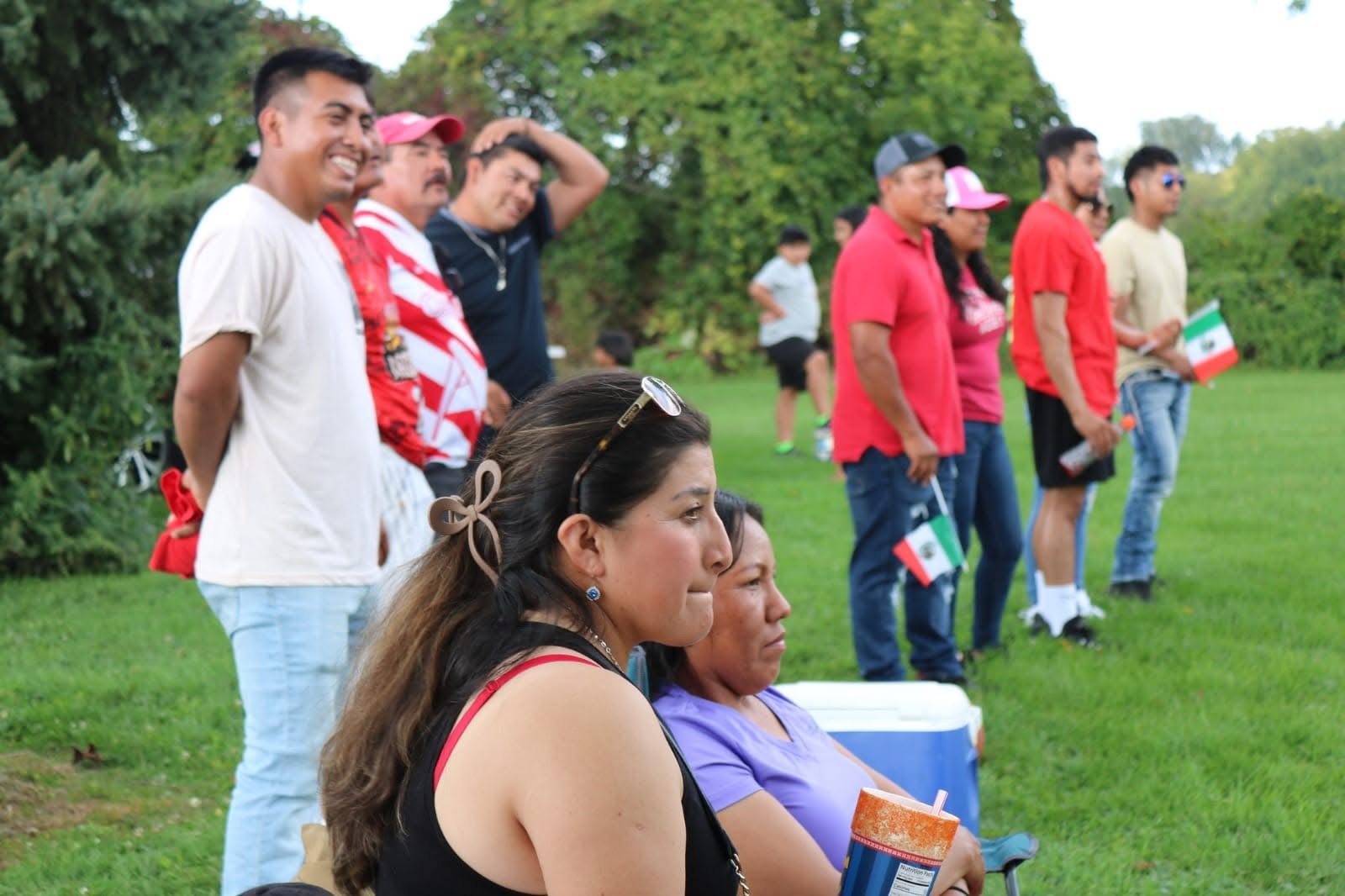
Photo by Alianza Agrícola
Families look on at a soccer game for farmworkers in western New York.
Gabriel, Jimenez and all farmworkers who were benefiting from the program are being represented by the awarded organizations in court. Agrarian and 23 other organizations joined an ongoing lawsuit in May. All the funding assigned to these plaintiffs represents $127 million.
“Many presidents have wanted the ability to essentially pick and choose what it wants to fund and what it doesn’t want to fund,” said Ben Grillot, who’s a senior attorney at the Southern Environmental Law Center. “And those efforts have been routinely rejected over the decades.”
Alianza would have already started the farm cooperative if the federal government had not stopped its grant, Gabriel said.
“It was something sad for us,” he said. “If the money had arrived, maybe right now, we would have already started.”
From Mexico to upstate New York
Gabriel arrived in Florida from Mexico about 17 years ago. With fellow farmworkers, he drove for hours, the warm weather turning to a deep freeze he never imagined.
The scenery changed in front of his eye, watching coastal palm trees in Florida to a whole new rural landscape in upstate New York. Once a dairy farm owner hired him in upstate New York, he’s been working at the same location, living in a house on the farm with other colleagues. His patrón, the farm’s rancher, owns more than 7,000 head of livestock and a dozen houses for workers to live in.
Gabriel became fond of the work, treating the herd and being surrounded by colleagues who spoke Spanish. All of the growth he has seen in the patrón’s ranch reminds him how “la mano Latina,” referring to the Hispanic workforce, increases agricultural production in the United States.
“I have always believed that we — Latinos — are part of the backbone of the economy of this country,” Gabriel said. “Thanks to our labor force, whether in dairy farms or agriculture, every person has their sacred food.”
Alianza became an extended family for him, since all his relatives are back home. He visits them once in a while and speaks with them by phone, whenever possible.
“That is why I have endured for over 17 years, because I adapted to this life,” Gabriel said.
In Alianza’s membership meetings, workshops or events, both farmers show their style: fresh hairstyles, long jeans, boots and button-up shirts or T-shirts, depending on the weather and the occasion.
“I have always believed that we — Latinos — are part of the backbone of the economy of this country.”
– Gabriel, upstate New York farmworker and Alianza member
Those gatherings are usually led by Jiménez, who founded Alianza and has run it ever since. With time, his style and family transformed. He arrived more than two decades ago, got married and became the father of two. His previous long-straight hair is a few inches shorter nowadays. His mustache and beard stayed the same: ear to ear.
In a concrete-cool basement of a local building, Jiménez holds Alianza’s biggest celebrations, discussions and training. From Día de los Muertos’ festivity, where members and allies gathered to remember their loved ones who crossed to the afterlife, to meetings where the farm cooperative is their top priority. The group granted Lives in the Balance access to those events.
At the same place, Jiménez told the room what he believed their greatest asset was.
“The only weapon we have is work,” he said. “Being good workers.”
And then, in the same basement, he spoke about the grant stopped by the Trump administration for months.
“We don’t want that dream to be extinguished by this government,” he said.
Alianza has never stopped working towards their dream, despite the letters from Washington. After a 12 hours-shift, Gabriel attended workshops by Zoom, learning about the agricultural business in the region. Other members continued to do the same in different capacities, while all worked to organize rallies against or in favor of local and federal policies.
“I hope that Mr. Trump and his cabinet have a change of heart,” Gabriel said. “That they realize that we, as Latinos, do not come here to steal, nor are we criminals. We simply want to help this country continue to grow.”
A digital journalist from Puerto Rico.
More from The System
Your judge may matter more than your immigration case
Story by Laura Robertson & Mikayla Melo
‘It’s modern slavery’
Story by Elany Romero Cruz
Syracuse Cuban couple detained amid Trump immigration crackdown
Photos by Ella Chan & Cassie Roshu Story by Anna Momo

How Syracuse’s immigrants navigate a changing system
Story by Sara Oppenheimer & Evan Edmiston Photos by Christine Kao